How to Structure Content for AI and Google in 2024

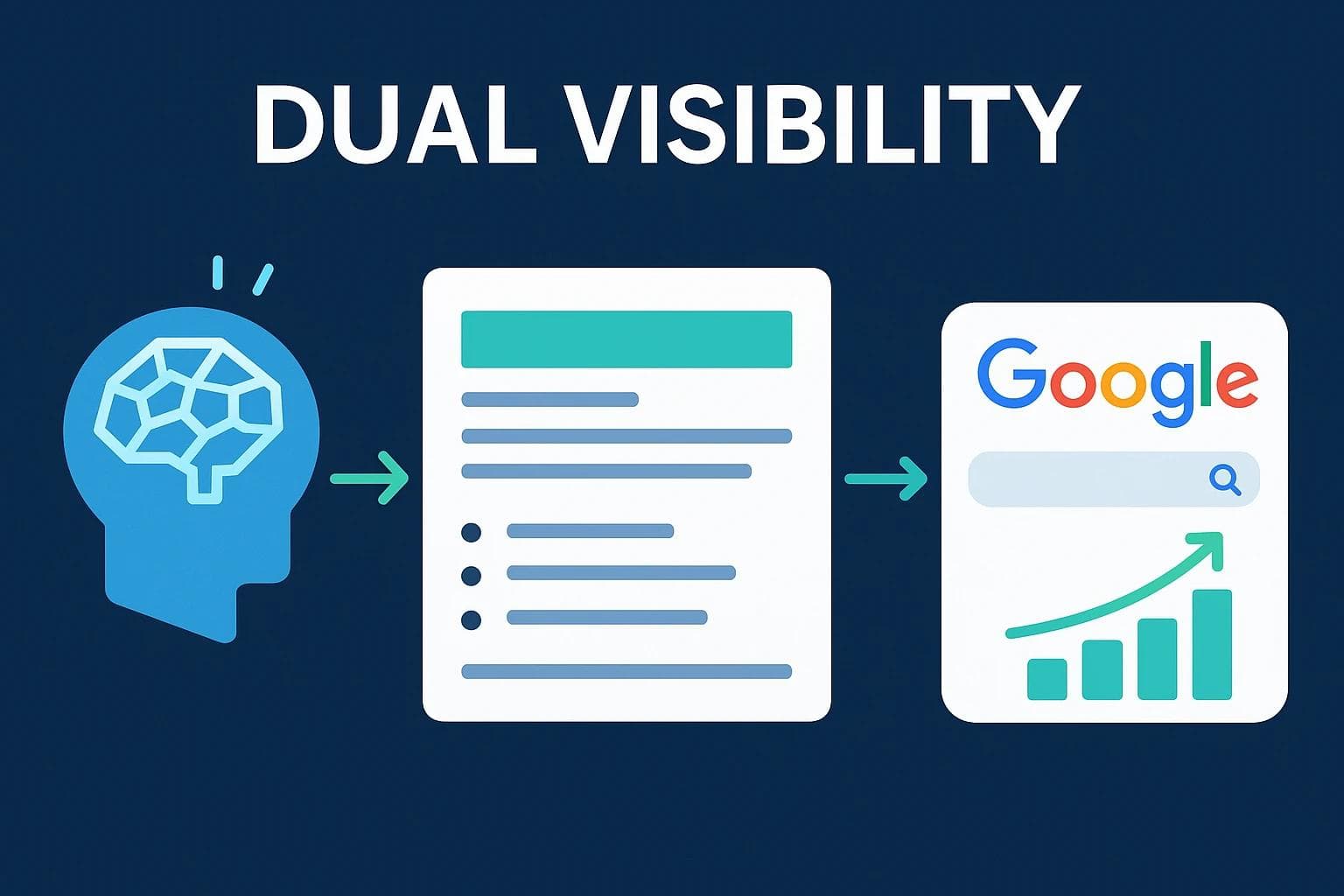
Getting Seen in 2024: How to Structure Content for Both Google and AI Answers
Have you noticed it? You search for something on Google, and before you even see the familiar blue links, a detailed, AI-generated answer appears right at the top. It’s concise, it’s direct, and it’s often pulling information from websites just like yours.
This is the new reality of search. The game isn’t just about ranking #1 anymore; it’s about becoming the source material for these AI answers. Many business owners and marketers are asking the same questions: "How do I get my content featured there? Am I optimizing for Google, or for AI now?"
The great news is, you don't have to choose. The very same techniques that make your content easy for AI to understand and extract also make it more appealing to Google's traditional ranking systems and, most importantly, to your human readers.
This is the principle of Dual Visibility: structuring your content to be the top choice for both search engine rankings and AI-powered answers.
What is Dual Visibility? A Simple Framework for Modern Content
Think of content structure as the reading glasses for AI. A dense wall of text is blurry and hard to decipher. But content with clear headings, short paragraphs, bullet points, and tables is sharp and in focus. The AI can instantly see the key points, understand relationships between ideas, and confidently extract the most relevant information to answer a user's question.
Simultaneously, a human reader scanning your page benefits from the exact same clarity. They can find what they need quickly, have a better experience, and are more likely to trust your expertise. Google loves this positive user engagement and rewards it with better rankings. It's a perfect win-win.

The Content Engineering Mindset: Bridging SEO and AI Optimization
To achieve dual visibility, it helps to adopt a "content engineering" mindset. This means moving beyond just writing and thinking strategically about how your content is built. It’s about intentionally designing every piece of content to be easily processed by both people and machines.
This isn’t about tricking algorithms. It’s about creating clarity. The core principles are surprisingly simple and rooted in what has always been good practice.
Your Dual Visibility Toolkit: 5 Essential Formats
Let's break down the most powerful and practical formats you can start using today. For each one, we'll cover what to do and why it works for both Google and AI.
1. Concise, Direct Definitions
- What to do: Start a section that defines a key term with a clear, one-to-two-sentence definition. Use a heading like "What is [Your Term]?" and put the definition right at the beginning of the paragraph.
- Why it Works:For AI: This is a perfect, bite-sized piece of information that directly answers a "what is" query. AI assistants can lift this definition verbatim, often with a citation back to your site.
- For Google: This structure is ideal for winning "Featured Snippets"—the answer boxes that appear at the top of search results.
2. Numbered and Bulleted Lists
- What to do: Whenever you're explaining a process (steps) or listing items (features, benefits, examples), use a numbered or bulleted list instead of a long paragraph.
- Why it Works:For AI: Lists create a clear, logical sequence or grouping of related items. AI can easily parse this to provide step-by-step instructions or summarize key points.
- For Google: Lists improve readability and scannability, keeping users on your page longer. They are also frequently pulled into Featured Snippets.
3. Crystal-Clear Heading Hierarchies
- What to do: Structure your content like an outline using proper headings. Use one H1 for your main title. Use H2s for major sections and H3s for sub-points within those sections. Make your headings descriptive and question-based where possible (e.g., "How to Implement Content Chunking").
- Why it Works:For AI: Headings provide a semantic roadmap of your content. The AI understands the hierarchy of information—what the main topic is and how all the sub-points relate to it.
- For Google: A logical heading structure helps Google understand the context of your page, which is crucial for ranking for relevant topics, not just keywords.
4. Strategic FAQ Sections
- What to do: Include a Frequently Asked Questions (FAQ) section at the end of your articles to address common user questions related to your topic. Phrase the questions exactly as a user would type them into a search bar.
- Why it Works:For AI: FAQs are a goldmine for AI assistants. The question-and-answer format is a native language for them, making your content a prime source for direct answers.
- For Google: Well-structured FAQs can appear in the "People Also Ask" sections of search results, driving more targeted traffic to your site.
5. Simple, Scannable Tables
- What to do: Use tables to compare features, show pricing, or organize data. Keep them simple with clear column and row headers.
- Why it Works:For AI: Tables present structured data in a way that is incredibly easy for machines to understand and compare. An AI can quickly extract data from a table to answer a query like "Compare Feature A and Feature B."
- For Google: Tables are another format that is often pulled directly into search results to provide quick, comparative answers to users.
Implementing these formats can transform a dense, uninviting article into a highly effective, dual-visible resource. While you can implement these strategies manually, platforms like fonzy ai are built to automatically create and structure content based on these principles from the ground up.

Advanced Application: The Power of Content Chunking
Once you've mastered the basic formats, you can level up with a concept called content chunking. This is the practice of breaking down your content into distinct, logical pieces, or "chunks." It’s how you take a big topic and make every single part of it understandable and extractable.
There are three main layers to think about:
- Macro Chunks: These are the major sections of your article, typically defined by your H2 headings. Each macro chunk should cover a distinct sub-topic.
- Micro Chunks: These are the individual paragraphs, lists, and tables within a macro chunk. Each micro chunk should represent a single, complete idea.
- Atomic Chunks: This is the most granular level—a single sentence, a bullet point, or a data point in a table that can stand on its own as a piece of factual information.
By engineering your content with these chunks in mind, you create a deeply structured resource where every piece of information is organized, contextualized, and ready for an AI to find and feature. It also reinforces your E-E-A-T (Experience, Expertise, Authoritativeness, and Trustworthiness) by presenting information in a clear, authoritative, and user-friendly way.

Your Next Steps Toward Dual Visibility
Getting started doesn't have to be complicated. Begin by reviewing your existing content.
- Audit a Page: Pick one of your most important articles. Can you improve its structure with better headings, shorter paragraphs, or a new list?
- Plan Your Next Post: For your next piece of content, create an outline using these principles before you start writing.
- Think Like Your Customer: Brainstorm the questions they are asking and build your content, especially your headings and FAQs, around those questions.
Adopting this content engineering approach is the most effective way to thrive in the new era of search. By focusing on clarity and structure, you create content that serves your human audience and gets you seen by the AI assistants shaping the future of information discovery.
For businesses looking to scale these efforts, an automated solution can be a game-changer. An intelligent system like fonzy ai can analyze your market, develop a content plan, and generate dozens of structurally-optimized articles every month, ensuring you achieve dual visibility consistently.
Frequently Asked Questions (FAQ)
What is content structuring for AI and Google?
Content structuring is the practice of organizing your webpage's content using formats like clear headings, short paragraphs, lists, and tables. This makes it easier for both Google's algorithms and AI assistants to understand, categorize, and extract information from your page.
How does structuring content help AI extraction?
AI models, like those powering Google's AI Overviews, thrive on clarity and logic. Structured formats act as signposts that help the AI identify key information, understand relationships between concepts, and pull out concise, accurate snippets to use in its generated answers. A well-structured page is like a well-organized library for an AI.
What are the basic content formats for AI and SEO?
The most effective basic formats are:
- Descriptive H1, H2, and H3 headings
- Short, single-idea paragraphs
- Numbered and bulleted lists
- Simple data tables
- Question-and-answer pairs (FAQs)
Does using AI to write content affect Google ranking?
Google's official stance is that it rewards high-quality content, regardless of how it is produced. The key is not who or what wrote the content, but whether it is helpful, reliable, and provides a good user experience. AI-generated content that is poorly structured, inaccurate, or unhelpful will perform poorly, just like human-written content with the same flaws. The focus should always be on quality and structure.
Roald
Founder Fonzy — Obsessed with scaling organic traffic. Writing about the intersection of SEO, AI, and product growth.
Stop writing content.
Start growing traffic.
You just read about the strategy. Now let Fonzy execute it for you. Get 30 SEO-optimized articles published to your site in the next 10 minutes.
No credit card required for demo. Cancel anytime.
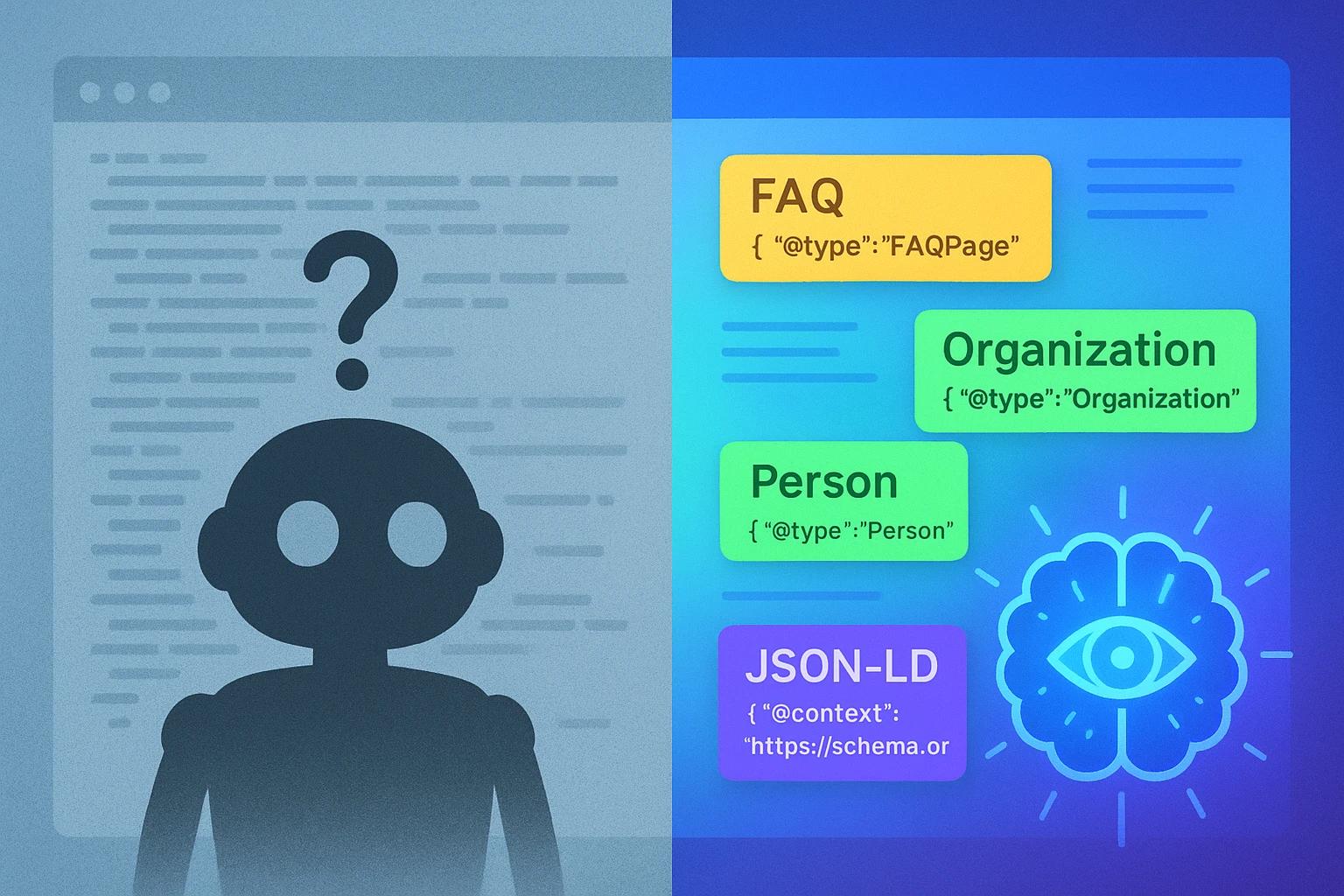
How Schema and FAQ Markup Help AI Understand Your Content
Learn how schema markup and FAQ help AI read your content clearly without needing developer skills.
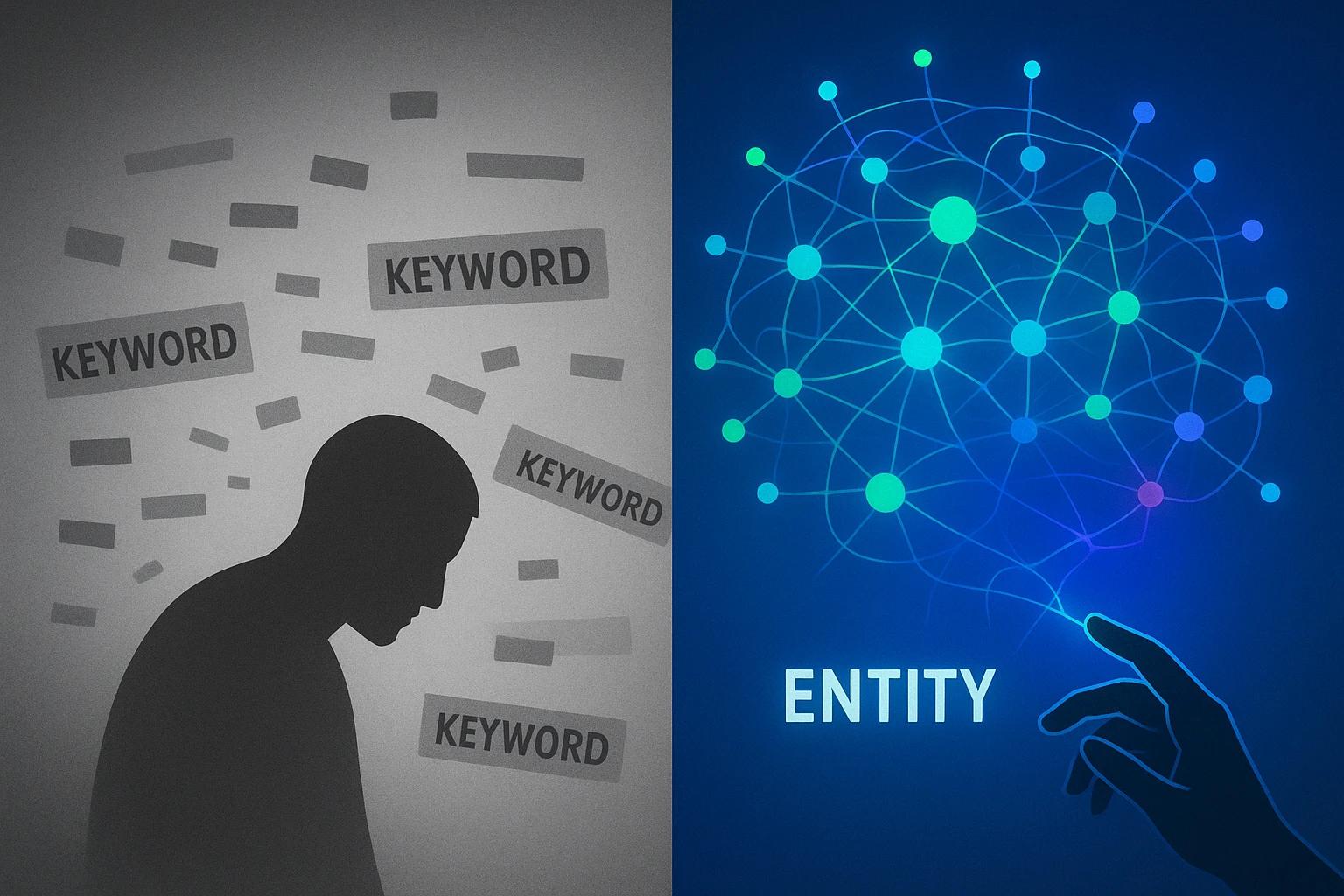
Building topical authority that AI and search engines trust
Learn how to shift from keywords to entities and build the expertise AI and search engines recognize and trust.
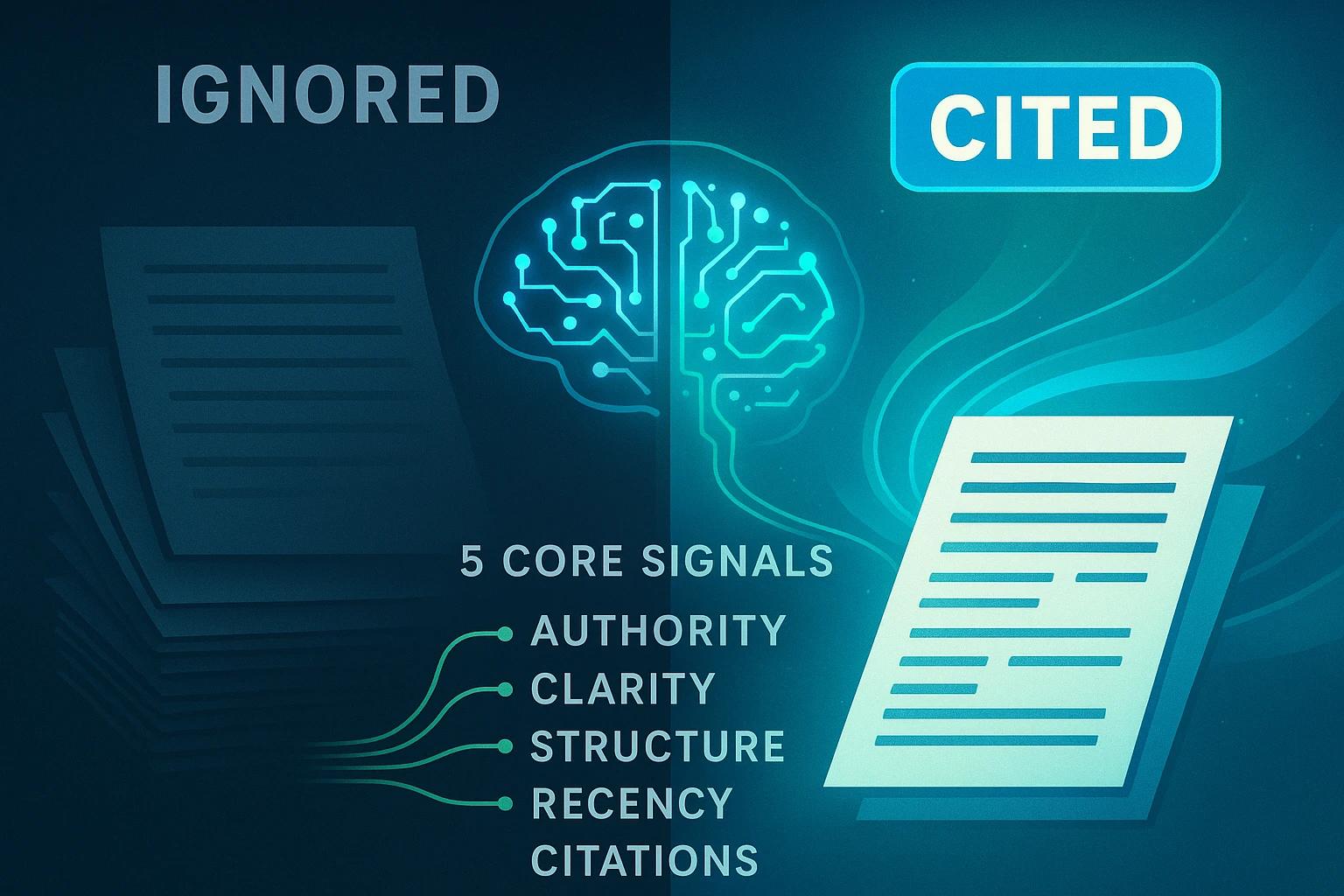
How AI Answer Engines Choose What to Cite
Discover the key signals and heuristics AI uses to decide which sources to cite in their answers.