How Schema and FAQ Markup Help AI Understand Your Content

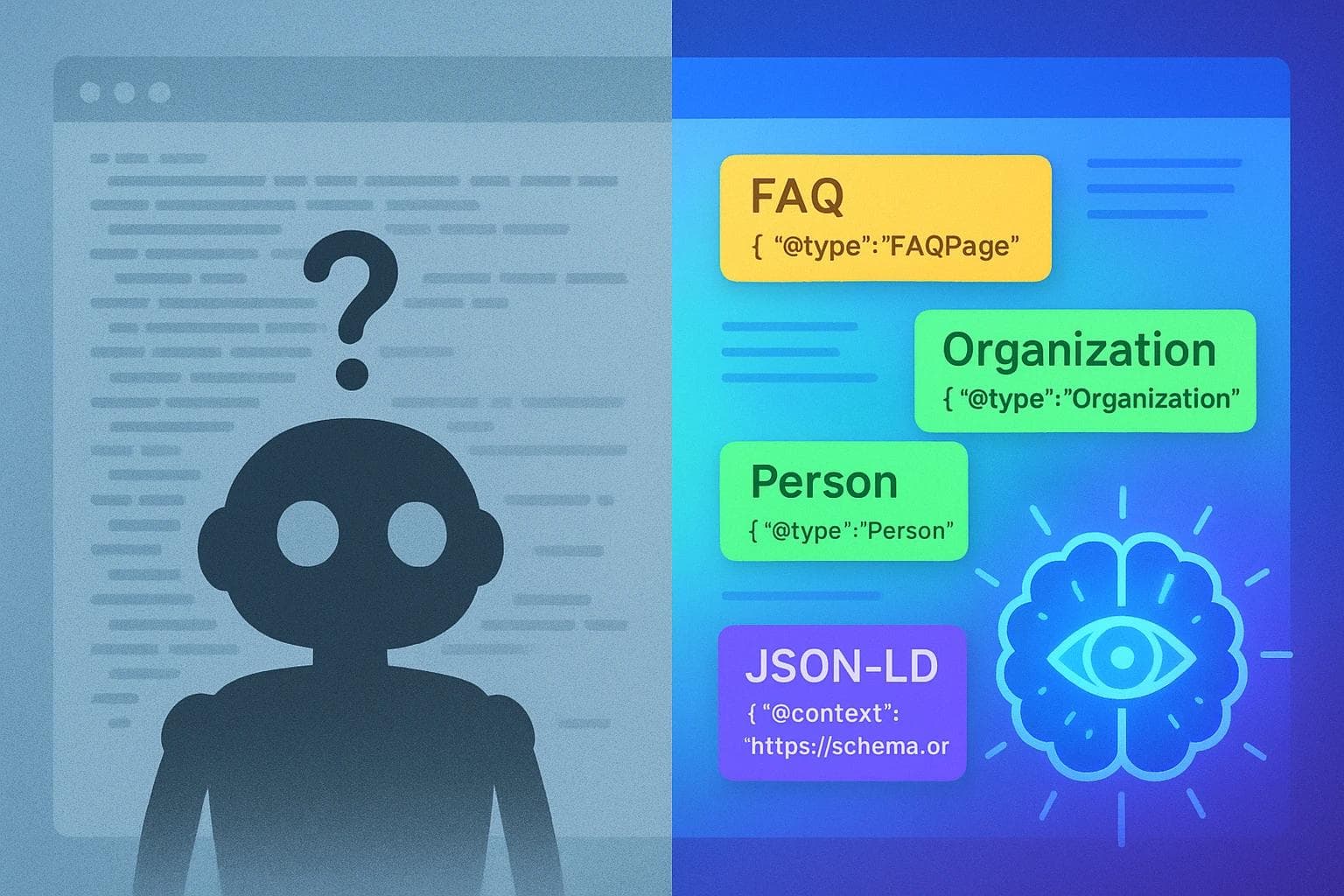
Your Content Is Invisible to AI. Here’s How to Fix It.
Have you ever typed a question into Google, seen the AI-generated answer at the top, and thought, “Hey, my article answers that perfectly! Why isn’t it there?”
It’s a frustrating feeling. You’ve done the hard work: researched, written, and published a fantastic piece of content. Yet, when it comes to the most valuable real estate on the search page—the AI-powered answer—your brand is nowhere to be seen. Your competitor is.
This isn't about keywords or backlinks, not in the traditional sense. This is about speaking a language that AI understands fluently. Your content might be written for humans, but to get featured by AI, it also needs a special set of instructions for machines.
Welcome to the world of schema markup, the technical signal that turns your content from just words on a page into a structured, understandable resource that AI is eager to cite. And the best part? You don't need to be a developer to make it work.
What Are We Even Talking About? Demystifying Structured Data
Let's start with a simple analogy. Imagine your webpage is a detailed book. A human can read it and understand the characters, the plot, and the main ideas. But a search engine or an AI model is like a speed-reader who needs help identifying the key information quickly.
Structured data, often called schema markup, acts like a series of sticky notes you place throughout your book.
- One note says, "This is the author's name."
- Another says, "This is the publication date."
- A third note says, "This section is a question, and this is its direct answer."
These "sticky notes" provide context. They don't change what the book says, but they tell the machine what each piece of information represents. This is the fundamental signal AI reads to grasp the meaning and relationships within your content. The "language" for these sticky notes comes from a shared vocabulary called Schema.org, and the most common way to write them is a format called JSON-LD, which is just a snippet of code you add to your page.
The AI Schema Playbook: Markup That Matters for Marketers
While there are hundreds of schema types, a handful are incredibly powerful for signaling to AI that your content is authoritative, well-structured, and answer-ready.
The Heavy Hitters: FAQPage and QAPage
This is often the first type of schema marketers encounter, and for good reason. It directly addresses the question-and-answer format that fuels AI search.
- FAQPage Schema: Use this for pages where you, the author, provide a list of frequently asked questions and their answers. Think of a product page's FAQ section or a blog post that answers common questions about a topic. You control both the question and the answer.
- QAPage Schema: This is for pages where users submit questions and other users (or you) can post answers, like a forum or a product Q&A section. The key difference is the user-generated nature.
For most marketing content, FAQPage is what you'll use. It's a direct signal to AI: "Here are clear, concise answers to specific user queries."
A Simple FAQPage Example (No Developer Needed):
Imagine you have two questions on your page. Here’s what the JSON-LD "sticky note" would look like. You can copy this and just replace the text.
The Trust Builders: Organization and Person
- Organization Schema: This tells AI about your company—your name, logo, address, and social profiles. It establishes your brand as a legitimate entity.
- Person Schema: When an individual authors an article, this schema identifies them as the expert, linking to their social profiles or author page. It signals, "This content was written by a real person with expertise in this field."
Using these schema types helps AI connect the dots, building a knowledge graph where your brand and your authors are seen as trusted sources.
The Foundational Blocks: Article and BlogPosting
These schema types are essential for any piece of content. They provide the basic journalistic signals that AI looks for:
headline: The title of the piece.datePublished: When it went live.dateModified: When it was last updated (a crucial signal of freshness).author: Connects to thePersonschema.publisher: Connects to theOrganizationschema.
Without this, AI sees your content as a document without context. With it, AI sees a professionally published article from a known entity and a specific author.
From Theory to Reality: A Quick-Start Guide to Implementation
Feeling a little overwhelmed? Don't be. You don't need to write this code from scratch.
- Generate It: Use a free tool like the Schema Markup Generator (JSON-LD) by Merkle. You simply choose the schema type (e.g., FAQ), fill in the fields, and it writes the code for you.
- Add It: Copy the generated JSON-LD script. The standard practice is to place it within the
<head>section of your page's HTML. If you're using a CMS like WordPress, there are plugins (like Yoast or Rank Math) that have built-in sections for adding code snippets to the header of a specific page. - Test It: This is the most important step. Copy the URL of the page where you added the code and paste it into Google's Rich Results Test. This tool will tell you if Google can read your schema correctly and if it's eligible for rich results.
Marketer's Do's and Don'ts for Schema
Why This Matters Now More Than Ever
In the past, the main benefit of schema was getting "rich snippets"—like star ratings or FAQ dropdowns—in the search results. That's still a huge plus.
But the game has changed. Generative Engine Optimization (GEO) is the new frontier. It’s not just about ranking #1 anymore; it's about being the definitive answer that AI models choose to present to users.
Proper schema markup is one of the most powerful technical signals you can send to build the E-E-A-T that AI craves. It provides verifiable facts about your content, your authors, and your organization. It removes ambiguity and makes it incredibly easy for an AI to:
- Understand the entities and concepts you're discussing.
- Trust the information you're providing.
- Extract and cite your content as the source for its generated answers.
Manually managing this for every article can be a bottleneck, which is why automated solutions from companies like Fonzy AI are becoming essential for scaling content strategies that are built for modern search.
Frequently Asked Questions
What is schema markup?
Schema markup is a semantic vocabulary of tags (or microdata) that you can add to your HTML to improve the way search engines read and represent your page in SERPs. It's a shared language that helps search engines understand the meaning and relationships behind your content.
What is FAQ schema specifically?
FAQ schema (FAQPage) is a specific type of markup designed for pages that contain a list of questions and answers on a particular topic. Implementing it can make your content eligible for rich snippets and inclusion in AI-driven answer formats.
How does schema help with SEO and AI?
For traditional SEO, it helps your content stand out with rich snippets, which can improve click-through rates. For AI and GEO, it provides clear, structured signals about your content's meaning, authorship, and trustworthiness, making it more likely to be selected as a source for AI-generated answers.
Is schema still relevant with all the changes in AI search?
It's more relevant than ever. As search becomes more about providing direct answers, the need for AI to clearly understand content has skyrocketed. Schema is your most direct way to communicate that understanding.
Your Next Step: Speak the Language of AI
The shift to AI-driven search is not a future trend; it's happening right now. Content that isn't structured for machine understanding risks becoming invisible.
You don't need to be a technical wizard to get started. Begin by identifying one of your most important, question-answering pages. Use a generator to create FAQPage schema for it, add it to the page, and validate it with Google's tool.
By taking this first step, you're not just optimizing a webpage. You're beginning to build a foundation of trust with AI, ensuring your valuable insights get found and featured. As you scale, you'll find that a comprehensive content plan, from creation to optimization, is key. Platforms like Fonzy AI are built to manage this entire lifecycle automatically, helping you get found in Google and AI answers.
Roald
Founder Fonzy — Obsessed with scaling organic traffic. Writing about the intersection of SEO, AI, and product growth.
Stop writing content.
Start growing traffic.
You just read about the strategy. Now let Fonzy execute it for you. Get 30 SEO-optimized articles published to your site in the next 10 minutes.
No credit card required for demo. Cancel anytime.
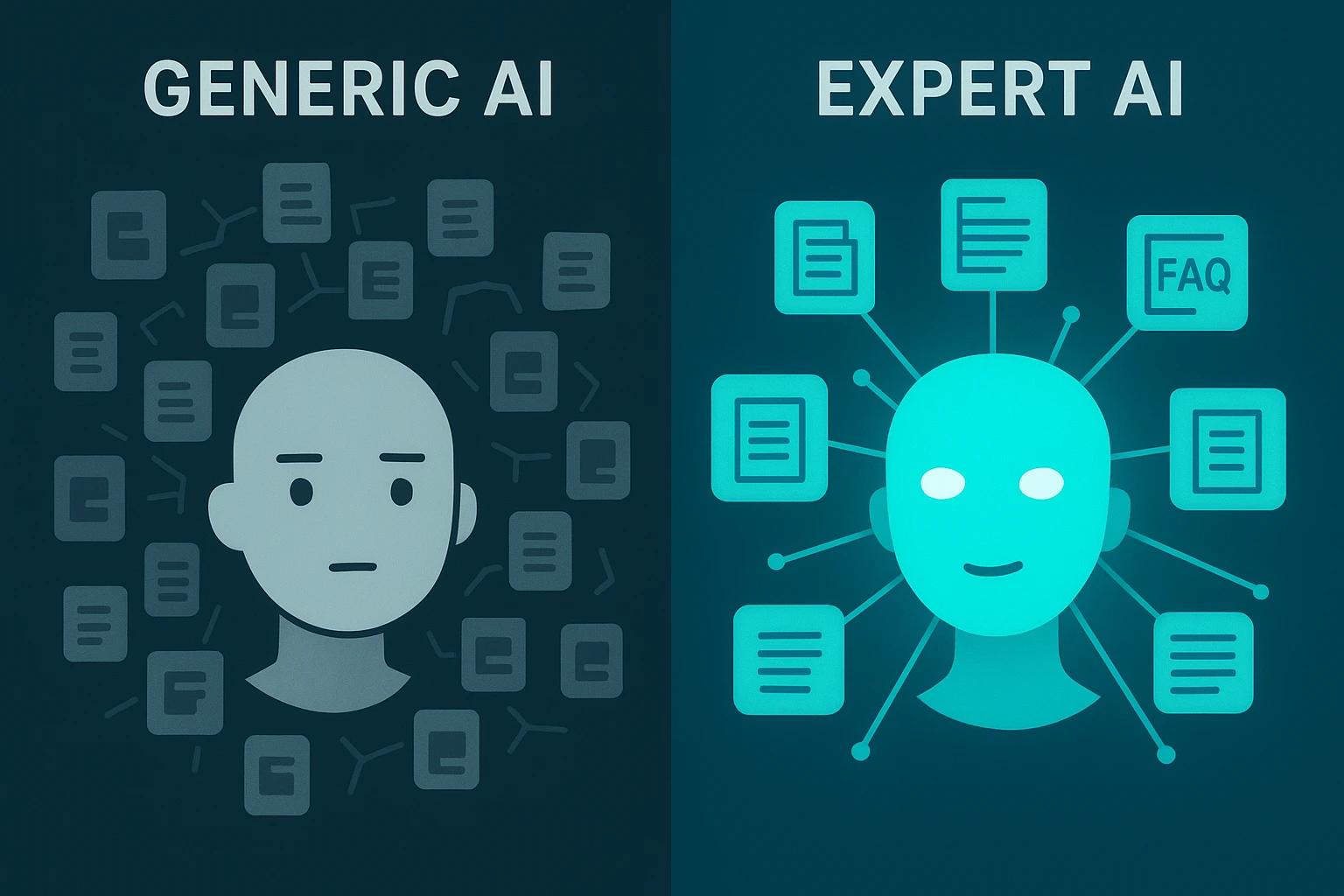
How Repetition Helps AI Learn and Reinforce Your Expertise
Learn why strategic repeated content helps AI understand and trust your unique expertise without hurting SEO.
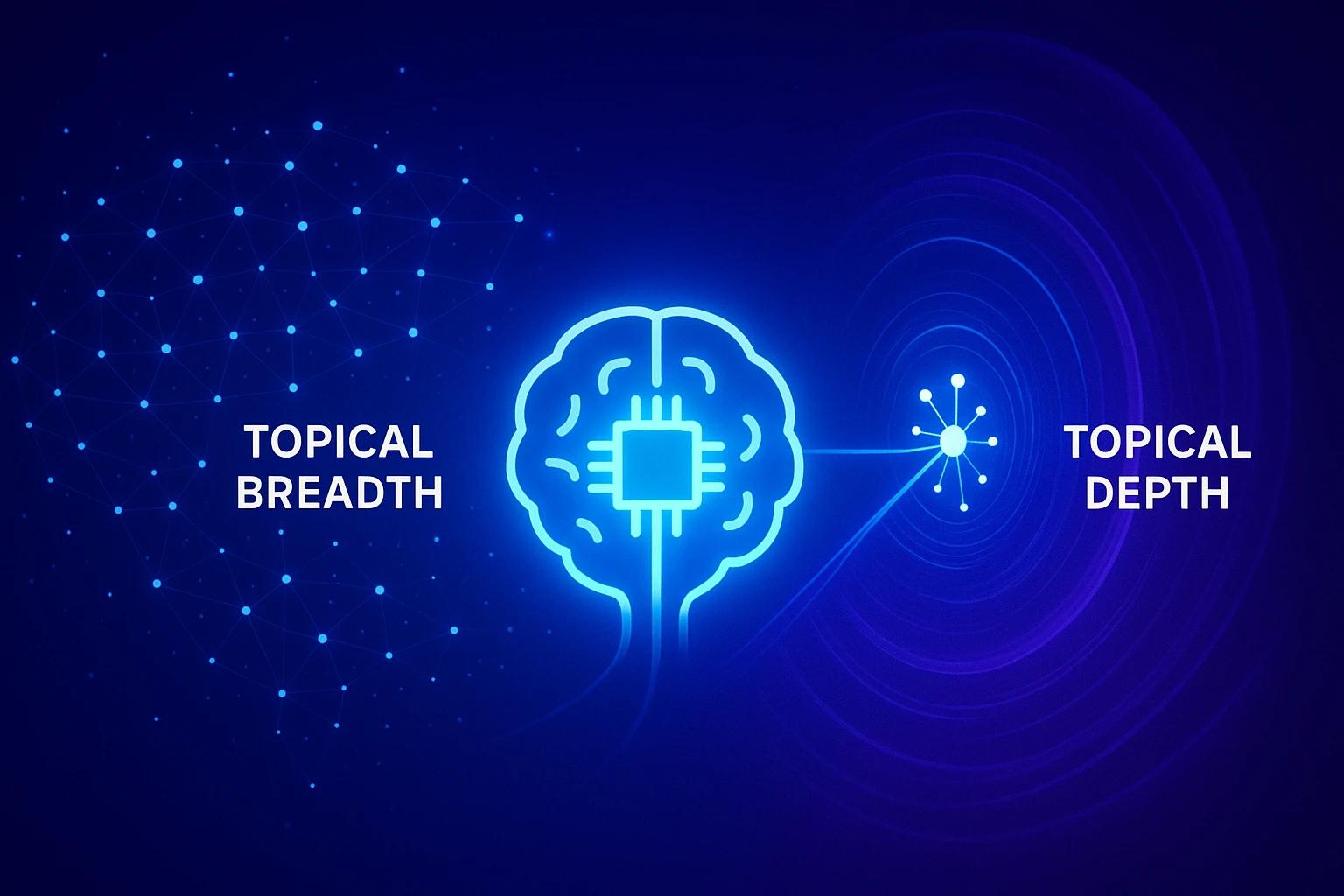
Topical Breadth vs Depth How Coverage Influences AI Answers
Learn how balancing topical breadth and depth helps your content get cited by AI answer tools and build authority.
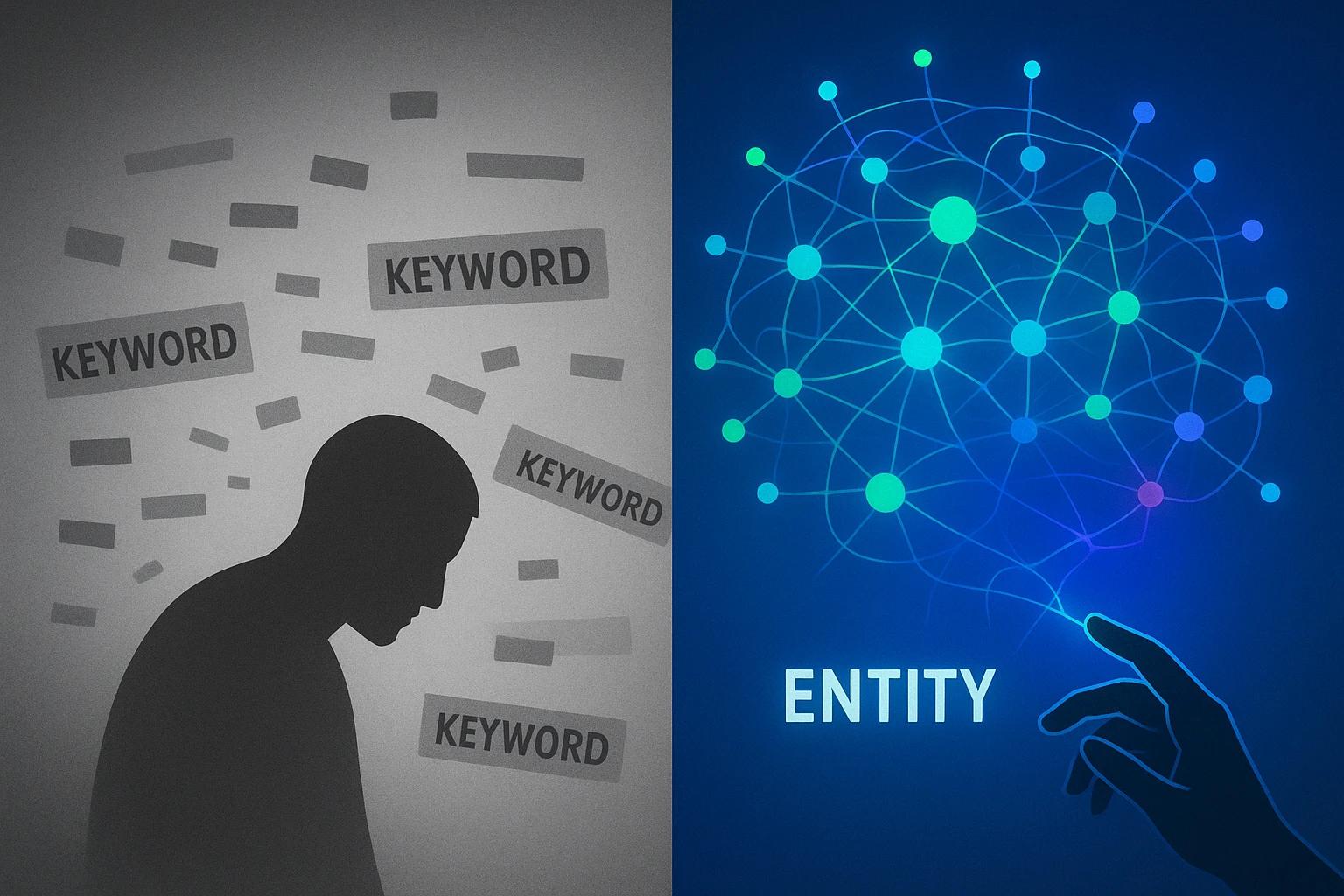
Building topical authority that AI and search engines trust
Learn how to shift from keywords to entities and build the expertise AI and search engines recognize and trust.