Beyond the Buzzwords A Unified Playbook for SEO AEO and GEO

Beyond the Buzzwords: A Unified Playbook for SEO, AEO, and GEO
Feeling overwhelmed by the constant stream of new marketing acronyms? You're not alone. The conversation has moved from just SEO to include AEO and now GEO, leaving many teams wondering if their entire strategy is obsolete. In fact, research shows that a staggering 90% of businesses are worried about the future of SEO because of AI's growing influence.
The good news is that SEO isn't dead. It’s evolving. The bad news? Treating Search Engine Optimization (SEO), Answer Engine Optimization (AEO), and Generative Engine Optimization (GEO) as separate, competing channels is a surefire way to duplicate effort and fall behind.
The smartest brands aren't choosing between them; they're building a single, powerful content engine that serves all three simultaneously. This is the new playbook for getting found everywhere your customers are looking.
The New Search Reality: From Ten Blue Links to Direct Answers
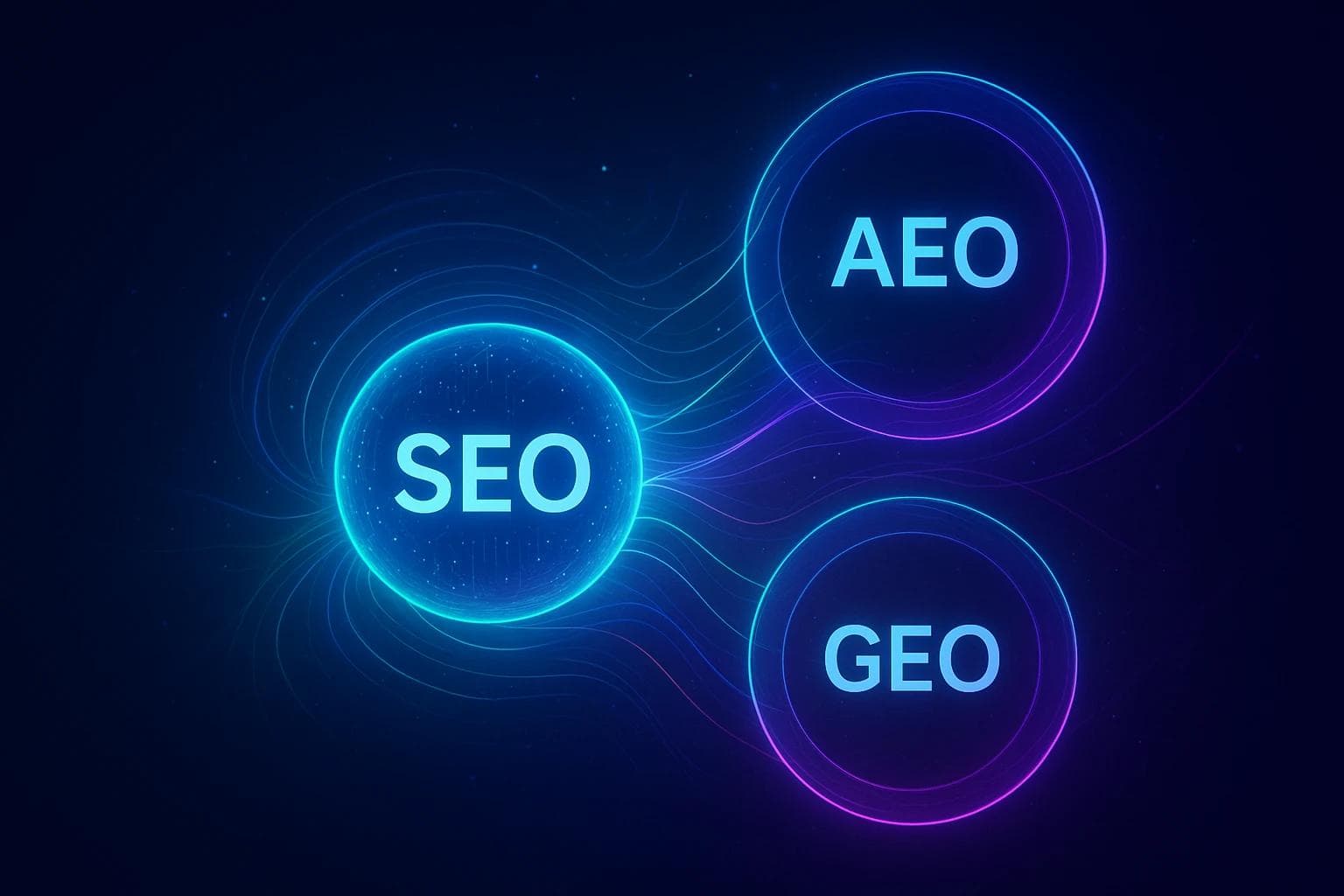
For years, the goal was simple: rank on page one. But the search landscape has fractured. Your customers now get information from traditional results, direct answer boxes, and conversational AI summaries. Trying to manage three separate strategies for these channels is a trap. The reality is they are not separate—they are concentric layers of the same discovery ecosystem.

- SEO (Search Engine Optimization) is your foundation. It’s the technical health, content depth, keyword strategy, and authority signals (like backlinks) that tell search engines your site is credible and relevant.
- AEO (Answer Engine Optimization) is the layer built on top of SEO. It focuses on structuring your content to provide direct answers for things like Google's featured snippets, "People Also Ask" boxes, and the over one billion voice searches performed every month.
- GEO (Generative Engine Optimization) is the outermost layer. It's about earning citations and mentions in AI-generated summaries from tools like ChatGPT, Perplexity, and Google's AI Overviews. This isn't about ranking; it's about being recognized as an authoritative source worthy of inclusion.
A fragmented approach is inefficient. A unified, or convergent, approach creates a powerful flywheel effect: strong SEO makes you eligible for AEO, and strong AEO makes your content a prime source for GEO.
The Pillars of a Convergent Search Strategy
Instead of asking "What's the difference?" the more strategic question is "How do they work together?" Understanding the specific tactics for each layer allows you to build a single piece of content that performs across the entire search ecosystem.

Pillar 1: SEO — The Unshakeable Foundation
Your existing SEO efforts are more critical than ever. Without a solid technical and authoritative base, your content is invisible to both answer engines and generative AI. Think of it this way: AI models are trained on the vast index of the web. As one expert from UPMC noted, if you are on page one of Google for a keyword, you're more likely to be cited in AI overviews.
Where to Focus Your Foundational Efforts:
- Technical Health: Ensure your site is fast, mobile-friendly, and easily crawlable. AI crawlers, just like Googlebot, won't waste resources on a slow or broken site.
- Topical Authority: Develop comprehensive content clusters around your core areas of expertise. This signals to search engines that you are a go-to resource on a subject.
- E-E-A-T Signals: Establish your Expertise, Experience, Authoritativeness, and Trustworthiness. This includes detailed author bios, a clear "About Us" page, and securing backlinks from other reputable sites in your industry.
Pillar 2: AEO — Winning the Direct Answer
With over 65% of Google searches now resulting in zero clicks, winning the answer box is the new page one. AEO is the practice of structuring your content so that search engines can easily extract and present it as a direct answer.
Key AEO Tactics:
- Answer Questions Directly: Start content sections with the direct question as a heading (e.g., "What is Answer Engine Optimization?") and follow it immediately with a concise, clear answer.
- Use Structured Data (Schema): Implement schema markup for FAQs, how-to's, and products. This is like adding labels to your content that help search engines understand its purpose and format, making it easier to pull into rich results.
- Embrace Natural Language: Write for humans, not just keywords. Optimize for the conversational questions people ask Siri, Alexa, and Google Assistant.
Pillar 3: GEO — Becoming the Source for AI
Generative AI doesn't "rank" pages; it synthesizes information and cites its sources. Your goal with GEO is to make your content so authoritative, trustworthy, and clearly structured that AI models choose it as a foundational source for their generated answers. This is where your E-E-A-T efforts truly pay off.
How to Optimize for AI Citations:
- Publish Original Data and Research: AI is designed to synthesize existing information. By providing unique insights, statistics, or studies, you become an indispensable source that cannot be ignored.
- Prioritize Factual Accuracy: Clearly cite your sources and ensure all information is verifiable. Trust is the primary currency in the world of generative AI.
- Build Your Entity: An "entity" is a distinct, well-defined concept (like your company, your CEO, or your product). Consistently build out information about your core entities across your site and the web to establish them as authoritative in Google's knowledge graph.
The Unified Workflow: Your Action Plan for Convergent Content
So how do you put this all together without tripling your workload? By integrating these principles into a single, streamlined content workflow from start to finish. This approach ensures every piece of content you create is optimized for all three layers from day one.

Step 1: Convergent Research & PlanningInstead of just targeting keywords, research the questions and intents behind them. Identify core topics (SEO), specific questions for direct answers (AEO), and areas where you can provide unique, authoritative data (GEO).
Step 2: Answer-First Content StructuringOutline your content with an "answer-first" mindset. Use clear headings for each question. Plan where you will implement structured data like FAQ schema. Structure your article logically to build a case, making it easy for both humans and AI to follow.
Step 3: Creation with E-E-A-T in MindWrite your content, ensuring you are demonstrating deep expertise. Who is the author? What is their experience? Why should anyone trust them? Weave in unique data points, cite credible sources, and link internally to other relevant content to build a strong topic cluster.
Step 4: Publishing and Technical OptimizationBefore you hit publish, double-check all technical SEO elements. Ensure your schema is implemented correctly and the page loads quickly. Your content's brilliance is irrelevant if the delivery mechanism is flawed.
Step 5: Measure What MattersYour KPIs need to evolve. While clicks and rankings are still important (SEO), start tracking new metrics. Look at your visibility in answer boxes (AEO) and begin monitoring for brand and content citations in AI-generated answers (GEO).
You Don't Need Three Strategies—You Need One Smart System
The fragmentation of search isn't a threat; it's an opportunity for brands that are ready to adapt. By moving away from siloed tactics and embracing a unified content strategy, you build an engine for visibility that is resilient, efficient, and prepared for the future of discovery.
The goal is no longer just to rank. It’s to become the definitive answer, everywhere your audience is asking questions.
Frequently Asked Questions
Is SEO being replaced by AEO and GEO?No. SEO is the foundation upon which AEO and GEO are built. Without strong SEO fundamentals like technical health and domain authority, it is nearly impossible to compete for direct answers or AI citations. They are complementary, not replacements.
Do I need a bigger budget or a separate team for this?Not necessarily. A convergent strategy is about working smarter, not harder. It involves integrating AEO and GEO principles into your existing content workflow. Rather than creating three different pieces of content, you create one piece that is structured to perform across all three channels. Tools that automate content planning and optimization can also create massive efficiencies.
How can a small business compete in this new environment?By focusing on a niche and building deep topical authority. Small businesses can't compete with major corporations on volume, but they can become the most trusted, authoritative source on a specific subject. By demonstrating true expertise and experience (E-E-A-T), you can win citations and visibility even against larger competitors.
How do I measure the ROI of AEO and GEO?Measurement is evolving. For AEO, you can track impressions and positions in featured snippets and "People Also Ask" boxes using tools like Google Search Console. For GEO, new metrics are emerging, such as "AI Visibility Score" or "Citation Count." The key is to shift focus from just clicks to overall brand visibility and the quality of engagement from the traffic you do receive.
Roald
Founder Fonzy — Obsessed with scaling organic traffic. Writing about the intersection of SEO, AI, and product growth.
Stop writing content.
Start growing traffic.
You just read about the strategy. Now let Fonzy execute it for you. Get 30 SEO-optimized articles published to your site in the next 10 minutes.
No credit card required for demo. Cancel anytime.
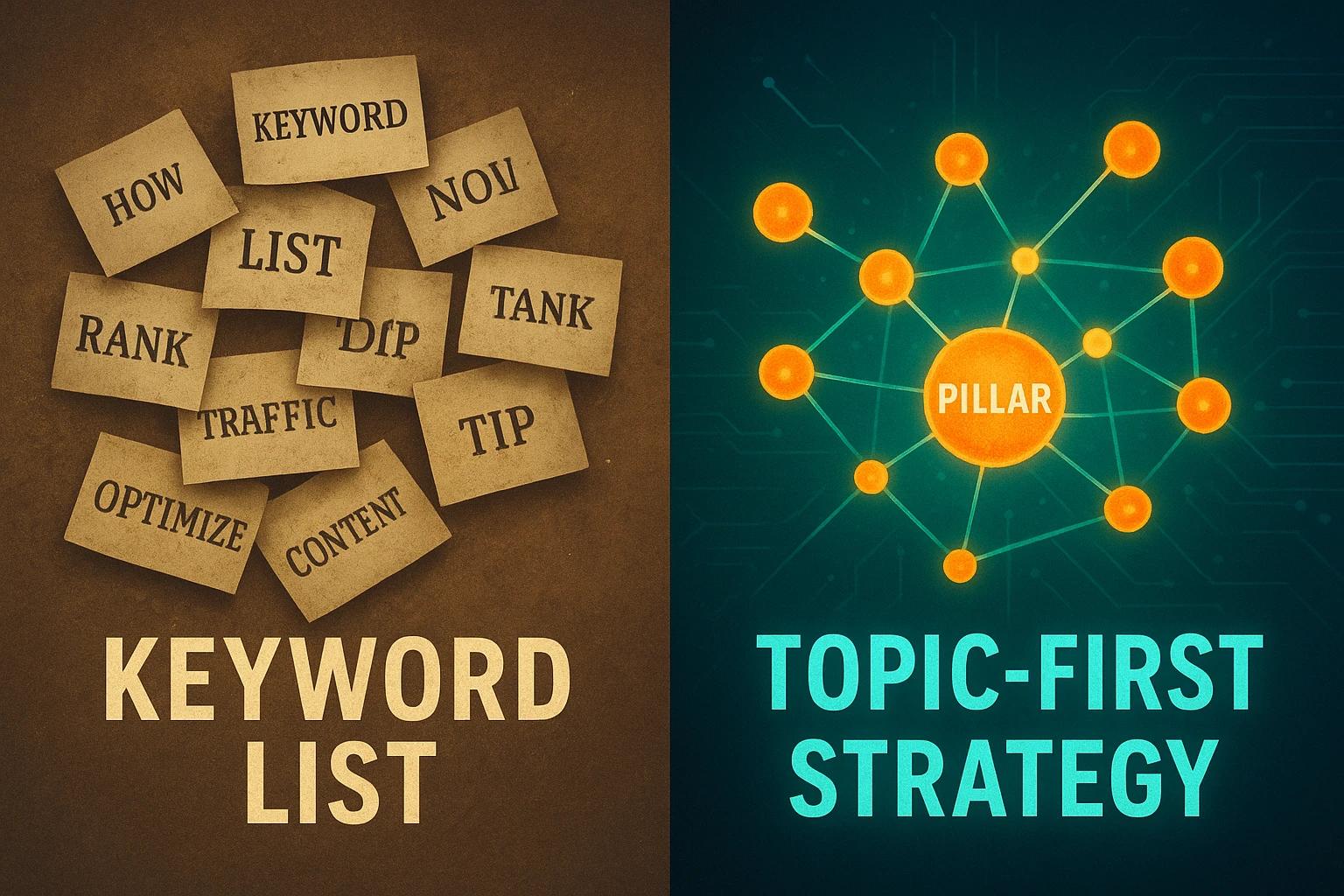
Topic-First Content Strategy for AI-Driven Search
Discover why focusing on topics over keywords drives SEO success in AI-powered search environments.
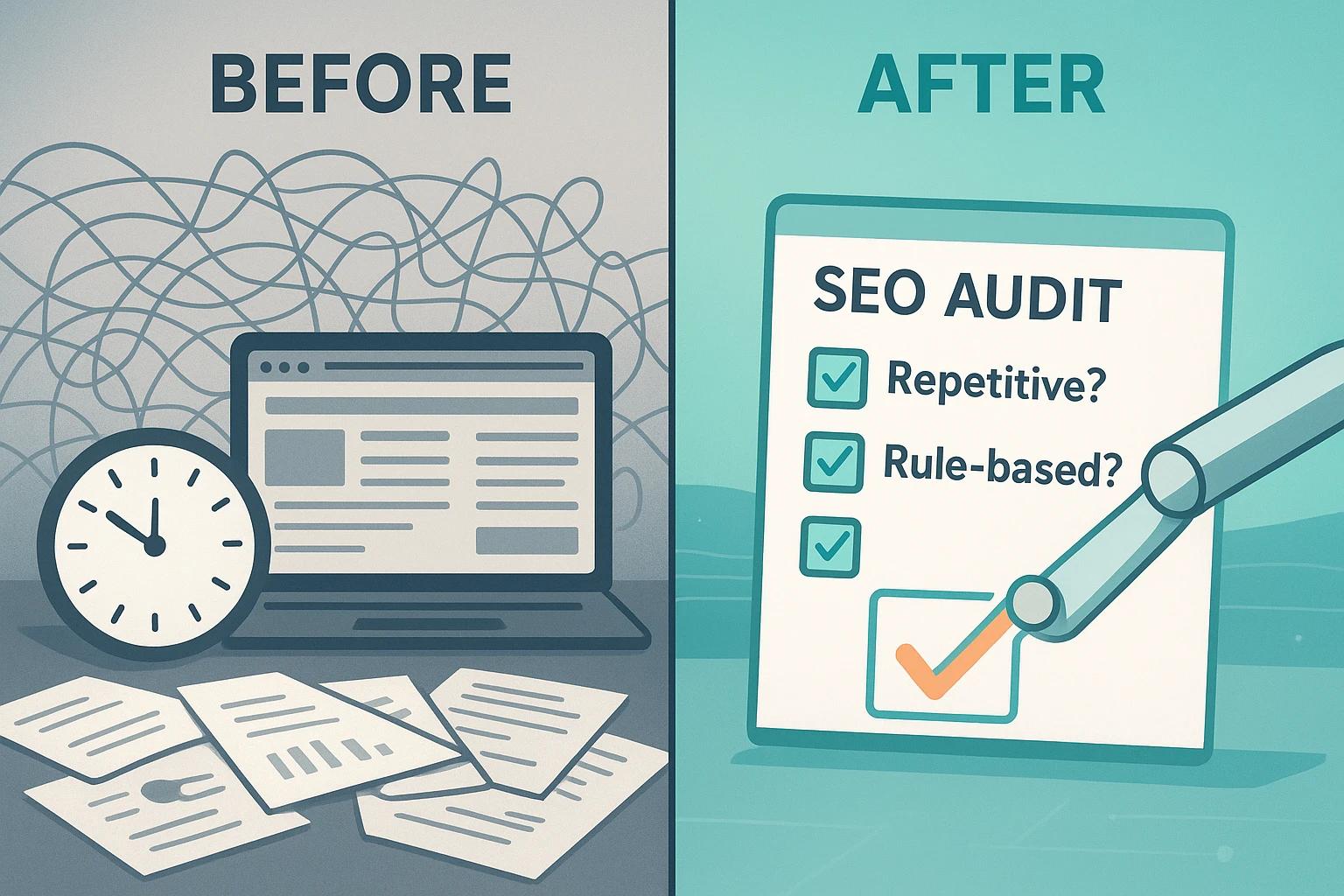
How to Audit SEO for Automation Opportunities
Discover a simple non-technical checklist to identify SEO tasks you can automate and save time for strategic work.
5 Signs Your Content Workflow Is Blocking Growth
Discover common content workflow problems slowing your growth and how automation can help improve efficiency and results.