
5 Signs Your Content Workflow Is Blocking Growth (and Where Automation Helps)
Ever feel like your content team is running on a hamster wheel? You’re publishing, but not progressing. You’re busy, but not growing. You have brilliant ideas and a talented team, but your organic traffic graph is stubbornly flat.
If this sounds familiar, the problem might not be your strategy or your people. It’s often the invisible, friction-filled process running in the background: your content workflow. This isn’t just about to-do lists; it’s the operational engine that turns great ideas into Google-ranking, audience-growing assets. When that engine sputters, your growth stalls.
Let's look at what a broken workflow really costs you and how to spot the warning signs.
What is a Content Workflow, Really?
Think of a content workflow as the assembly line for your digital presence. It’s the step-by-step process that takes an idea from a spark of inspiration to a published, optimized article that attracts and engages readers. A healthy workflow is smooth, predictable, and efficient. A broken one is a maze of bottlenecks, missed deadlines, and lost opportunities.
"Blocking growth" isn't just a buzzword. In content, it looks like this:
- Slower Time-to-Market: Your competitors are publishing content about a new trend while your brief is still waiting for approval.
- Inconsistent Output: You can’t maintain a regular publishing schedule, which signals to search engines that your site isn’t a consistently fresh source of information.
- Wasted Resources: Your team spends more time navigating convoluted processes than they do creating high-impact content.
The good news? The friction points that are holding you back are often the exact places where AI and automation can step in to create a superhighway for your content.

Are You Experiencing These Growth Blockers?
Before you can fix the problem, you have to diagnose it. Use this checklist to see which of these common workflow symptoms are showing up in your own process. Recognizing them is the first step toward unlocking a more efficient, growth-oriented operation.

The 5 Telltale Signs Your Workflow Needs an Upgrade
Let’s dive into the five most common signs that your workflow is holding you back and explore how targeted automation can clear the path for growth.
### Sign 1: The 'Great Idea' Graveyard and Slow-Moving Briefs
The Symptom: Your team has a spreadsheet, Trello board, or Slack channel filled with dozens of "great ideas" that never go anywhere. When an idea is chosen, creating a comprehensive brief that satisfies everyone—from the writer to the SEO specialist—takes weeks of back-and-forth emails.
Why It Blocks Growth: This is a classic speed-to-market killer. While you’re debating the finer points of a brief, your competitors are already ranking for the topic. This ideation bottleneck means you’re constantly playing catch-up, missing out on timely trends and leaving valuable keyword opportunities on the table.
Where Automation Helps: Modern AI platforms can transform this process. Instead of manually brainstorming, AI can analyze your website, your competitors, and current search trends to generate a data-backed content plan filled with high-opportunity topics. It can then draft a detailed, SEO-optimized brief for each topic in minutes, not weeks. This eliminates blank-page paralysis and ensures every piece of content is built on a strategic foundation from the very beginning.
### Sign 2: Your Content Calendar Looks More Like a Wish List
The Symptom: You meticulously plan a content calendar, assigning publish dates for every article. But by the end of the month, half the dates are red. Deadlines are constantly pushed, articles get stuck in review, and the cadence you aimed for feels more like a suggestion than a rule.
Why It Blocks Growth: Consistency is king in the eyes of Google and your audience. An erratic publishing schedule hurts your SEO authority and erodes reader trust. It kills your momentum and prevents you from building a reliable library of content that compounds in value over time.
Where Automation Helps: This is a project management problem that automation excels at solving. An integrated content platform can automate the entire lifecycle: when a draft is ready, the editor is automatically notified. Once approved, it moves to the publishing queue. Some systems can even handle publishing directly to your CMS (like WordPress or Webflow) on a pre-set schedule, ensuring you never miss a beat. This creates a predictable rhythm that search engines love.
### Sign 3: Quality Feels Like a Roll of the Dice
The Symptom: You read one article and it perfectly captures your brand's voice and expertise. The next one feels like it was written by a completely different company. There's no consistent tone, style, or depth, making your brand feel fragmented and unreliable.
Why It Blocks Growth: Inconsistent quality undermines your authority. If readers don't know what to expect, they won't come back. This lack of a cohesive voice weakens your brand identity and makes it difficult to build a loyal audience—a key factor in long-term organic growth.
Where Automation Helps: Think of AI as your ultimate brand guardian. You can train it on your specific style guide, tone of voice, and even past high-performing articles. AI-assisted writing and editing tools can then ensure every single draft adheres to these guidelines, checking for tone, clarity, and brand consistency. It’s like having an editor who has perfectly memorized your brand book and can review every piece of content instantly.
### Sign 4: Your Best Ideas Are One-and-Done
The Symptom: Your team publishes a fantastic, in-depth guide that performs well. And then… nothing. It sits in your blog archive while the team scrambles to create the next new thing. There’s no process for updating old content, repurposing it for other channels, or building topic clusters around your winners.
Why It Blocks Growth: You're leaving massive amounts of value on the table. A single pillar post can be repurposed into social media updates, a video script, an email newsletter, and more, maximizing its reach. Furthermore, failing to perform a [content gap analysis] or update existing posts with new information means you’re letting valuable SEO assets decay over time.
Where Automation Helps: AI is brilliant at identifying these hidden opportunities. It can scan your existing content library and suggest articles that need a refresh, identify keyword gaps you could fill, and even auto-generate repurposed snippets for different channels. This turns your content from a disposable asset into a compounding one, squeezing every drop of SEO juice out of the work you’ve already done.
### Sign 5: Handoffs Feel Like a Game of Telephone
The Symptom: The writer gets feedback from the editor, then separate, sometimes conflicting, feedback from the SEO lead via Slack. The final draft is sent back, but a key statistic was lost somewhere in a long email chain. Every handoff is a potential point of failure and confusion.
Why It Blocks Growth: Communication silos are efficiency killers. Every minute your team spends trying to reconcile feedback or hunting down the latest version of a document is a minute they aren't creating. This friction leads to errors, delays, and a final product that often doesn't align with the original strategic goal.
Where Automation Helps: A unified, AI-driven content platform becomes the single source of truth. The strategy, the brief, the draft, the edits, and the optimization checklist all live in one place. Automated notifications handle the handoffs, ensuring the right person sees the right version at the right time. This breaks down silos and creates a transparent, seamless flow from start to finish, allowing your team to focus on quality, not coordination.
From Chaos to Clarity: Visualizing an Automated Workflow
The difference between a manual, chaotic workflow and an automated one is night and day. One is characterized by constant fire-fighting, missed deadlines, and inconsistent quality. The other is a streamlined, predictable system designed for one thing: growth. It moves your team from being reactive to proactive, freeing up their creative and strategic energy.
When you start looking at [AI SEO solutions], think about which of these bottlenecks they are designed to solve. The goal isn't just to write faster; it's to build a smarter, more resilient content engine.

Frequently Asked Questions
### What is a content workflow?
A content workflow is the structured process your team follows to take a piece of content from the initial idea stage all the way through to publication and analysis. It includes steps like ideation, research, briefing, writing, editing, SEO optimization, and scheduling.
### Isn't automation just for big companies with huge budgets?
Not anymore. The rise of AI-driven platforms has made powerful content automation accessible and affordable for businesses of all sizes, including small businesses, coaches, and consultants. These tools are designed to level the playing field, giving smaller teams the power to compete with larger content operations.
### Will AI replace my content team?
This is a common concern, but the most effective approach is to view AI as an assistant, not a replacement. Automation handles the repetitive, time-consuming tasks (like drafting briefs, scheduling posts, and checking for consistency), freeing up your human team members to focus on what they do best: high-level strategy, creativity, and connecting with your audience.
### How do I start automating my content workflow?
Start small. Use the signs in this article to identify your single biggest bottleneck. Is it ideation? Is it scheduling? Then, look for a tool or process that specifically addresses that one pain point. Once you see the benefits, you can begin to integrate automation into other parts of your workflow.
Your Next Step: From Diagnosis to Action
Recognizing that your workflow is the source of friction is the "aha moment" that unlocks real change. An inefficient process isn't just a minor annoyance; it's a direct cap on your growth potential.
Use this guide to have an honest conversation with your team. Pinpoint where the delays and frustrations are happening. Once you’ve identified the bottlenecks, you can start to see a clear path forward—one where technology handles the tedious work, and your team is free to create content that truly drives your business forward.

Roald
Founder Fonzy — Obsessed with scaling organic traffic. Writing about the intersection of SEO, AI, and product growth.
Stop writing content.
Start growing traffic.
You just read about the strategy. Now let Fonzy execute it for you. Get 30 SEO-optimized articles published to your site in the next 10 minutes.
No credit card required for demo. Cancel anytime.
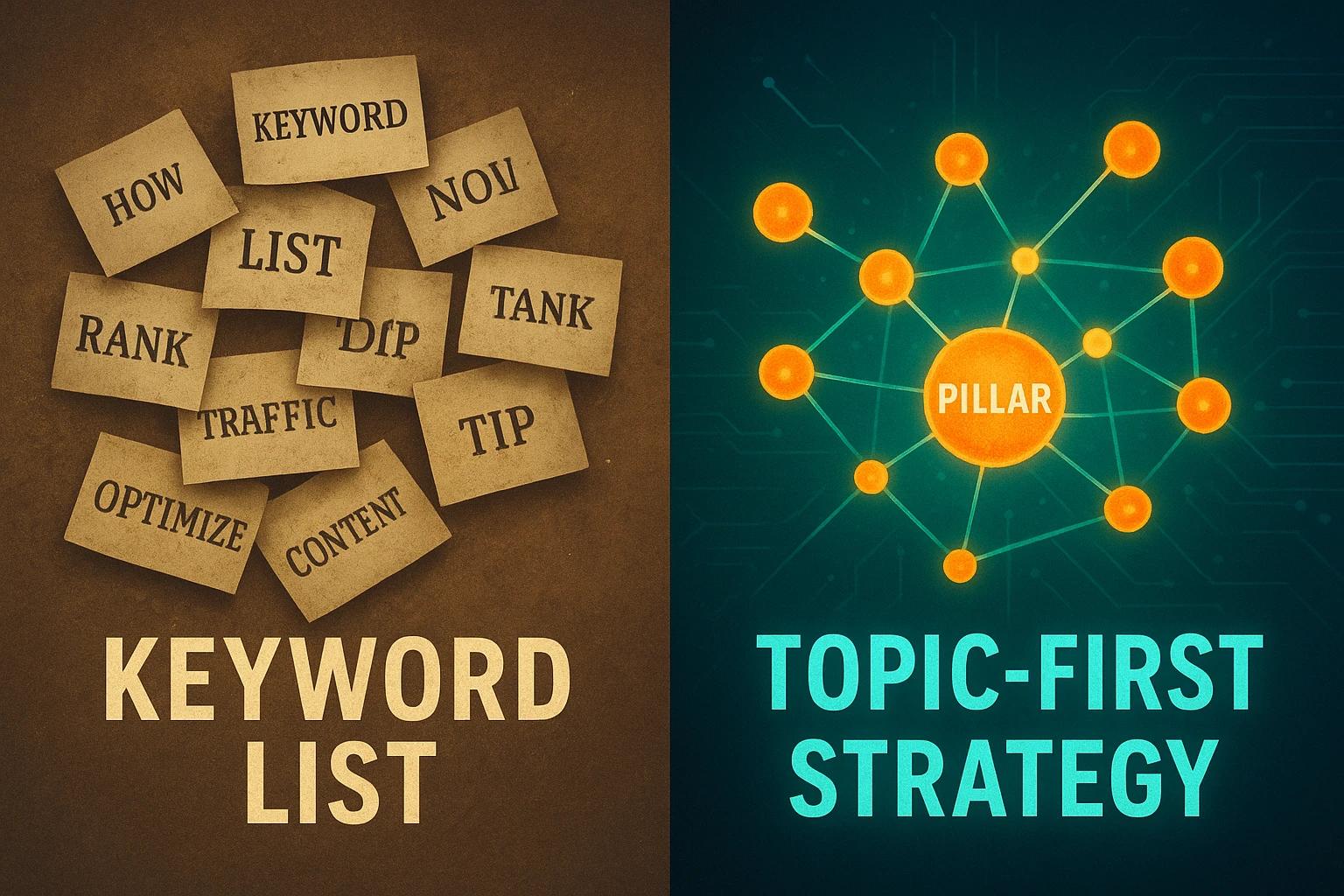
Topic-First Content Strategy for AI-Driven Search
Discover why focusing on topics over keywords drives SEO success in AI-powered search environments.
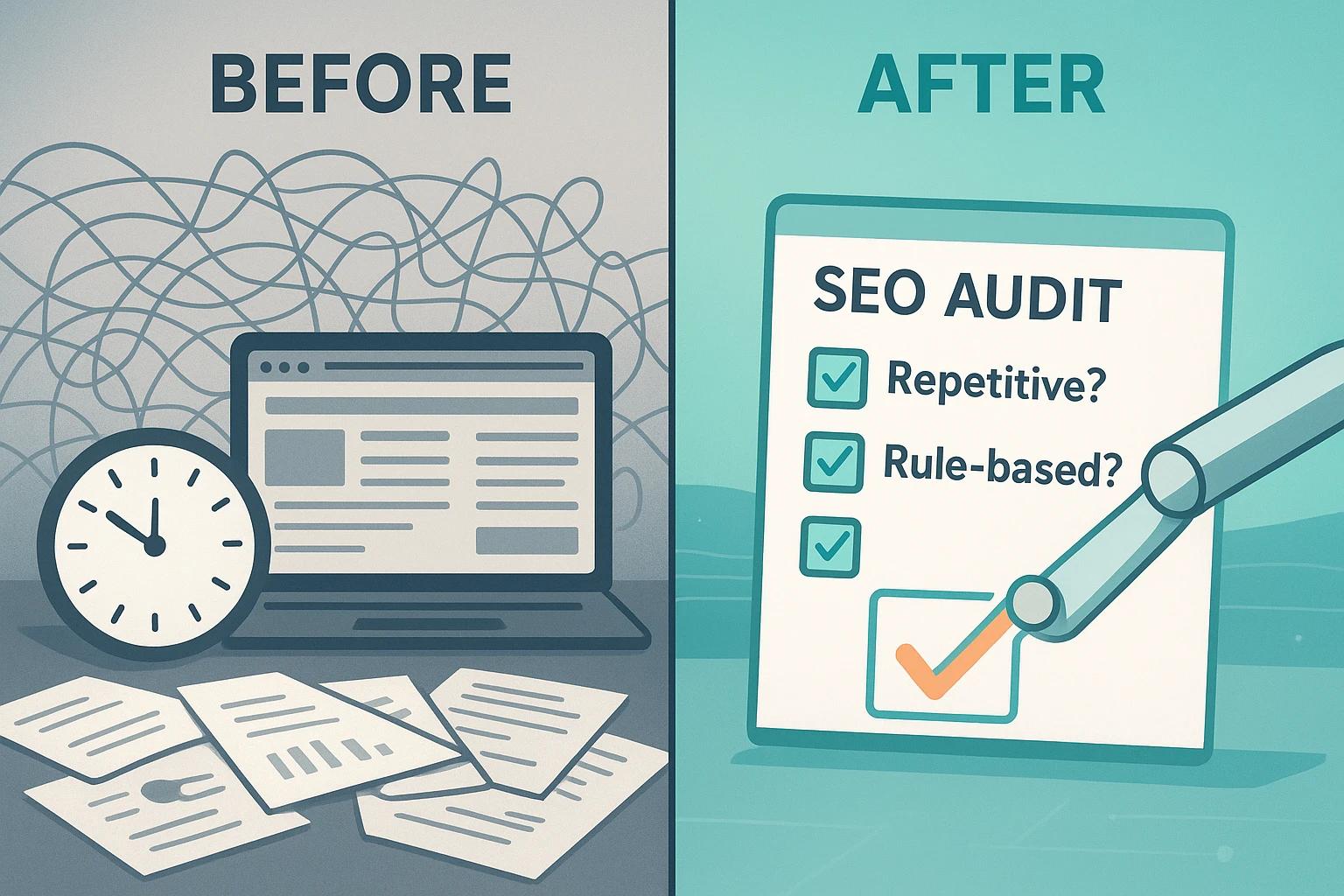
How to Audit SEO for Automation Opportunities
Discover a simple non-technical checklist to identify SEO tasks you can automate and save time for strategic work.

Common AI Content Myths and How to Avoid Them
Learn the top myths about AI content and how to use AI effectively to create valuable, high-quality content.