Beyond the Keyword: The Modern Agency's Guide to Building Unshakeable Topic Authority
Ever had that sinking feeling? You’ve meticulously researched high-volume keywords, crafted content for a client, and hit publish. Yet, weeks later, the traffic needle barely moves. Rankings are stagnant, the client is getting antsy, and you're left wondering if you're just one algorithm update away from starting over.
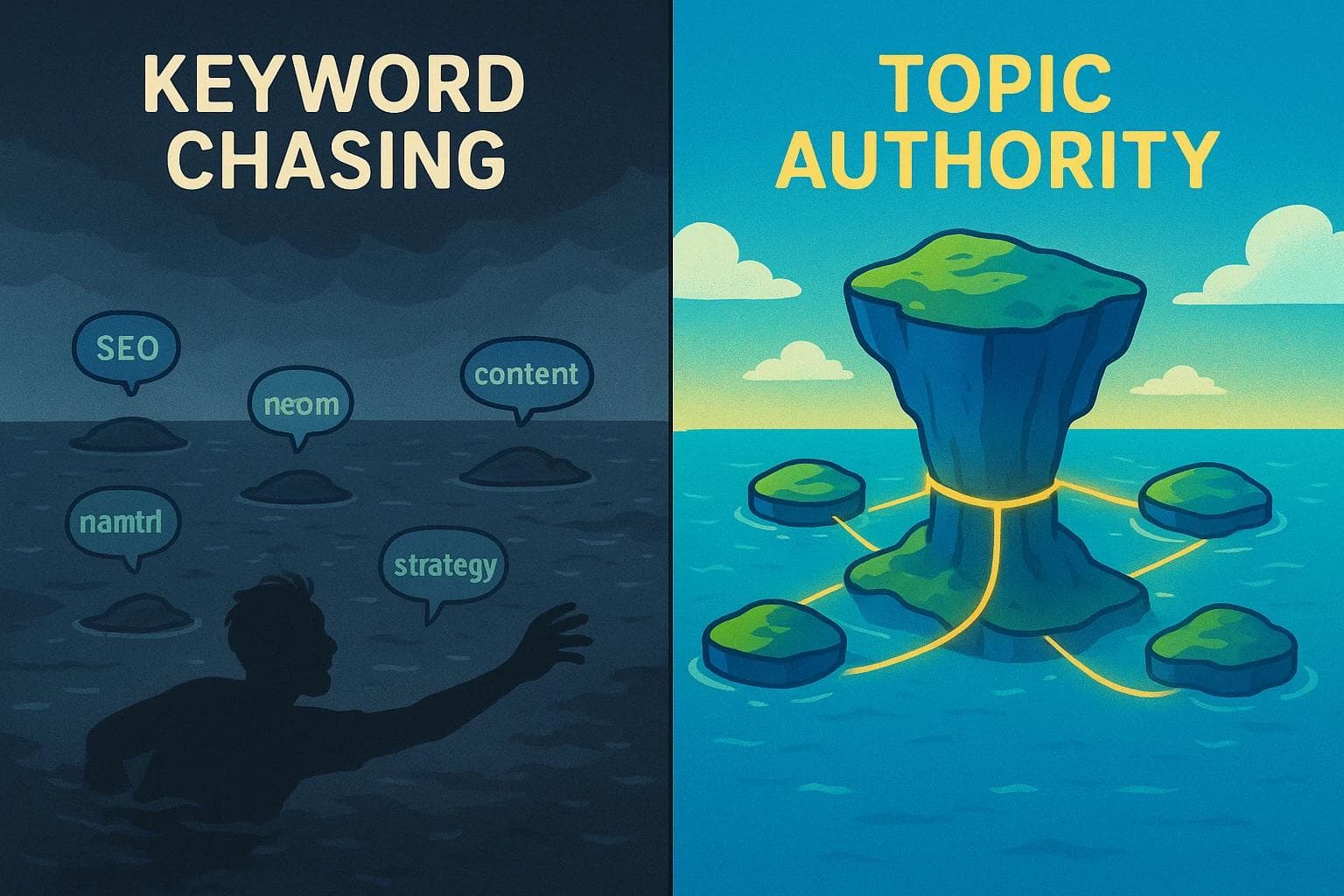
This isn't a sign of failure; it's a signal of a fundamental shift. For years, SEO was a game of "keyword chasing"—a frantic race to rank for isolated, high-traffic terms. But Google no longer thinks in keywords; it thinks in concepts. And the agencies that will thrive in this new era are the ones that stop chasing keywords and start building topic authority.
This guide is your blueprint for making that shift. We'll move beyond the jargon to give you a practical framework for building deep, sustainable authority for your clients, turning their websites into the go-to resource in their niche and making your agency an indispensable partner.
The Foundation: Shifting from Keywords to Concepts
Before we build the house, we need to understand the foundation. The leap from keyword chasing to topic authority is less about new tactics and more about a new way of thinking.
What Is "Keyword Chasing" (And Why Is It Fading)?
Keyword chasing is the traditional SEO practice of targeting individual keywords one by one. An agency might create one article for "best running shoes for flat feet," another for "marathon training shoes," and a third for "trail running footwear."
The Problem: These articles exist as isolated islands. They don't connect to each other, show a comprehensive understanding of the broader topic of "running footwear," or signal to Google that your client is a true expert. In an age of semantic search—where search engines understand the relationships between words and ideas—this approach is simply outdated. It focuses on what people search for, not why they search for it.
What Is "Topic Authority"?
Topic authority is the depth and breadth of expertise your client’s website demonstrates on a specific subject. Instead of isolated islands, you build an interconnected ecosystem of content.
Imagine your client's website as a library. Keyword chasing is like having a few random, popular books scattered on the shelves. Topic authority is like having an entire, meticulously organized wing dedicated to a single subject, with an introductory guide, detailed chapters, and advanced reference materials, all cross-referenced.
Google sees this comprehensive coverage and concludes, "This site is a genuine authority on this topic." This trust is rewarded with higher, more stable rankings across a wide range of related search queries. It’s a core component of demonstrating Experience, Expertise, Authoritativeness, and Trustworthiness (E-E-A-T), which is critical for ranking today.

The Agency Blueprint: A 5-Step Process for Building Topic Authority
Understanding the concept is the first step. Executing it for clients is what sets your agency apart. This requires a repeatable, strategic process that moves from discovery to creation.

Step 1: Topic Discovery & Validation
First, identify the core topics where your client can realistically become an authority.
- Audience Research: Go beyond keywords. What are the fundamental problems and questions your client's audience has? What are their goals? Forums like Reddit, Quora, and industry-specific communities are gold mines for this.
- Competitor Analysis: Look at the top-ranking sites for your client's main service. Don't just look at what keywords they rank for; analyze their content structure. Are they building topic clusters? Where are their topical gaps? This is your opportunity.
- Internal Audit: Review your client’s existing content. They may already have a few strong "cluster" pieces without realizing it. Identify these pockets of strength to build upon.
Step 2: Build Topic Clusters with Pillar Pages
This is where the strategy becomes tangible. A topic cluster consists of two parts:
- Pillar Page: A broad, comprehensive piece of content that covers the core topic from end to end. Think of it as a "definitive guide." For a marketing agency, a pillar page might be "The Ultimate Guide to Content Marketing for Small Businesses."
- Cluster Content: A series of more specific articles that explore subtopics mentioned in the pillar page in greater detail. For the content marketing pillar, cluster content could include articles like "How to Create a Content Calendar," "10 Ways to Repurpose Blog Content," and "Measuring Content Marketing ROI."
The "Aha" Moment: The magic happens with internal linking. Every cluster article links back up to the pillar page, and the pillar page links out to each cluster article. This creates a powerful, organized structure that signals deep expertise to search engines.
Step 3: Integrate Strategic Keyword Research
This is a crucial point where agencies get confused. Building topic authority doesn't mean you abandon keywords. It means you use them more intelligently.
Instead of chasing isolated keywords, you use keyword research to:
- Validate Subtopics: Ensure your chosen cluster topics have sufficient search demand.
- Inform Content Angles: Discover specific questions people are asking (e.g., "how to create a content calendar for a small team") to make your content more relevant.
- Optimize On-Page SEO: Use primary and secondary keywords naturally within your pillar and cluster content to help Google understand its specific focus.
Step 4: Create Content with "Information Gain"
In a world flooded with content, being "good" isn't enough. Your content needs to provide "information gain"—offering a unique perspective, new data, or a more comprehensive explanation than what already exists.
For every piece of content, ask:
- Are we just rephrasing the top 3 results on Google?
- Can we include a unique case study, an expert quote, or a proprietary framework?
- Can we explain this concept more clearly or with better examples than anyone else?
This focus on quality is what builds true authority and earns the trust of both users and search engines.
Step 5: Optimize and Internally Link
As you publish your cluster, a deliberate internal linking strategy is your final, critical step. These links are the threads that weave your individual articles into a cohesive web of authority. Ensure every cluster piece links to its pillar and to other relevant cluster pieces. This distributes "link equity" throughout the topic cluster and helps Google discover and index your content more efficiently.
The Scalability Problem: Why This Is Hard for Agencies (And How to Solve It)
The blueprint above is powerful. But as you read it, you probably felt a familiar tension: "This sounds great, but how can we possibly do this for 10, 20, or 30 clients? The manual effort is enormous."
You're right. Manually planning topic clusters, managing writers, ensuring consistent quality, and implementing a perfect internal linking strategy across dozens of clients is an operational nightmare. This is where most agencies abandon the strategy and revert to the comfort of chasing one-off keywords.
But the most successful agencies don't do it manually. They rely on systems and platforms designed for this exact challenge. To build topic authority at scale, you need a centralized solution that can:
- Analyze a client's niche to automatically identify topic gaps and opportunities.
- Generate data-driven content plans and topic clusters without weeks of manual research.
- Automate high-quality content creation to maintain a consistent publishing velocity.
- Implement smart internal linking across all new and existing content automatically.
- Track performance to prove the ROI of your topical strategy to clients.
Without a scalable system, you're building a skyscraper with hand tools. It’s possible, but it's slow, expensive, and prone to error. With the right platform, you have the heavy machinery needed to build authority efficiently and profitably. A powerful system turns an excellent strategy into a scalable service offering.

Frequently Asked Questions
### What's the difference between Topic Authority and Domain Authority?
Domain Authority (a metric created by Moz) is a predictive score of a website's overall likelihood to rank. It's heavily influenced by the quantity and quality of backlinks to the entire domain. Topic Authority is much more specific; it's a measure of how expert and comprehensive a site is on a particular subject. You can have a high Domain Authority but low Topic Authority in a new area you're trying to target.
### How do you measure Topic Authority?
There isn't a single, universal metric. Instead, you measure its effects:
- Keyword Footprint: An increase in the number of keywords your client ranks for within a specific topic.
- Impressions for Core Topics: Growth in impressions in Google Search Console for queries related to your pillar page.
- Ranking for Long-Tail Keywords: As your authority grows, you'll start ranking for highly specific, long-tail questions without even targeting them directly.
### How long does it take to build Topic Authority?
It's a long-term strategy, not a quick fix. You can start seeing initial movement in 3-6 months, but building true, defensible authority can take a year or more. This is why setting clear expectations with clients is crucial. The payoff is more stable, sustainable traffic that is less vulnerable to algorithm updates.
### How does AI and Answer Engine Optimization (AEO) affect this?
It makes topic authority more important, not less. AI-powered search engines and Google's AI Overviews aim to provide direct, comprehensive answers. They synthesize information from the most authoritative sources. By building a deep well of interconnected, expert content, you position your client's website as a primary source for these AI systems to pull from, future-proofing their visibility.
Your Next Move: From Chasing to Building
The shift from chasing keywords to building authority is the single most important strategic pivot your agency can make to deliver lasting results for clients. It aligns your work with the direction search is heading, builds a durable competitive advantage, and ultimately makes your services more valuable.
Start small. Pick one client and conduct a topic gap analysis this week. Map out one pillar page and three cluster articles. The journey begins with a single step, and the reward is leaving the frantic chase behind for good, and building something that lasts.

Roald
Founder Fonzy — Obsessed with scaling organic traffic. Writing about the intersection of SEO, AI, and product growth.
Stop writing content.
Start growing traffic.
You just read about the strategy. Now let Fonzy execute it for you. Get 30 SEO-optimized articles published to your site in the next 10 minutes.
No credit card required for demo. Cancel anytime.
How Content Frequency Affects SEO Rankings and What to Prioritize
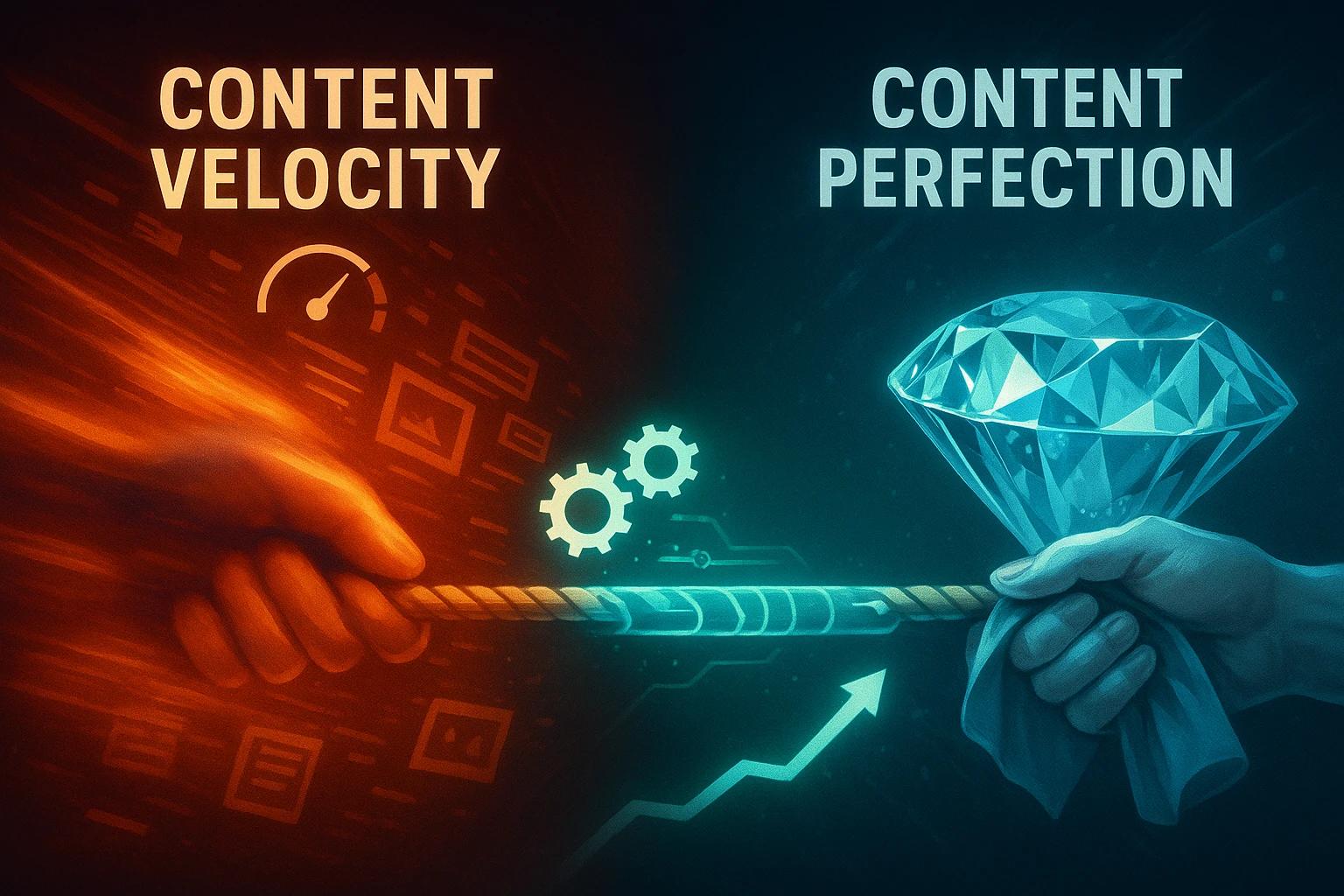
Explore how balancing content speed and quality impacts SEO and learn when to focus on velocity or perfection.
5 Signs Your Content Strategy is Losing Customers
Discover key signs your content strategy is stuck and quietly losing customers before it impacts your growth.

How to Measure SEO ROI with Business Metrics
Learn simple ways to measure SEO ROI focusing on leads, conversions, cost, and customer value beyond keywords and rankings.