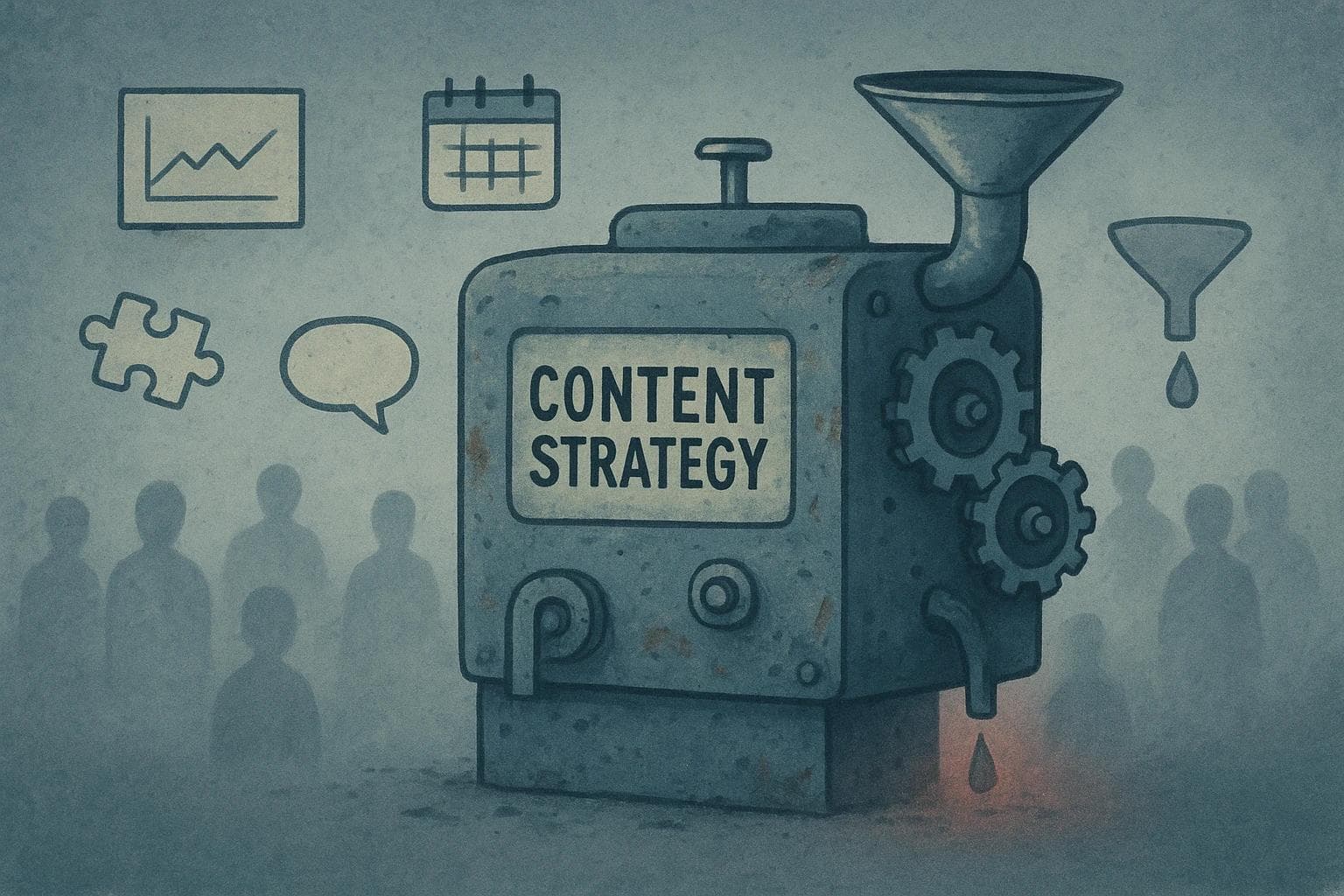
5 Signs Your Content Strategy is Stuck and Quietly Losing Customers
You’re doing all the “right” things. You publish blog posts. You’re active on social media. You even sent out a newsletter last month. From the outside, it looks like you have a content marketing plan. But when you look at your analytics, you feel a familiar sense of disappointment. Traffic is flat, engagement is a ghost town, and the leads… well, they’re not exactly pouring in.
It feels like you're shouting into a void.
This is a frustratingly common scenario. Many businesses mistake activity for strategy. They create content without a clear roadmap, hoping something eventually sticks. But a lack of strategy isn't just inefficient—it's actively costing you. Every potential customer who searches for a solution you offer but can’t find you is a quiet loss. Every visitor who lands on a random, unhelpful blog post and leaves is a missed opportunity.
Your content strategy might not be failing with a bang, but with a slow, silent leak of potential customers. The first step to fixing the leak is knowing where to look.

The 5 Silent Killers of Your Content Strategy
Let's pull back the curtain on the subtle symptoms that indicate your content efforts are stuck in neutral. Recognizing these signs is the "aha moment" you need to shift from simply creating content to building a customer-attracting engine.
Sign 1: Your Publishing Schedule is Unpredictable
What it looks like: You publish three articles one week, then nothing for a month. Your blog or social media feeds have noticeable gaps, followed by a flurry of activity when you feel a burst of inspiration (or guilt).
Why it happens: This is the classic sign of treating content as a task to be checked off, not a core business function. It often stems from a lack of resources, time, or a clear plan outlining what to create and when. You’re operating in a reactive "content tactic" mode, not a proactive "content strategy" mode.
How it quietly loses customers:
- Erodes Trust: An inconsistent presence makes your brand seem unreliable. If a potential customer visits your site and sees the last blog post was from six months ago, they may question if you're still in business or an authority in your field.
- Damages SEO: Search engines like Google reward consistency. Regular publishing signals that your site is an active, valuable resource, which helps improve your rankings. Sporadic content tells algorithms you’re not a dependable source of fresh information, making it harder for new customers to find you.
Quick Self-Assessment: Can you look at your calendar and confidently say what content is going live two weeks from now? If the answer is no, you’re likely running on inconsistency.
Sign 2: You Suffer from "Random Acts of Content"
What it looks like: Your blog is a collection of disconnected ideas. One day you write about an industry trend, the next a case study, and the week after a post about your company culture. There’s no clear thread connecting your content or guiding the reader on a journey.
Why it happens: This occurs when there's no defined topic coverage or "content pillar" strategy. You're chasing shiny objects or writing about what feels easy that day, rather than systematically covering the topics your ideal customer is searching for.
How it quietly loses customers:
- Fails to Build Authority: To be seen as an expert, you need to build a deep reservoir of content around specific topics. Random posts make you a jack-of-all-trades and master of none in the eyes of both Google and your audience. Potential customers looking for a specialist will go elsewhere.
- Confuses Your Audience: A visitor who lands on one article has no clear next step. Without related articles to explore, they have no reason to stick around. You solve one-off problems instead of becoming their go-to resource.
Quick Self-Assessment: Could a new visitor understand your core expertise by looking at the titles of your last 10 articles?
Sign 3: Your Traffic is a Flatline, Not a Growing Asset
What it looks like: You get a small spike in traffic on the day you publish a new article (mostly from your email list or social channels), but it quickly drops back to baseline. Your overall organic traffic isn't growing month-over-month.
Why it happens: Your content isn't built for the long term. It lacks SEO focus, meaning it’s not optimized to answer the specific questions people are typing into Google. This prevents you from building "compounding traffic"—organic traffic from search engines that grows over time as your articles rank higher and for more keywords.
How it quietly loses customers: You are invisible to the vast majority of your potential market—the people who are actively searching for solutions but don't know your brand exists yet. You're relying solely on your existing audience instead of building a system that attracts new prospects 24/7.
Quick Self-Assessment: Do your articles from 6-12 months ago still bring in new traffic every single month?
Sign 4: Your Engagement Metrics are Abysmal
What it looks like: Crickets. Your meticulously crafted articles get few to no comments, shares, or social media interactions. Your "time on page" analytics are low, indicating people click, skim, and leave almost immediately.
Why it happens: This is a direct symptom of a disconnect with your audience. The content might be too generic, overly promotional, or simply not addressing their real pain points. It’s a sign you haven't clearly defined your target demographic or understood their true needs. As the experts at mightyandtrue.com point out, low engagement is often tied to a failure in content relevancy.
How it quietly loses customers: Lack of engagement means you're not building a community or a relationship. Customers buy from brands they know, like, and trust. If your content doesn't resonate, it fails to build that connection, and potential leads remain just that—potential. They don't become part of your ecosystem.
Quick Self-Assessment: Does your content ask questions and invite conversation, or does it just broadcast information?
Sign 5: You're Not Converting Readers into Anything
What it looks like: People might be reading your content, but that's where the journey ends. They aren't signing up for your newsletter, downloading your free resource, or requesting a demo. Your content exists in a vacuum, completely disconnected from your business goals.
Why it happens: Your content lacks a clear purpose or call-to-action (CTA). You haven’t mapped your content to the customer journey, so you're not providing the right information or the right next step at the right time. It’s like having a great conversation but forgetting to get the person’s phone number.
How it quietly loses customers: You're doing the hard work of attracting an audience but failing to capture their interest in a meaningful way. Every reader who leaves without taking a next step is a potential lead who has slipped through your fingers, likely ending up on a competitor's site that makes their journey clearer.
Quick Self-Assessment: Does every piece of content you create have a clear, logical next step for the reader to take?
Moving from Symptoms to Strategy: A Path Forward
Recognizing these signs is a crucial first step, but it can also feel overwhelming. Where do you even begin to fix a strategy that's broken on multiple fronts? The key is to move from randomly treating symptoms to methodically diagnosing the root cause.

A true content strategy overhaul involves a few core shifts:
- Define Your Audience: Get painfully specific about who you are talking to. What are their goals? What challenges do they face? What questions are they asking at each stage of their journey?
- Establish Your Pillars: Instead of random topics, identify 3-5 core "pillars" of expertise. Build topic clusters around these pillars to create a web of interconnected content that establishes your authority.
- Align Content with Business Goals: Every article, video, or post should have a purpose. Is it to build awareness? Generate leads? Nurture existing prospects? Define success before you start creating.
- Systematize and Schedule: Create a content calendar. This transforms publishing from a sporadic task into a consistent, reliable process. Consistency is the engine of trust and SEO.
The Content Strategy Rebuilding Blueprint
Rebuilding doesn't have to be complicated. It's about getting back to basics and creating a solid foundation. Focus on these six core elements to build a strategy that actively attracts and retains customers instead of quietly losing them.

Creating, managing, and optimizing this kind of strategic engine takes significant effort. It requires research, planning, consistent execution, and ongoing analysis. This is why many businesses are turning to automated platforms to handle the heavy lifting. A system driven by a smart Fonzy AI approach can analyze your market, develop a data-backed content plan, and automate the creation and publishing process, ensuring you never suffer from "random acts of content" again.
By shifting your mindset from content creation to strategic brand building, you can turn your website into a powerful magnet for your ideal customers, ensuring they find you, trust you, and ultimately, do business with you.
Frequently Asked Questions (FAQ)
Q1: What are the most common signs of a failing content strategy?
The five most common signs are: 1) Inconsistent publishing, which erodes trust and SEO. 2) "Random acts of content" with no clear connection, which fails to build authority. 3) Stagnant or non-compounding traffic, indicating a lack of SEO focus. 4) Low engagement, signaling a disconnect with your audience's needs. 5) Poor conversion rates, meaning your content isn't guiding readers toward your business goals.
Q2: Why does a content strategy fail?
Content strategies typically fail for a few key reasons. The most common is the lack of a true strategy in the first place—mistaking a list of tactics (like "post on social media") for a plan. Other reasons include an unclear understanding of the target audience, a disconnect between content and business objectives, insufficient resources to maintain consistency, and a failure to measure and adapt based on performance data.
Q3: How do I fix a broken content strategy?
Start with a diagnosis. Perform a content audit to see what's working and what isn't. Then, go back to fundamentals:
- Re-define your audience: Create detailed buyer personas.
- Set clear goals: What do you want your content to achieve (e.g., increase organic leads by 20%)?
- Develop content pillars: Choose 3-5 core topics you want to own.
- Create a calendar: Plan your content at least a month in advance to ensure consistency.
- Measure everything: Track key metrics to understand your impact and make data-driven improvements.
Q4: What are the "5 C's of Content" I should focus on?
The 5 C's provide a great framework for creating effective content. They are:
- Clarity: Is your message easy to understand?
- Consistency: Are you publishing regularly and maintaining a consistent tone?
- Creativity: Are you presenting information in an engaging and unique way?
- Credibility: Is your content well-researched, accurate, and trustworthy?
- Customer-Centricity: Is your content focused on solving your audience's problems, not just promoting your brand?
Q5: How long does it take to see results from a new content strategy?
While you can see immediate results from promoting content to your existing audience, building a strong organic presence takes time. It typically takes 6-9 months of consistent, high-quality, SEO-focused content creation to see significant compounding traffic and lead growth. The key is patience and persistence. Content strategy is a long-term investment, not a short-term campaign.

Roald
Founder Fonzy — Obsessed with scaling organic traffic. Writing about the intersection of SEO, AI, and product growth.
Stop writing content.
Start growing traffic.
You just read about the strategy. Now let Fonzy execute it for you. Get 30 SEO-optimized articles published to your site in the next 10 minutes.
No credit card required for demo. Cancel anytime.
How Content Frequency Affects SEO Rankings and What to Prioritize
Explore how balancing content speed and quality impacts SEO and learn when to focus on velocity or perfection.

How to Measure SEO ROI with Business Metrics
Learn simple ways to measure SEO ROI focusing on leads, conversions, cost, and customer value beyond keywords and rankings.

The Role of Human Oversight in AI-Driven Content
Learn how human oversight ensures quality and brand voice in AI-generated content for agencies.