How Structured Data and Knowledge Graph Improve Answer Visibility


Beyond the Snippet: How Structured Data and the Knowledge Graph Make You an AI's Favorite Answer
Ever asked your phone a question like, "Hey Siri, what are the best ways to repot an orchid?" and gotten a perfect, spoken answer? You probably listened, got the info you needed, and moved on. But have you ever stopped to wonder where that answer came from?
It wasn't magic. It was the result of a complex digital conversation, and the website that provided the answer did something special to be chosen. It didn't just write good content; it taught search engines how to understand that content on a deeper level.
This is the new frontier of being found online. It's not just about ranking #1 anymore. It's about becoming the definitive, trusted source that AI assistants and search engines turn to for answers. Getting there requires understanding two foundational concepts: Structured Data and the Knowledge Graph. Let's break down what they are and why they are the keys to your future visibility.
Foundational Concepts: Speaking the Language of Search Engines
To get your content featured by AI, you first need to make sure search engines like Google understand it as well as a human would. That means translating your content from human language into machine-readable language.
What is Structured Data? The Cliff Notes for Your Website
Imagine you hand someone a novel and ask them to find the main character's name. They’d have to read through pages to figure it out. Now, imagine you hand them the same novel but with a cheat sheet attached: Main Character: Jane Eyre. They get the answer instantly.
Structured data is that cheat sheet for your website.
It’s a standardized format of code (often JSON-LD) that you add to your site to explicitly identify and classify page elements. Instead of making Google guess what your page is about, you’re telling it directly:
- "This string of numbers is a product price."
- "This block of text is a step-by-step 'how-to' guide."
- "This company name is our official organization name."
This process, also known as schema markup, removes ambiguity. According to Google's own documentation, adding structured data can enhance your appearance in search results through rich results, like review stars or FAQ dropdowns, making your content more eye-catching and useful.
What is a Knowledge Graph? The Internet's Digital Brain
If structured data is the set of facts, the Knowledge Graph is the web of connections between those facts. Google’s Knowledge Graph is a massive database that understands the real world not as a collection of keywords, but as a network of entities—people, places, organizations, and concepts—and the relationships between them.
This is the leap from "strings" to "things." The search engine no longer just sees the string of letters "E-i-f-f-e-l T-o-w-e-r." It understands the thing—the Eiffel Tower entity—and its relationships:
- Is located in: Paris (another entity)
- Is a type of: Tower (a concept)
- Was designed by: Gustave Eiffel (another entity)
This interconnected web of knowledge is what allows a search engine to answer a complex question like, "How tall is the tower designed by the same person who worked on the Statue of Liberty?" It navigates the relationships to find the answer.

By adding structured data to your site, you are providing clear, verifiable facts (Data) that search engines can use to build understanding (Information) and connect to their broader map of the world (Knowledge). This makes your content a reliable source for their answer engines.
From Theory to Action: A Practical Guide to Getting Seen
Understanding the concepts is the first step. Now, how do you put this knowledge into practice to start influencing your visibility in AI answers and Knowledge Panels?
It starts with a shift in mindset, followed by methodical implementation.
Step 1: Think Like a Librarian (Adopt an Entity-First Mindset)
Before you write a single line of code, you need to stop thinking only about keywords and start thinking about entities. Your business isn't just a collection of services; it's an entity with specific attributes and relationships. Ask yourself:
- What is my core entity? (e.g., "Fonzy.ai," the organization)
- What are its key attributes? (e.g., a logo, an address, a phone number, a founding date)
- What other entities does it offer or relate to? (e.g., "AI Content Automation," a service; "SEO Strategy," a service)
- What questions do our entities answer? (e.g., How do you automate content? What is Answer Engine Optimization?)
Defining these clearly on your website—especially on your homepage, about page, and contact page—and then marking them up with schema creates a solid foundation.
Step 2: Implement and Validate Your Schema
Once you have your entity mindset, you can start marking up your content with the right schema types. While there are hundreds, a few are particularly powerful for answer visibility:
- Organization Schema: Establishes your official brand entity, including your logo, address, and social profiles.
- FAQPage Schema: Marks up question-and-answer pairs, making you a prime candidate for "People Also Ask" boxes and voice search answers.
- HowTo Schema: Breaks down instructions into a clear, step-by-step process that's easy for AI to parse and present.
- Product Schema: Defines product details like price, availability, and reviews, essential for e-commerce.
The key is to implement this code correctly. Always use a tool like Google's Rich Results Test to validate your markup and ensure there are no errors before you deploy it.

The Nuance of Visibility: Common Myths and Hard Truths
This is where many people get stuck. They add the code, the validation tool says it’s perfect, but nothing changes. It’s a common frustration that stems from a few key misconceptions about how this all works.
Myth vs. Reality: Does Schema Directly Fuel AI Answers?
Here’s one of the most misunderstood aspects of structured data. A common belief is that AI models like the one powering Google’s AI Overviews read your structured data directly and use it to formulate answers.
The reality is more indirect, but no less important.
Research and experiments from the SEO community have shown that LLMs (Large Language Models) don't necessarily "read" your JSON-LD code during training. Instead, structured data's primary role is to help Google Search better understand, index, and classify your content. This leads to two major benefits:
- It powers rich results. These visually enhanced listings make your content more authoritative and trustworthy in the eyes of users and, by extension, Google.
- It solidifies your entity. By clearly defining who you are and what you do, you help Google connect your brand to topics in its Knowledge Graph.
An AI is more likely to cite a source that Google already understands and trusts. So while schema isn't a direct "API to the AI," it's a critical step in building the authority that makes you a citable source.

"I Added Schema, So Why Isn't It Working?"
Seeing no change after implementing structured data can be maddening. Here are the most common culprits:
- Technical Errors: Even a single misplaced comma in your JSON-LD can invalidate the entire script. Always use validation tools.
- Policy Violations: You cannot mark up content that is hidden from the user. For example, adding FAQ schema to questions that don't actually appear on the page is a violation that will get your markup ignored.
- Lack of Authority or "Notability": Simply adding
Organizationschema doesn't guarantee a Knowledge Panel. Google's Knowledge Graph is built on confidence. It needs to see consistent information about your brand (name, address, etc.) across multiple trusted sources (your website, Google Business Profile, industry directories, Wikipedia) to establish you as a notable entity. - It's a Guideline, Not a Guarantee: Google states that valid structured data makes you eligible for rich results, but it doesn't guarantee them. Factors like search query, device, location, and overall site quality all play a role.
Frequently Asked Questions (FAQ): Your Structured Data Cheat Sheet
What's the difference between structured data and a knowledge graph?
Structured data is the code you put on your website to label your content for search engines. The Knowledge Graph is the massive, interconnected database within the search engine that uses that data (and data from many other sources) to understand the world. You use structured data to influence the knowledge graph.
Which schema format should I use? JSON-LD, Microdata, or RDFa?
Google recommends JSON-LD. It's implemented as a single script in the <head> or <body> of your HTML, making it much easier to manage and less prone to breaking your site's layout compared to Microdata or RDFa, which are mixed in with your visible content.
Does this guarantee I'll get a rich result or a Knowledge Panel?
No. It makes you eligible, which is a critical first step, but it’s not a guarantee. Visibility depends on Google’s algorithms, the user's query, and your overall site authority and trustworthiness (E-E-A-T).
How can a small business build its entity in the knowledge graph?
Consistency is key.
- Start with
Organizationschema on your website. - Create and fully optimize a Google Business Profile.
- Ensure your business name, address, and phone number (NAP) are identical across all online directories (Yelp, industry-specific sites, etc.).
- Earn mentions and links from other authoritative websites.
Your Next Step: From Learner to Leader
Making your content visible to AI isn't about finding a single technical trick. It's about fundamentally shifting your strategy from chasing keywords to building a clear, authoritative, and machine-readable brand entity.
By translating your content into the language of search engines with structured data, you build a foundation of trust and clarity. You're not just creating pages; you're contributing reliable facts to the internet's brain.
Your journey starts with a simple audit. Look at your most important pages—your homepage, your top service pages, your best blog posts—and ask: "Does a machine understand what this page is truly about?" If the answer isn't a clear "yes," you've found your starting point.
Now that you understand the foundation of structured data, you're ready to explore more advanced topics like developing a complete Answer Engine Optimization strategy. And if you're looking to put this all on autopilot, understanding how AI-driven content automation can build your entity at scale is the logical next step.
Roald
Founder Fonzy — Obsessed with scaling organic traffic. Writing about the intersection of SEO, AI, and product growth.
Stop writing content.
Start growing traffic.
You just read about the strategy. Now let Fonzy execute it for you. Get 30 SEO-optimized articles published to your site in the next 10 minutes.
No credit card required for demo. Cancel anytime.
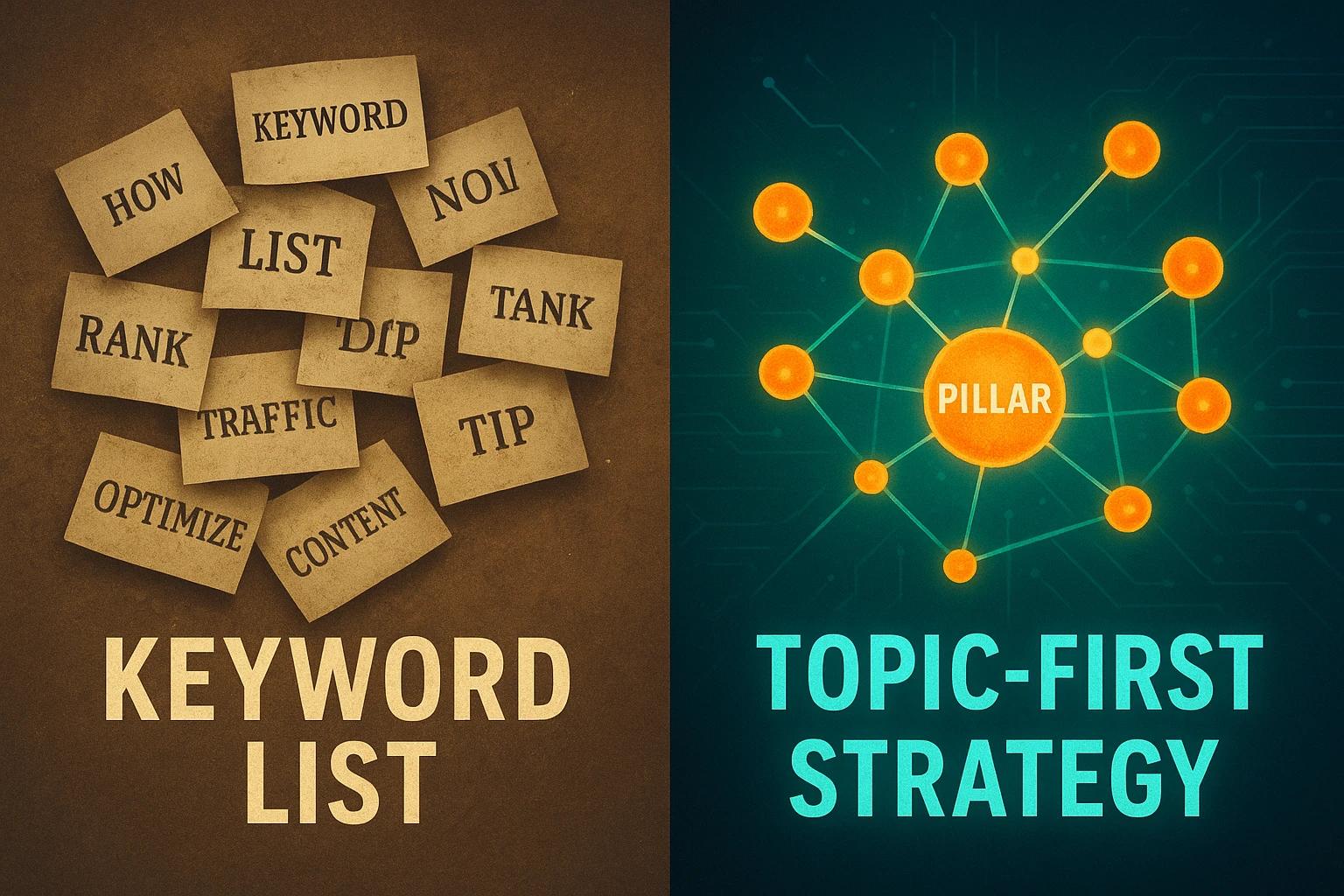
Topic-First Content Strategy for AI-Driven Search
Discover why focusing on topics over keywords drives SEO success in AI-powered search environments.
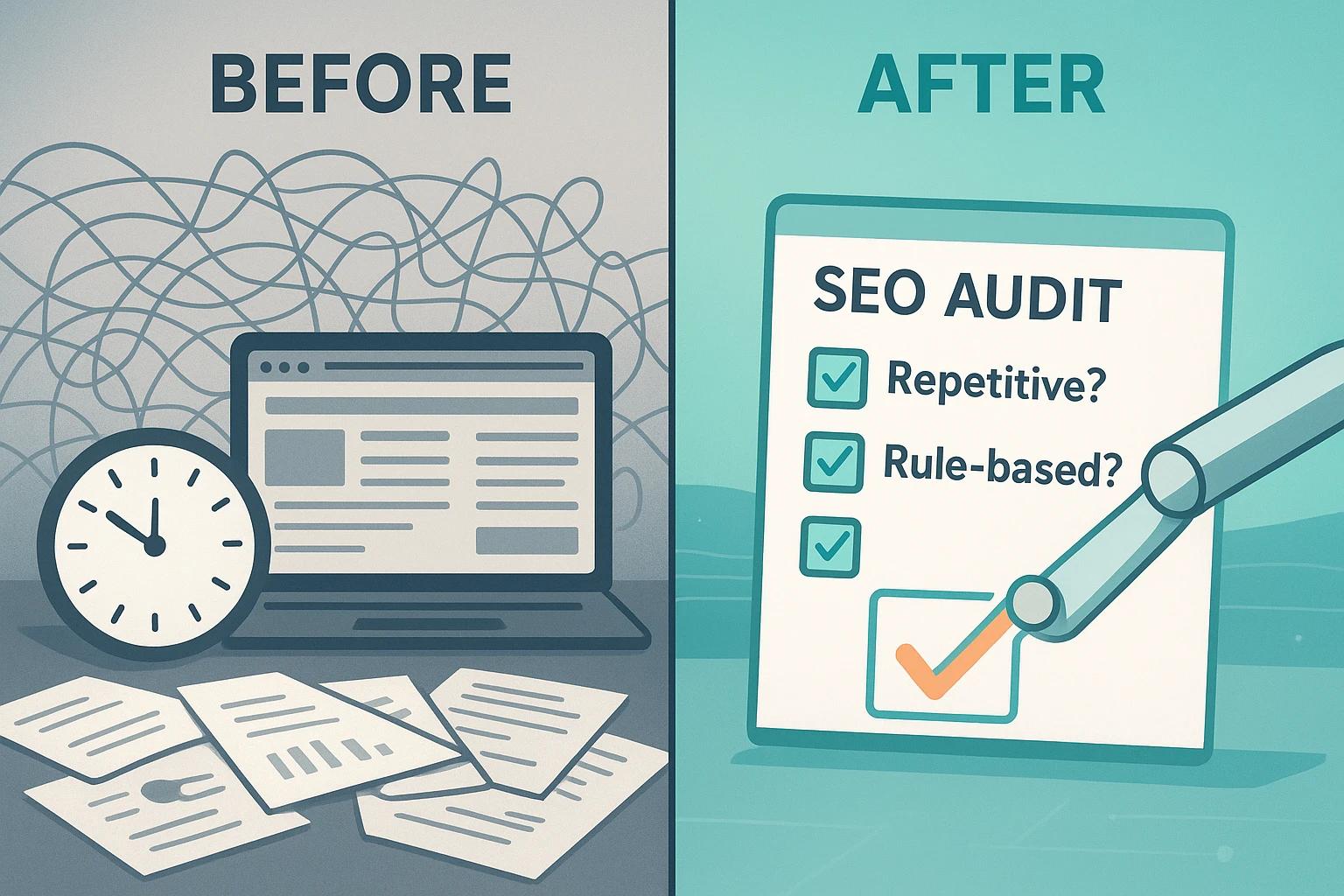
How to Audit SEO for Automation Opportunities
Discover a simple non-technical checklist to identify SEO tasks you can automate and save time for strategic work.

5 Signs Your Content Workflow Is Blocking Growth
Discover common content workflow problems slowing your growth and how automation can help improve efficiency and results.