
The AI-Ready Blueprint: How to Structure Content for Google’s AI Overviews
Ever feel like you’re playing a game where the rules keep changing? You spend months perfecting your SEO, climbing the search rankings, and then one morning, you check your analytics, and your traffic has taken a nosedive. You’re not alone. With the rise of Google’s AI Overviews and other answer engines, the game has fundamentally changed.
For many, this shift feels like a threat. Forbes even reported that some sites could see a traffic decrease of up to 60%. But what if you could see it as an opportunity? An opportunity to become the exact source AI systems turn to for reliable answers.
The secret isn’t about gaming an algorithm; it's about clarity. It's about structuring your content so that a machine can understand it as easily as a human can. Think of it less like writing an article and more like creating a clean, well-documented API for your knowledge—one that AI is eager to connect with.

This guide will walk you through the essential principles of creating AI-extractable content. We’ll break down how to craft headings, summaries, and snippets that not only please your human readers but also make you a go-to source for the new era of AI-driven search.
From Human-First to AI-Ready: A Necessary Mindset Shift
For years, the mantra has been "write for humans, not for search engines." That advice is still true, but it's incomplete. Today, we need to write for humans in a way that machines can precisely understand.
Think about how you find an answer in a textbook. You don't read every word. You scan the chapter titles (H1), look at the section headings (H2s), and read the first sentence of a paragraph to see if it’s relevant. You’re looking for structural clues to find information efficiently.
AI models do the same thing, but on a massive scale and with a far more literal interpretation. They don’t "read" for pleasure; they parse for facts, relationships, and "extractable data units." A dense, meandering paragraph might be beautiful prose to a human, but to an AI, it’s a confusing block of unstructured information.
This is the core "aha moment": Every piece of your content—every heading, paragraph, and bullet point—should be written as if it could be lifted out of the page and still make perfect sense on its own. This is the essence of creating "atomic answers" that AI can easily grab and feature.
The Core Building Blocks of AI-Extractable Content
Making your content AI-ready doesn't require a complete overhaul. It’s about being more deliberate and disciplined with the structure you already use. Let's focus on the three areas that deliver the biggest impact: headings, summaries, and structured formats.
Crafting Headings AI Can Understand
Headings are the skeleton of your content. For a human, they break up text and improve scannability. For an AI, they create a logical hierarchy that explains what your content is about and how the ideas relate to one another.
Common mistakes include using "cute" or vague headings that don't clearly describe the section's content, or having a messy hierarchy (like jumping from an H2 to an H4). Here’s a better way:
- Your H1 is the Title and the Promise: You get one H1. It should clearly state what the entire article will deliver.
- H2s are the Core Questions: Treat your H2s like chapters in a book or the main questions a user has about the topic. A question-based H2 like "What is AI-Friendly Content Structure?" is far more effective than something vague like "First Steps."
- H3s Provide Specific, Atomic Answers: Use H3s to break down the answers to your H2 questions into smaller, more specific points. These are often the exact snippets AI is looking to extract.
Understanding what’s the impact of heading structure on ai extractability? is the first step toward building a solid foundation. A clear, logical hierarchy is non-negotiable for AI interpretation.
Writing Summaries and Snippets AI Loves
AI models are built for efficiency. They look for the most direct, unambiguous answer to a query. To provide this, you need to change how you write your introductory sentences and paragraphs.
Adopt the "Answer-First" Principle: Start your sections and even paragraphs with a direct answer or key takeaway. Journalists call this the "inverted pyramid"—put the most important information right at the top.
- Before (Vague): "There are many things to consider when you start thinking about how AI will interpret the content you are writing for your website."
- After (Answer-First): "AI systems prefer content with clear, concise sentences and a logical heading structure because it allows them to extract information accurately."
Keep Paragraphs Short and Focused: Aim for one core idea per paragraph, typically within 2-4 short, declarative sentences. Research from technical content experts like Digital Blacksmiths suggests that sentences of 10-20 words in Subject-Verb-Object order are ideal for machine processing.

Using Formats That Scream "Structure!"
Beyond headings and paragraphs, using lists and tables is one of the clearest signals you can send to an AI that you’re presenting structured information.
- Bulleted Lists: Ideal for features, benefits, or non-sequential items. Ensure each bullet point is a self-contained idea. Avoid multi-sentence bullet points.
- Numbered Lists: Perfect for step-by-step instructions or processes. The numerical order provides a clear, logical flow that AI can easily follow and present as a tutorial.
- Tables: Use them to compare data or features. The rows and columns explicitly define relationships between different data points, making it incredibly easy for AI to parse.
Before any list or table, add a simple introductory sentence that provides context, such as: "Follow these three steps to audit your content:"
Speaking AI's "Secret Language": Semantic Cues
You can further guide an AI by using explicit phrases that signal the purpose of your content. Think of these as signposts that tell the model, "Hey, pay attention, this part is important!"
These "semantic cues" help an AI understand the context and importance of the information that follows. They act as direct instructions for interpretation.

Simple additions can make a huge difference:
- Instead of just summarizing, add a heading like "Key Takeaways" or start a paragraph with "In summary,…"
- For tutorials, explicitly use phrases like "Step 1:…", "Step 2:…"
- When defining a term, start with "[Term] is defined as…"
This isn't about keyword stuffing; it's about providing entity clarity. Use the primary name for a concept consistently. If you’re writing about "Generative Engine Optimization," don't switch between "GEO," "Gen-AI SEO," and other variations without first establishing the acronym. This clarity helps AI confidently identify the core subjects of your content.
Frequently Asked Questions (FAQ) about AI Content Structure
What is AI-friendly content structure?
AI-friendly content structure is a way of organizing and formatting your writing so that artificial intelligence systems, like those behind Google's AI Overviews, can easily read, understand, and extract key information. It focuses on clear hierarchies (H1, H2, H3), concise paragraphs, direct "answer-first" sentences, and the use of structured formats like lists and tables.
How is this different from traditional SEO?
It’s an evolution of it. Traditional SEO focuses heavily on keywords, backlinks, and technical site health. While those are still vital, AI-friendly structure is more about on-page clarity and information architecture. It prioritizes making your content's meaning and relationships explicit for machine interpretation, which is now a direct ranking factor for getting cited in AI answers.
Do I still need to use structured data like Schema markup?
Yes, absolutely. Think of it this way: a good content structure is like a well-organized store with clear aisles and signs. Schema markup is like the detailed inventory list you hand the store manager. It doesn't replace the need for good organization, but it reinforces it, giving AI systems a definitive, machine-readable confirmation of what your content is about (e.g., this is a HowTo guide, this is an FAQPage).
Can I just reformat my old content for AI?
Yes, and you should! Auditing your existing content and applying these principles is a high-impact activity. Focus on your most important pages first. Clarify headings, break up long paragraphs, implement the answer-first principle, and add bulleted summaries. This can breathe new life into older content and make it relevant for the new age of AI search.
The Future is Extractable
The shift to AI-driven search isn't a temporary trend; it's the new foundation of how information will be discovered online. By embracing a more structured, clear, and deliberate approach to content creation, you're not just optimizing for a machine—you're future-proofing your knowledge.
The goal is simple: make your content so clear and well-organized that AI systems don't just see you as an option, but as the authoritative source they can trust to provide answers. By turning your content into a clean, extractable resource, you position yourself to win in the next chapter of search.

Roald
Founder Fonzy — Obsessed with scaling organic traffic. Writing about the intersection of SEO, AI, and product growth.
Stop writing content.
Start growing traffic.
You just read about the strategy. Now let Fonzy execute it for you. Get 30 SEO-optimized articles published to your site in the next 10 minutes.
No credit card required for demo. Cancel anytime.
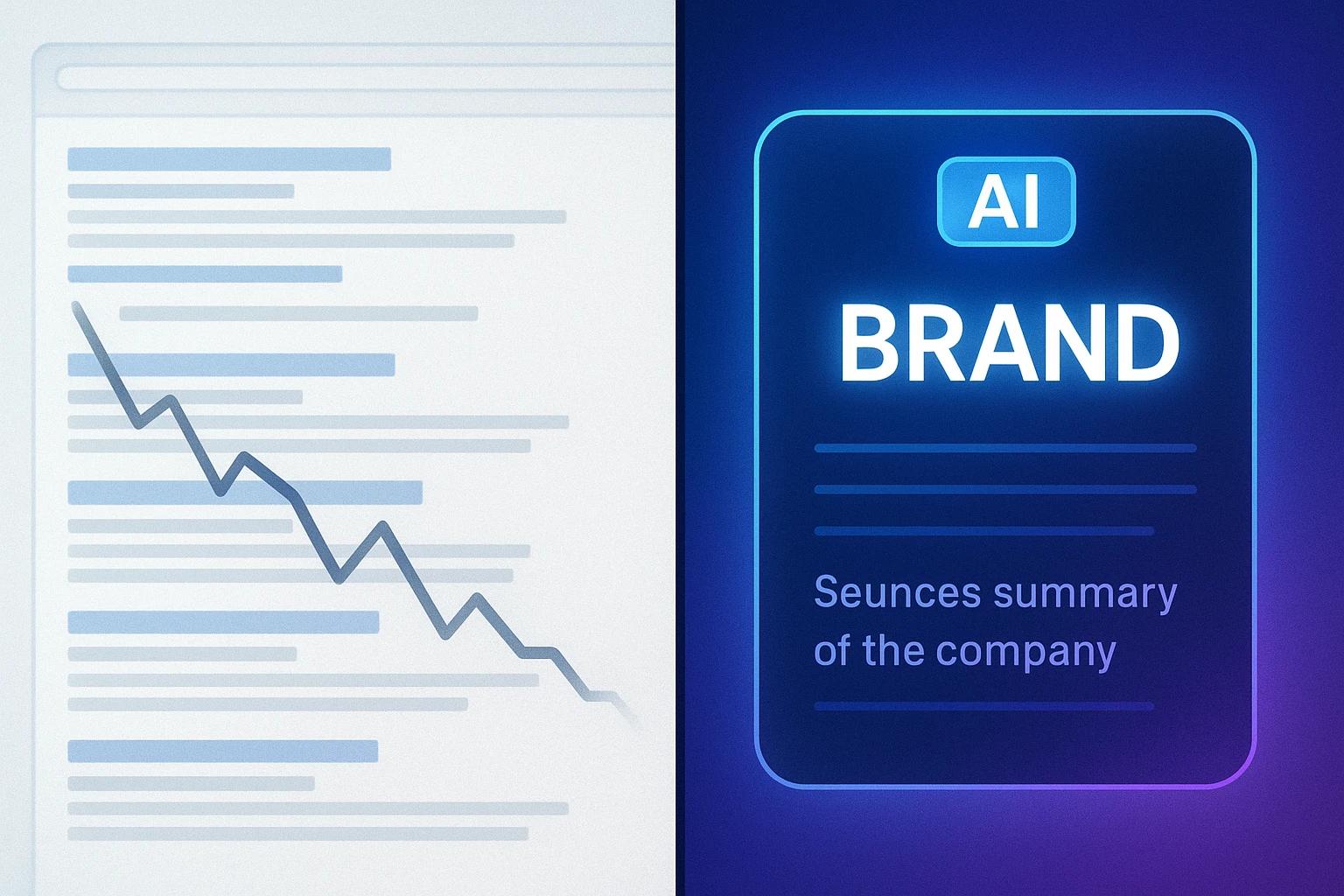
How to Measure Visibility for AI Answers and Traditional Search
Learn key metrics to track your visibility in AI answers versus traditional search results and why old SEO metrics no longer suffice.
Common myths about AI search and content explained
Discover key misconceptions about AI in search and content creation to avoid wasting time and improve your strategy.

AI SEO for Marketers From Manual Grind to Strategic Impact
Discover how AI boosts SEO productivity and quality. Learn to automate research, content creation, and optimization with human oversight.