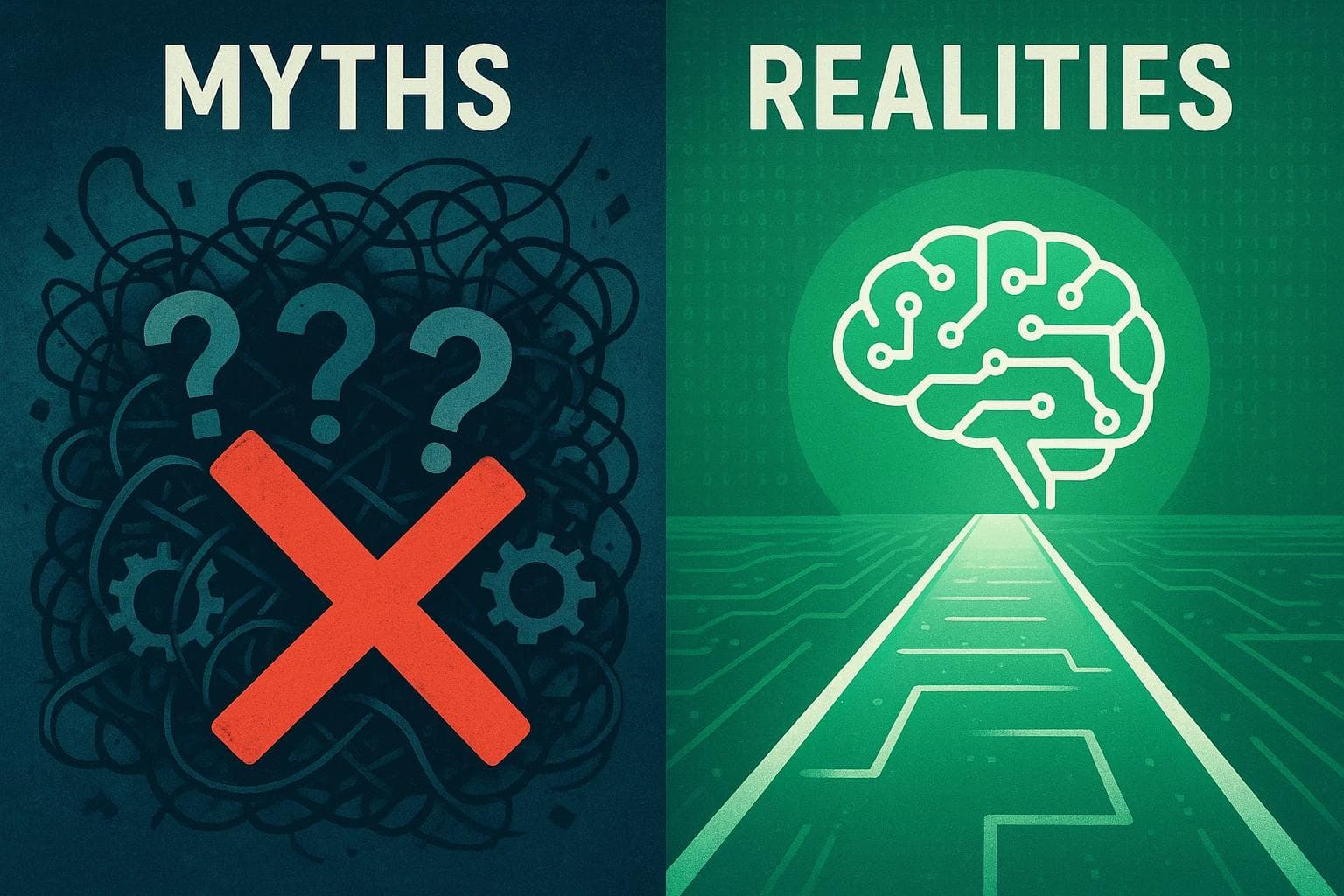
The AI Content Gold Rush: 3 Myths Costing You Time and Traffic
Imagine striking gold. You’ve heard the whispers: AI can write all your blog posts, articles, and web copy, practically overnight. It’s the ultimate shortcut to ranking on Google, a content gold rush for the digital age. So, you dive in, generating articles by the dozen and hitting "publish" with visions of skyrocketing traffic.
Weeks go by. Crickets. Your rankings are flat, your traffic is stagnant, and you’re left wondering what went wrong.
If this sounds familiar, you’re not alone. The excitement around AI has created a landscape filled with tempting shortcuts and costly misconceptions. Many businesses are investing time and energy based on myths, only to end up back where they started.
The truth is, AI is not a magic wand—it’s a power tool. And like any power tool, you need to understand how to use it safely and effectively to build something great. Let's clear the fog and debunk the most common myths, so you can stop wasting time and start building a content strategy that actually works in the age of AI search.

Myth 1: “AI answers mean traditional SEO is dead.”
With AI-powered search results like Google’s AI Overviews providing direct answers, a wave of panic hit the marketing world. The fear: if users get answers at the top of the page, they’ll never click on our websites again. So, why bother with SEO?
The Reality: SEO isn't dead, it's evolving into Answer Engine Optimization (AEO).
Think about it: where do these AI models get their information? They synthesize it from the most reliable, well-structured, and authoritative content they can find—the very content that ranks high in traditional search.
Instead of making SEO obsolete, AI has raised the stakes. Your goal is no longer just to rank #1, but to be the trusted source cited within the AI-generated answer. This is the core of Answer Engine Optimization (AEO).
Google still uses its core principles to determine what’s trustworthy. The most important one to know is E-E-A-T:
- Experience: Do you have real, first-hand experience with the topic?
- Expertise: Are you a knowledgeable authority in your field?
- Authoritativeness: Do others in your industry see you as a go-to source?
- Trustworthiness: Is your site secure and your information accurate and reliable?
The "Aha" Moment: Your website is no longer just a destination; it's a primary source of data for AI. Your job is to create content so clear, authoritative, and helpful that AI models choose to learn from you and feature your insights. This means focusing on quality and authority is more important than ever.
Myth 2: “The more content I publish, and the longer it is, the better.”
This myth comes from a place of logic: more pages mean more chances to rank, and longer articles mean more keywords. In the early days of SEO, this "brute force" approach sometimes worked. Now, AI tools make it possible to churn out thousands of words in minutes, making this strategy seem incredibly tempting.
The Reality: Quality, structure, and relevance crush sheer volume.
AI answers and modern search engines are designed to fight information overload, not contribute to it. They prioritize content that directly and efficiently answers a user's question. Publishing a dozen mediocre, 3,000-word articles that vaguely touch on a topic is far less effective than publishing one focused, 800-word article that nails the answer with expert insight.
Here’s what truly matters now:
- Clarity and Structure: Is your content easy to scan and understand? Using clear headings, lists, and tables helps both humans and AI models digest your information. The impact of heading structure on AI extractability is huge; a logical flow allows AI to pinpoint specific answers within your text.
- Unique Insights: What can you offer that an AI can't? Your personal experiences, customer stories, unique data, and expert opinions are your most valuable assets. AI is great at summarizing existing information, but it can’t create new, human experience.
- Helpfulness: At the end of the day, Google’s "Helpful Content System" rewards content created for people, by people with relevant experience. If your content genuinely helps someone solve a problem or learn something new, you're on the right track.
The "Aha" Moment: Stop thinking like a content factory and start thinking like a trusted teacher. Your goal isn't to win by publishing the most words, but by providing the most value.
Myth 3: “Any AI-generated content can get cited in AI answers.”
This is perhaps the most dangerous myth. It leads to a "set it and forget it" mentality where creators simply copy and paste whatever an AI tool produces, assuming it’s good enough to be featured in an AI-generated search result.
The Reality: AI cites authoritative sources, not just AI-generated text.
Simply using AI to write an article doesn’t make it a candidate for citation. In fact, raw, unedited AI content often lacks the very things required to build trust and authority. It can be generic, lack real-world examples, and sometimes even contain factual errors ("hallucinations").
To become a citable source, your content needs a crucial ingredient: active human expertise. AI should be your brilliant first-draft writer or tireless research assistant, not the final author. The best results come from a collaborative workflow where humans guide the process.
This is where a strategic, human-in-the-loop process becomes your competitive advantage.

A workflow like this ensures that AI's speed and scale are fused with human experience, critical thinking, and unique brand voice. You’re not just publishing content; you’re publishing trustworthy, expert-validated information that AI models and human readers can rely on.
The "Aha" Moment: AI doesn't create authority; it helps you scale it. True authority comes from your expertise, and your job is to infuse that expertise into every piece of content the AI helps you create.
Moving from Myth to Mastery
Navigating the new world of AI and search can feel overwhelming, but it doesn't have to be. By letting go of these common myths, you can avoid the pitfalls that trap so many others. Instead of chasing shortcuts, you can focus on a strategy that builds lasting authority and drives real results.
The future isn't about choosing between humans or AI. It's about creating a powerful partnership between them.

Frequently Asked Questions (FAQ)
Q: Does Google penalize AI-generated content?
No, Google does not penalize content simply because it was created using AI. Google's official stance, as outlined in its "Helpful Content System," is to reward high-quality content that is helpful to people, regardless of how it's produced. The penalty is for low-quality, spammy, or unhelpful content, not for the tool used to create it. A human-guided AI article can rank highly, while a poorly written human article can fail.
Q: Will AI replace human SEO experts and content writers?
It's more of a transformation than a replacement. AI is automating repetitive tasks like initial research, drafting, and data analysis, freeing up humans to focus on higher-level strategy, creative thinking, editing, and injecting unique expertise—the E-E-A-T factors that AI cannot replicate. The roles are evolving to be more strategic and editorial.
Q: Is AI content inherently "bad" or low-quality?
Not at all. The quality of AI content depends entirely on the quality of the instructions (prompts) it's given and the level of human oversight it receives. Used as a starting point and then edited, fact-checked, and enriched by a human expert, AI-assisted content can be excellent. The "bad" reputation comes from raw, unedited AI output being published "as-is."
Q: How can I make my AI-assisted content stand out?
Focus on what makes you human. Inject your own unique experiences, add customer testimonials, include original data or case studies, develop a distinct brand voice, and provide a point of view that isn't just a summary of existing information. Use AI for the heavy lifting, but use your expertise for the finishing touches that build trust.

Roald
Founder Fonzy — Obsessed with scaling organic traffic. Writing about the intersection of SEO, AI, and product growth.
Stop writing content.
Start growing traffic.
You just read about the strategy. Now let Fonzy execute it for you. Get 30 SEO-optimized articles published to your site in the next 10 minutes.
No credit card required for demo. Cancel anytime.
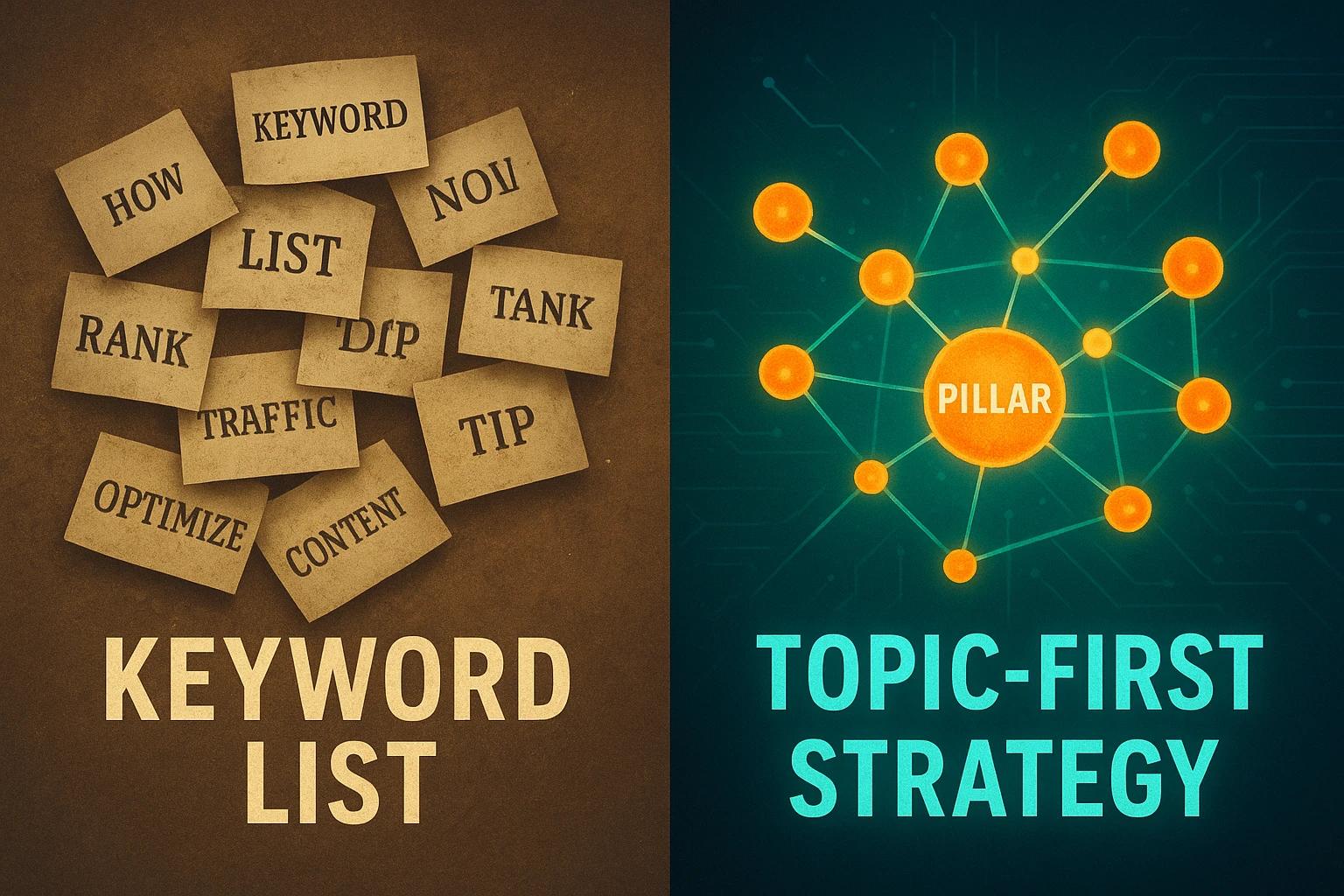
Topic-First Content Strategy for AI-Driven Search
Discover why focusing on topics over keywords drives SEO success in AI-powered search environments.
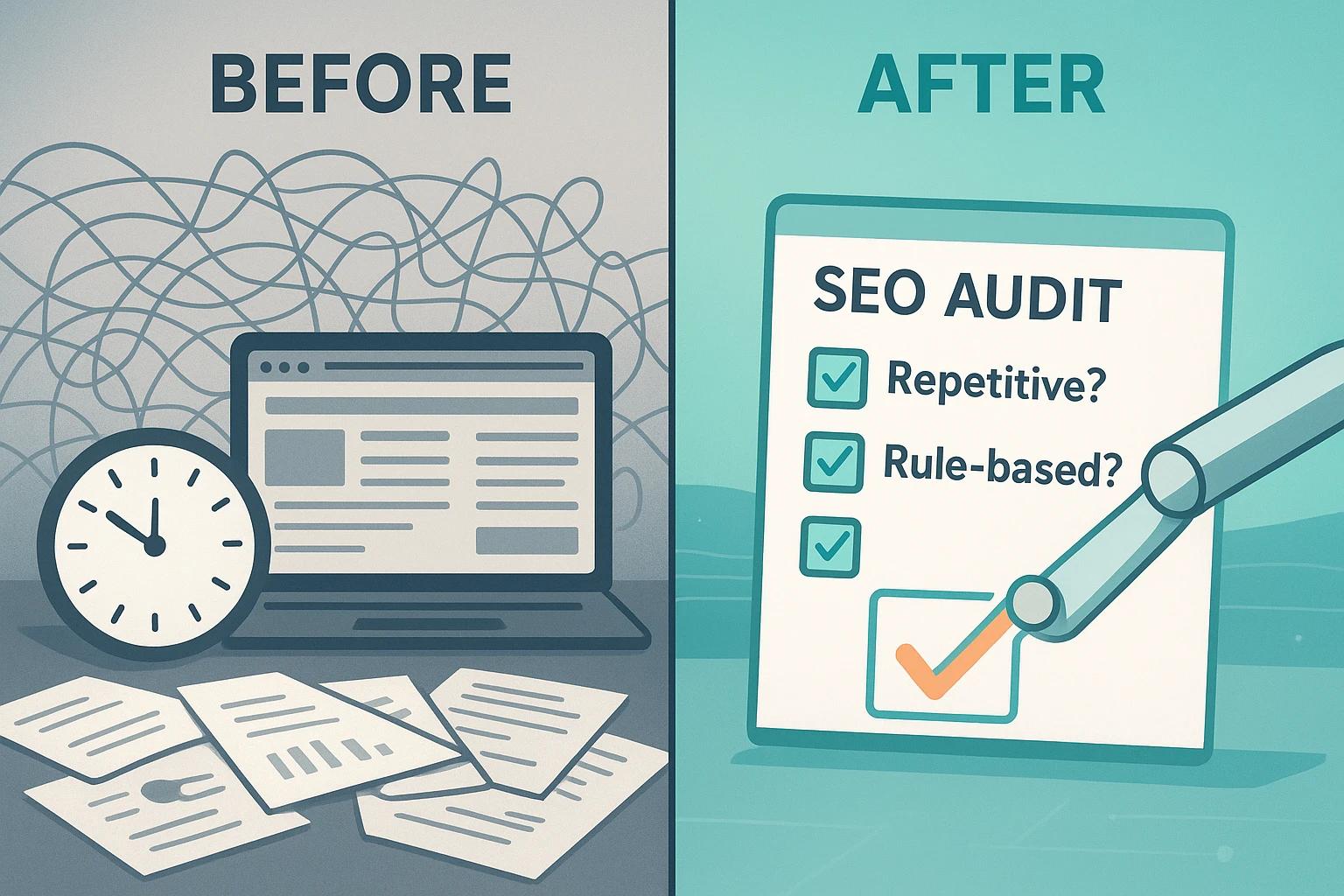
How to Audit SEO for Automation Opportunities
Discover a simple non-technical checklist to identify SEO tasks you can automate and save time for strategic work.
5 Signs Your Content Workflow Is Blocking Growth
Discover common content workflow problems slowing your growth and how automation can help improve efficiency and results.