Signs Your Organic Traffic Could Be AEO Opportunity Signals


Is Your Organic Traffic Dropping? It Might Not Be Your SEO
You’ve done everything right. You’ve researched your keywords, crafted high-quality content, and built a solid backlink profile. Yet, when you check your analytics, the story is frustratingly familiar: traffic is flat, or worse, declining.
You start to question everything. Is it a recent Google update? Is the competition just out-muscling you? While those are possibilities, there’s a new player on the field that might be the real reason for your traffic woes: AI-powered answers.
What feels like an SEO problem might actually be an incredible opportunity in disguise. Your content could be getting seen by more people than ever, just not in the way you’re used to measuring. Welcome to the new world of Answer Engine Optimization (AEO).
The Big Shift: From Search Engines to Answer Engines
For years, the goal of SEO has been simple: get your link to the top of the page. But search engines are evolving. They no longer want to just be a directory of links; they want to be the source of answers. This fundamental shift from a Search Engine to an Answer Engine changes the rules of the game.
- Search Engine Optimization (SEO) focuses on ranking your webpage for specific keywords. The primary goal is to earn a click by convincing the user your link is the best result.
- Answer Engine Optimization (AEO) focuses on having your content selected as the direct answer to a user's query. The goal is to become the cited, authoritative source within AI-generated summaries, voice assistant replies, and other direct answer formats.
The key difference? SEO gets you on the list. AEO makes you the answer.

Decoding the Distress Signals: 3 Traffic Problems That Point to AEO Opportunities
If you’re experiencing frustrating traffic patterns, don't rush to overhaul your entire SEO strategy. Instead, look closely at the data. These common problems are often the clearest signals that you have an AEO opportunity waiting to be seized.
Signal #1: Your Impressions are High, but Your Clicks are Tanking
Have you ever looked at your Google Search Console report and seen a keyword with thousands of impressions but only a handful of clicks? This is a classic sign that an AI-powered answer is satisfying user intent right on the search results page.
Your content is visible—that’s what the high impression count tells you. It’s likely even being used to help formulate the AI Overview or featured snippet. But because the user gets their answer instantly, they have no reason to click through to your site. Research confirms this trend, with some studies showing that organic click-through rates (CTR) can drop by over 60% on search pages featuring AI Overviews.
The Reframe: This isn't a failure. It's validation. It means your content is seen as authoritative enough for AI to use. The opportunity now is to optimize it to encourage brand recognition and citation, turning visibility into authority.
Signal #2: You're Succeeding in a "Zero-Click" World (and Losing Traffic)
It's a startling fact: over half of all Google searches now end without a single click. Users find their answers in knowledge panels, featured snippets, and increasingly, comprehensive AI-generated summaries.
If your traffic is stagnating despite ranking for many informational queries (like "what is…" or "how to…"), you may be a victim of your own success. Your content is providing so much value upfront that it's being scraped and displayed directly, eliminating the need for a click.
The Reframe: You're already providing the answer. The next step is to ensure you get the credit. Optimizing for AEO means structuring your content so that your brand name and expertise are inextricably linked to the answer provided.
Signal #3: Your Long-Tail Keywords Aren't Performing Like They Used To
For years, long-tail keywords—those highly specific, multi-word phrases—were a cornerstone of SEO. They captured users with very specific intent. Today, however, AI is exceptionally good at understanding and answering these complex, conversational queries directly.
A user who once might have searched "best lightweight laptop under $1000 for college student" and clicked on a blog post can now get a detailed, summarized answer from an AI Overview. If you've noticed a steady decline in traffic from your most specific, in-depth articles, it’s a strong signal that AI is now fielding those questions.
The Reframe: The user intent is still there, but the destination has changed. The opportunity lies in shifting your content strategy from long-form answers to providing clear, citable "answer atoms" that AI models can easily extract and feature.

From Signal to Strategy: Your AEO Playbook for Beginners
Recognizing the signals is the first step. Responding to them is how you win in this new landscape. You don't need a massive budget or a team of data scientists. You just need a new way of thinking about your content.
Step 1: Think in "Atomic Answers"
AI models look for clarity and conciseness. Instead of burying your key answer deep within a long article, bring it right to the top.
- Create a Direct Answer Block: At the very beginning of your article, provide a clear, 40-60 word summary that directly answers the primary question.
- Use Question-Based Headings: Structure your article with H2s and H3s that are phrased as questions (e.g., "How Does AEO Differ From SEO?"). This makes it easy for AI to match parts of your content to specific queries.
Step 2: Structure Your Content for AI, Not Just Humans
Structured data, or Schema markup, is like a secret language that helps search engines understand the context of your content. It’s one of the most powerful tools for AEO.
- Implement FAQPage Schema: If your page answers multiple related questions, use FAQ schema to label each question and answer pair.
- Use HowTo Schema: For step-by-step guides, this schema breaks down the process in a machine-readable format that’s perfect for AI summaries and voice search.
Step 3: Double Down on E-E-A-T
E-E-A-T (Experience, Expertise, Authoritativeness, and Trustworthiness) is more critical than ever. AI models are designed to prioritize information from sources they can trust.
- Showcase Your Expertise: Include detailed author bios with credentials and links to their social profiles.
- Cite Your Sources: Link out to authoritative studies, data, and expert opinions to show that your content is well-researched.
- Build Topical Authority: Consistently create comprehensive content around a core topic to establish your site as a go-to resource in your niche.

Answering Your AEO Questions (FAQ)
What is Answer Engine Optimization (AEO)?
Answer Engine Optimization is the practice of creating and formatting your content to be easily understood and selected by AI systems to provide direct answers to user queries on search engine results pages, in AI chatbots, and through voice assistants.
Is AEO replacing SEO?
Not at all. Think of AEO as an evolution of SEO. Strong SEO fundamentals—like technical health, site speed, and quality backlinks—are still the foundation. AEO is an additional layer of optimization focused on being the source of the answer, not just another link in the results.
How is this different from getting a featured snippet?
Featured snippets were the precursor to modern AI answers. While they share the goal of providing a direct answer, AEO is broader. It covers the more complex, multi-source AI Overviews generated by Large Language Models (LLMs) and extends to other platforms like ChatGPT and voice search.
Can a small business really compete in AEO?
Absolutely. AEO can level the playing field. AI prioritizes clear, authoritative, and trustworthy content, regardless of a site's size. By focusing on a specific niche where you have deep expertise and consistently applying E-E-A-T principles, you can become the cited source even against larger competitors.
Your Next Step: From Awareness to Action
Seeing your organic traffic dip can be alarming, but it doesn't have to be a crisis. By learning to recognize these patterns not as SEO failures but as AEO signals, you can pivot your strategy to meet the future of search.
The shift from a list of links to a single, definitive answer is already here. The brands that thrive will be the ones who stop chasing clicks and start focusing on becoming the most trusted, citable source of information in their field. Now that you can spot the signals, the next step is building a content system designed to win in the age of answers.
Roald
Founder Fonzy — Obsessed with scaling organic traffic. Writing about the intersection of SEO, AI, and product growth.
Stop writing content.
Start growing traffic.
You just read about the strategy. Now let Fonzy execute it for you. Get 30 SEO-optimized articles published to your site in the next 10 minutes.
No credit card required for demo. Cancel anytime.
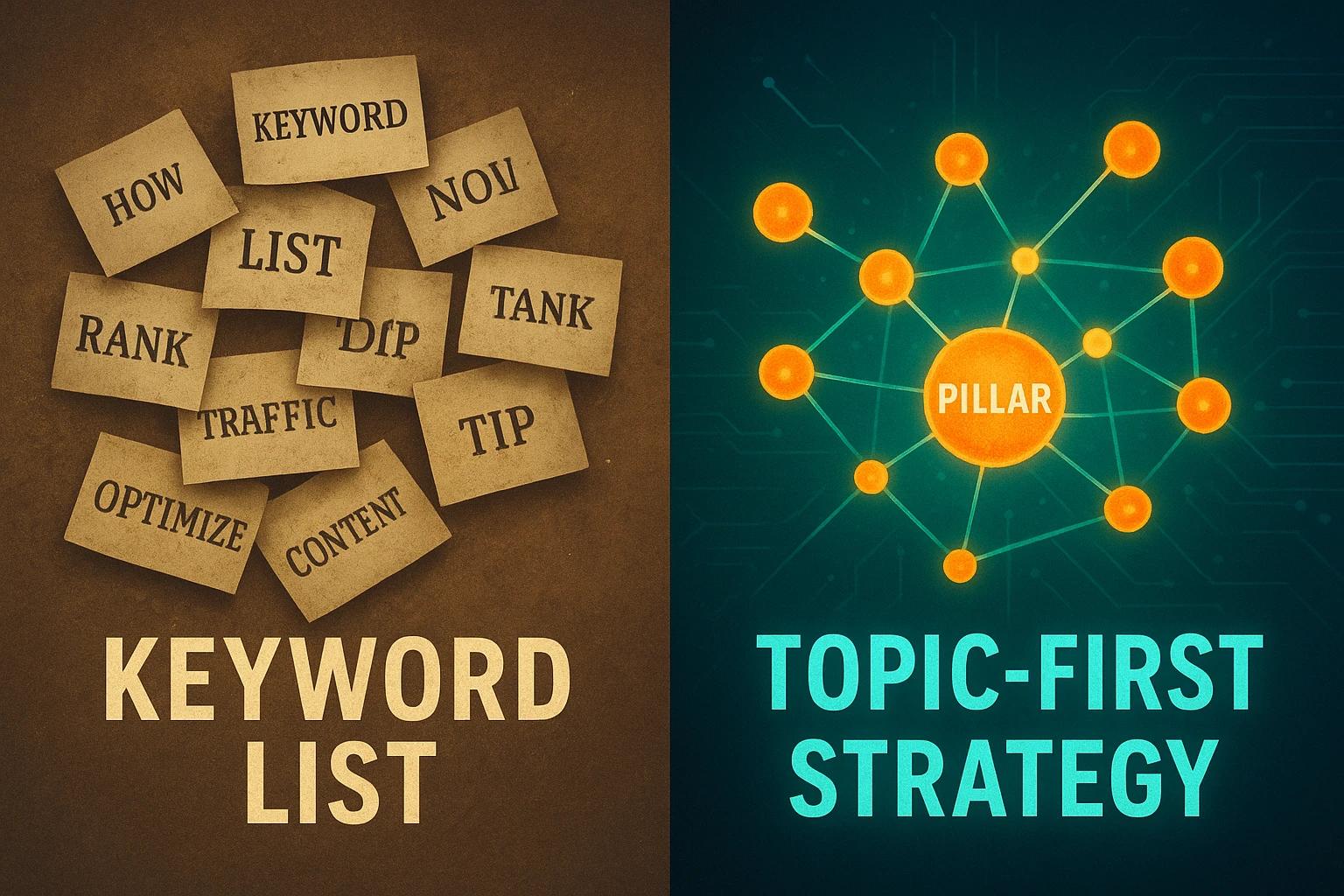
Topic-First Content Strategy for AI-Driven Search
Discover why focusing on topics over keywords drives SEO success in AI-powered search environments.
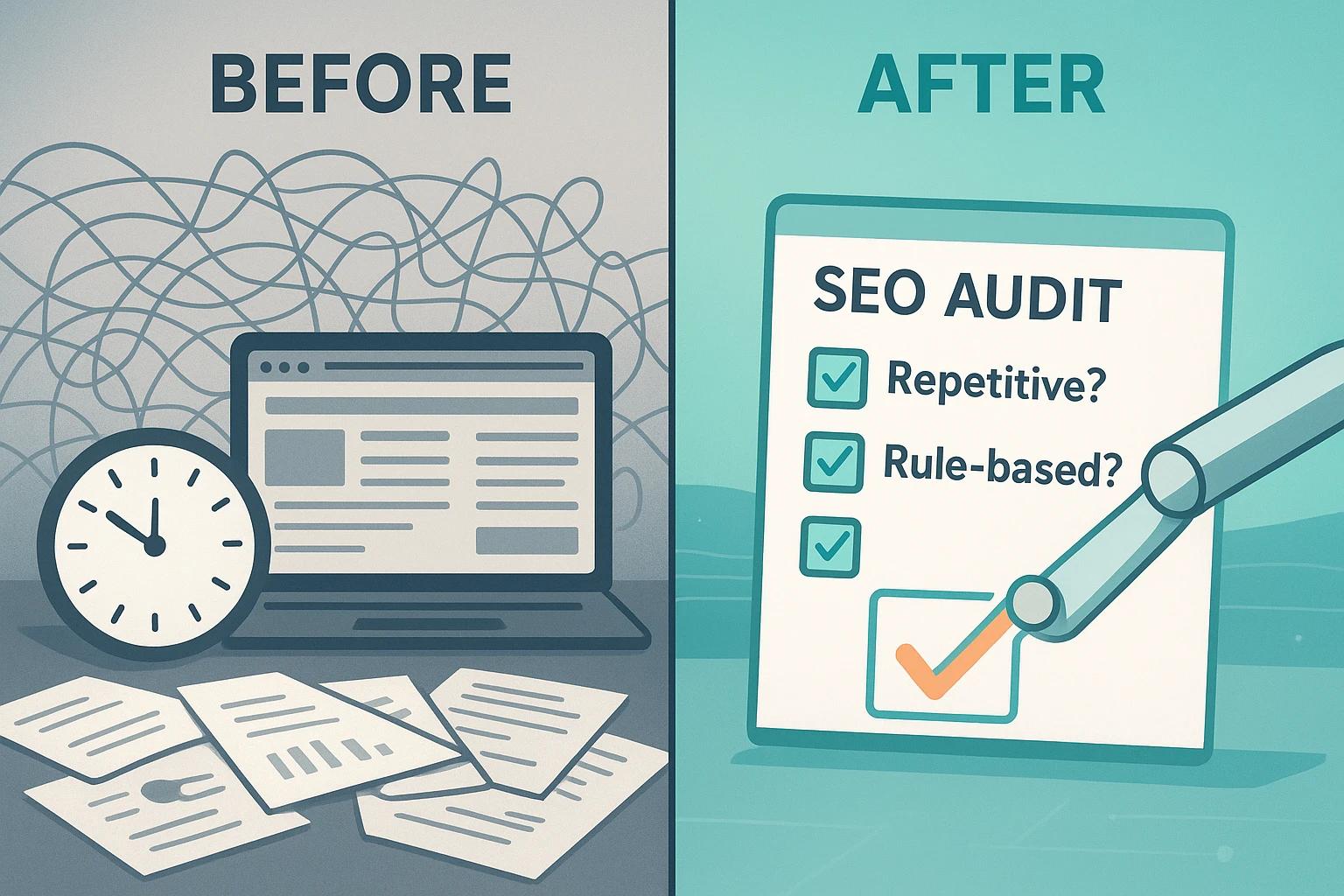
How to Audit SEO for Automation Opportunities
Discover a simple non-technical checklist to identify SEO tasks you can automate and save time for strategic work.
5 Signs Your Content Workflow Is Blocking Growth
Discover common content workflow problems slowing your growth and how automation can help improve efficiency and results.