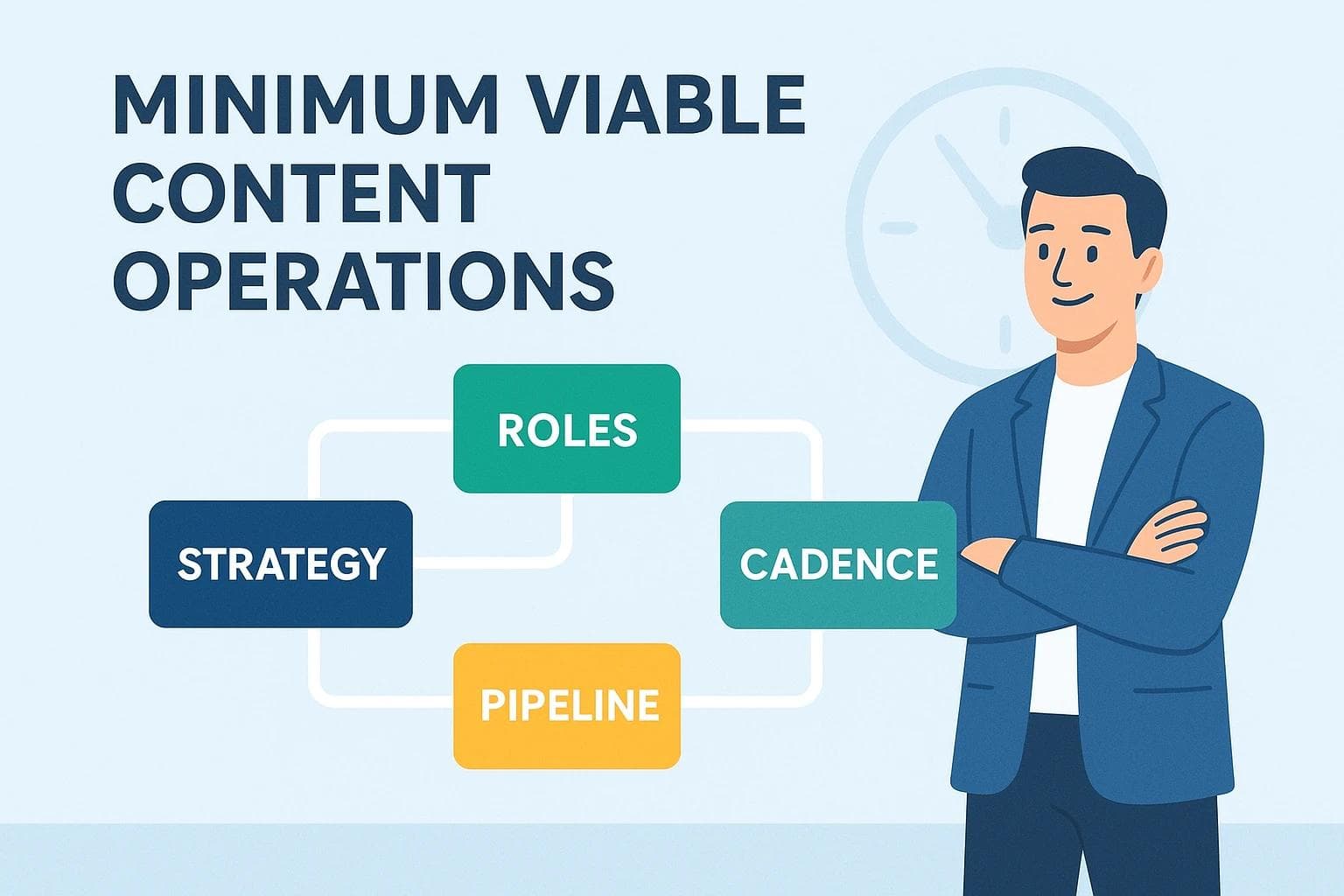
Minimum Viable Content Operations for Small Agencies: A Step-by-Step Framework
You know the feeling. It’s Tuesday afternoon, you’ve just wrapped up a critical client call, and a notification pops up: "Write this week's blog post." A wave of guilt washes over you. You know content is the key to attracting better clients and building your agency's authority, but every hour you spend writing is an hour you can't bill.
This is the "Agency Trap." You're caught between serving current clients and marketing to find future ones. Content marketing feels like a luxury you can't afford, a time-consuming chore that constantly gets pushed to the bottom of the list.
But what if there was a way to produce consistent, high-quality content without sacrificing billable hours? What if you could build a lean, repeatable system that runs in the background, almost on autopilot?
That system is called Minimum Viable Content Operations (MVCO). It’s not about writing more; it’s about building a smarter engine to power your agency’s growth.
What Exactly is Minimum Viable Content Operations (MVCO)?
You’ve probably heard of a Minimum Viable Product (MVP). It’s about building the simplest version of a product to learn from the market. MVCO applies that same agile philosophy to your agency's content.
Let's get one thing clear: content strategy is not content operations.
- Content Strategy is your map. It answers the big questions: Who are we talking to? What do they care about? What do we want them to do? Resources from places like Mael Roth and Content Harmony are great for building this map.
- Content Operations is your vehicle and your driver's manual. It’s the practical, step-by-step framework that gets you from Point A to Point B consistently and efficiently. It’s the "how" that turns your strategy into reality.
MVCO is a lightweight, repeatable process designed specifically for the resource constraints of small agencies. Its core principles are:
- Focus: Do one or two things exceptionally well instead of ten things poorly.
- Agility: Learn from what works and quickly iterate without massive upfront investment.
- Efficiency: Create a "non-billable time shield" to protect your team's most valuable resource.
- Systemization: Build a process that doesn't depend on any single person’s heroic efforts.
The 6-Step Framework to Build Your Agency's MVCO
Ready to build your content engine? This framework breaks down the process into manageable steps that you can implement right away.
Step 1: Define Your "Why" and "Who"
Before you write a single word, you need clarity. A lack of focus is the number one reason agency content fails. Don't overcomplicate it. Just answer two questions:
- Why are we creating content? Be specific. "To get more leads" isn't enough. Try: "To attract two qualified leads per month for our web design services by demonstrating our expertise in e-commerce UX."
- Who are we creating it for? Don't just say "small businesses." Get granular. "We're talking to founders of direct-to-consumer brands with 5-10 employees who are frustrated with their Shopify store's conversion rate." This clarity makes content creation infinitely easier.
Step 2: Choose Your Core Content Pillars
You can't be an expert on everything. Based on your "Why" and "Who," choose 1-3 core topics—or pillars—that you can own. These should be topics where your agency’s expertise and your ideal client's pain points intersect.
For our e-commerce agency example, the pillars might be:
- Shopify Conversion Rate Optimization
- Customer Retention Strategies for DTC Brands
- Headless Commerce Explained
Everything you create should relate back to these pillars. This builds topical authority, which is crucial for [ranking high in search engines].
Step 3: Assign the Four Core Roles (Even if You're a Team of One)
Every content operation, no matter how small, needs four key functions. In a small agency, one person might wear all these hats, but it’s vital to recognize them as distinct roles with different tasks.
- The Strategist: Owns the "Why" and "Who." Plans the content calendar based on the core pillars and tracks performance. (Time: 1-2 hours/month)
- The Creator: Writes the articles, records the videos, or designs the graphics. This is the "doing" part. (Time: 2-4 hours/piece)
- The Editor: Reviews content for clarity, tone, grammar, and alignment with the strategy. Acts as quality control. (Time: 30-60 mins/piece)
- The Publisher: Handles the technical side—uploading to the CMS, formatting, adding images, basic SEO, and scheduling for promotion. (Time: 30 mins/piece)

If you're a solo founder, you are all four. The trick is to "switch hats" deliberately. Block time in your calendar for "Strategist Hour" or "Publisher Hour" to stay focused and efficient.
Step 4: Set a Sustainable Content Cadence
Consistency trumps volume. Burning out after publishing eight articles in one month and then nothing for the next three is worse than publishing one solid article every other week.
Choose a cadence you can stick to, no matter what.
- The Monthly Pillar: One high-value, in-depth blog post per month.
- The Bi-Weekly Beat: One solid article every two weeks.
- The Weekly Insight: One shorter, timely post every week.
Start smaller than you think you can handle. You can always scale up later. The goal is to build a rhythm and create a reliable presence for your audience.
Step 5: Build Your Lean Publishing Pipeline
A pipeline prevents bottlenecks and last-minute scrambles. It’s a simple, visual workflow that takes an idea from concept to live content. You can manage this in a simple tool like Trello or Asana.
Your pipeline should have at least these five stages:
- Idea Backlog: A running list of potential topics related to your pillars.
- Drafting: The content is actively being created.
- In Review: The content is with the "Editor" for feedback.
- Ready to Publish: The draft is approved, formatted, and scheduled in your CMS.
- Published & Promoting: The content is live, and you're sharing it on relevant channels.
To make this even smoother, create a simple "Pre-Publish Checklist" for the Publisher role. This should include things like:
- [ ] SEO Title and Meta Description Added
- [ ] Relevant Internal Links Included
- [ ] Images Have Alt Text
- [ ] Clear Call-to-Action at the End
Step 6: Measure What Matters
Don't get lost in a sea of data. For an MVCO, you only need to track a few key metrics that tie back to your "Why."
Instead of just looking at page views, ask better questions:
- Did this post lead to any newsletter sign-ups?
- How many visitors from this post clicked to our "Services" page?
- Did we get any consultation requests that mentioned this article?
A simple spreadsheet or a focused look at your analytics once a month is all you need to see if your efforts are moving the needle.
From Manual Operations to Smart Automation
Once your MVCO is running smoothly for a few months, you’ll start to notice something: the repetitive tasks. The time spent scheduling social media posts, finding internal linking opportunities, or formatting blog posts.
This is the point where you’ve earned the right to automate. You’ve built a solid, human-powered system, and now you can identify the exact gaps where technology can make it better.
Identifying Your First Automation Opportunities
Look for the tasks that are repeatable and time-consuming. These are prime candidates for automation:
- Content Ideation: AI can analyze your site and competitors to generate a data-driven content plan.
- Content Creation: AI tools can help you generate first drafts, saving hours of creation time.
- Publishing & SEO: Platforms can automatically publish content, add smart internal links, and ensure every post is optimized for search.
How to Evaluate an Integrated Content Platform
When you're ready to explore automation, you need a platform built for efficiency. Use this checklist to evaluate your options:
- End-to-End Solution: Does it handle everything from [AI-driven content strategy] to creation, publishing, and optimization? A fragmented toolset creates more work.
- Ease of Use: Can you set it up in a few clicks? A complicated onboarding process defeats the purpose of saving time.
- Scalability: Will it grow with your agency? Look for platforms that can scale content production without scaling your workload.
- Focus on Results: Does the platform prioritize driving organic traffic and getting you found in search engines and AI answers?
Your MVCO Quick-Start Checklist
Feeling motivated? Here's how you can start building your MVCO tomorrow:
- [ ] Block 1 Hour: Schedule a meeting with yourself to answer the "Why" and "Who" questions.
- [ ] Choose 2 Pillars: Identify the two most important topics for your ideal client.
- [ ] Define Your Roles: Write down who will be the Strategist, Creator, Editor, and Publisher, even if it's all you.
- [ ] Set a Cadence: Commit to one piece of content every two weeks for the next three months.
- [ ] Create a Trello Board: Build your 5-stage publishing pipeline.
- [ ] Brainstorm 5 Ideas: Add five potential article titles to your "Idea Backlog."
That's it. You've just laid the foundation for a powerful content engine that will work for your agency, not against it.
Frequently Asked Questions (FAQ)
### How is MVCO different from just having a content strategy?A content strategy is the plan (the map); MVCO is the repeatable process for executing that plan (the vehicle). Many agencies have a strategy document gathering dust. An MVCO is an active, operational system that ensures the strategy gets implemented consistently without draining resources.
### What if I'm the only person in my agency doing content?MVCO is designed for you! The key is to separate the roles from the people. By time-blocking for each of the four roles (Strategist, Creator, Editor, Publisher), you bring focus to each task. This prevents you from trying to write, edit, and format all at the same time, which is a recipe for burnout.
### How much time should a Minimum Viable Content Operation take?For a bi-weekly publishing cadence, a well-oiled MVCO should take no more than 4-6 hours of focused, non-billable time per month. The goal is to create a system so efficient that it becomes a small, predictable part of your operational overhead, not a major time sink.
### What's the most common mistake agencies make when starting this?Trying to do too much, too soon. They aim for a daily publishing cadence, try to be on every social platform, and write about ten different topics. MVCO is the antidote to this. Start with one content type, on one channel, with a sustainable cadence. Master the process, then expand.

Roald
Founder Fonzy — Obsessed with scaling organic traffic. Writing about the intersection of SEO, AI, and product growth.
Stop writing content.
Start growing traffic.
You just read about the strategy. Now let Fonzy execute it for you. Get 30 SEO-optimized articles published to your site in the next 10 minutes.
No credit card required for demo. Cancel anytime.
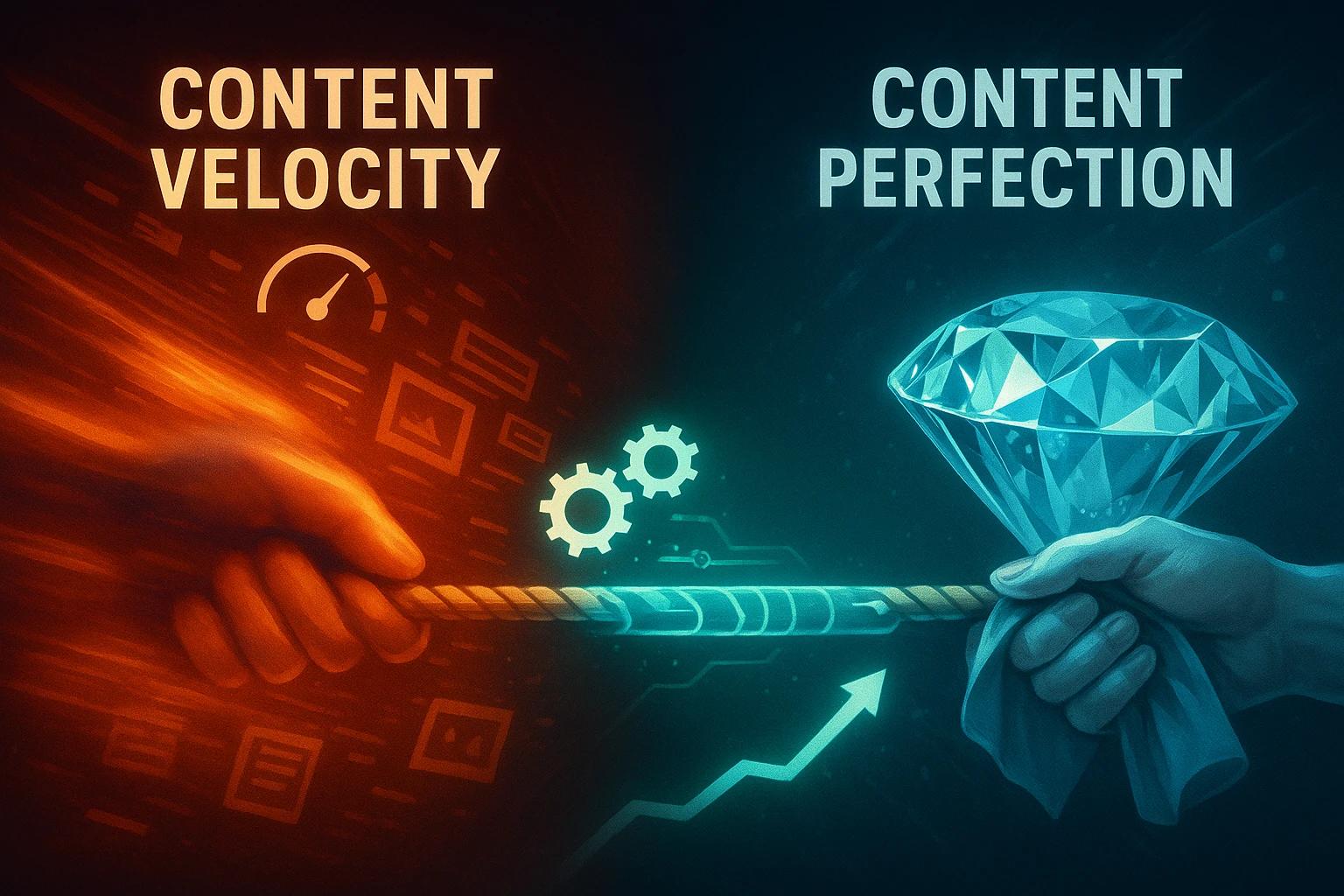
How Content Frequency Affects SEO Rankings and What to Prioritize
Explore how balancing content speed and quality impacts SEO and learn when to focus on velocity or perfection.
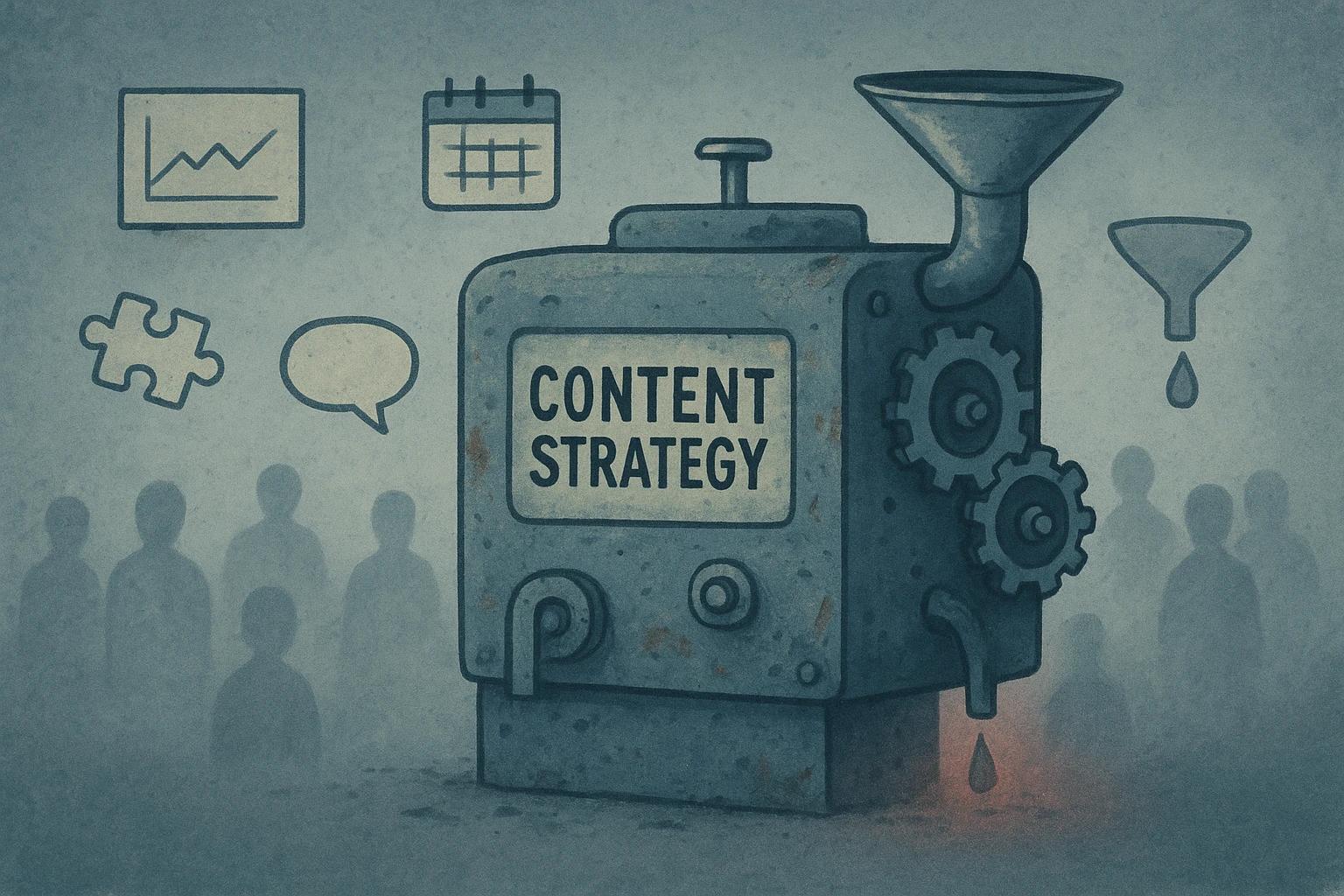
5 Signs Your Content Strategy is Losing Customers
Discover key signs your content strategy is stuck and quietly losing customers before it impacts your growth.

How to Measure SEO ROI with Business Metrics
Learn simple ways to measure SEO ROI focusing on leads, conversions, cost, and customer value beyond keywords and rankings.