Measuring AI SEO Success: Metrics That Actually Matter for Busy Marketers
Have you ever looked at your SEO report and felt a sense of confusion? Your keyword rankings are climbing, your content is getting impressions, but your website traffic is flat—or even dipping. It’s a frustrating scenario that’s becoming more common, and it’s not your fault.
This is the "impression-click paradox" of the new AI-driven search era. Search engines like Google are no longer just lists of links; they are answer engines. They use AI to summarize information directly on the results page, giving users answers without needing them to click through to your website.
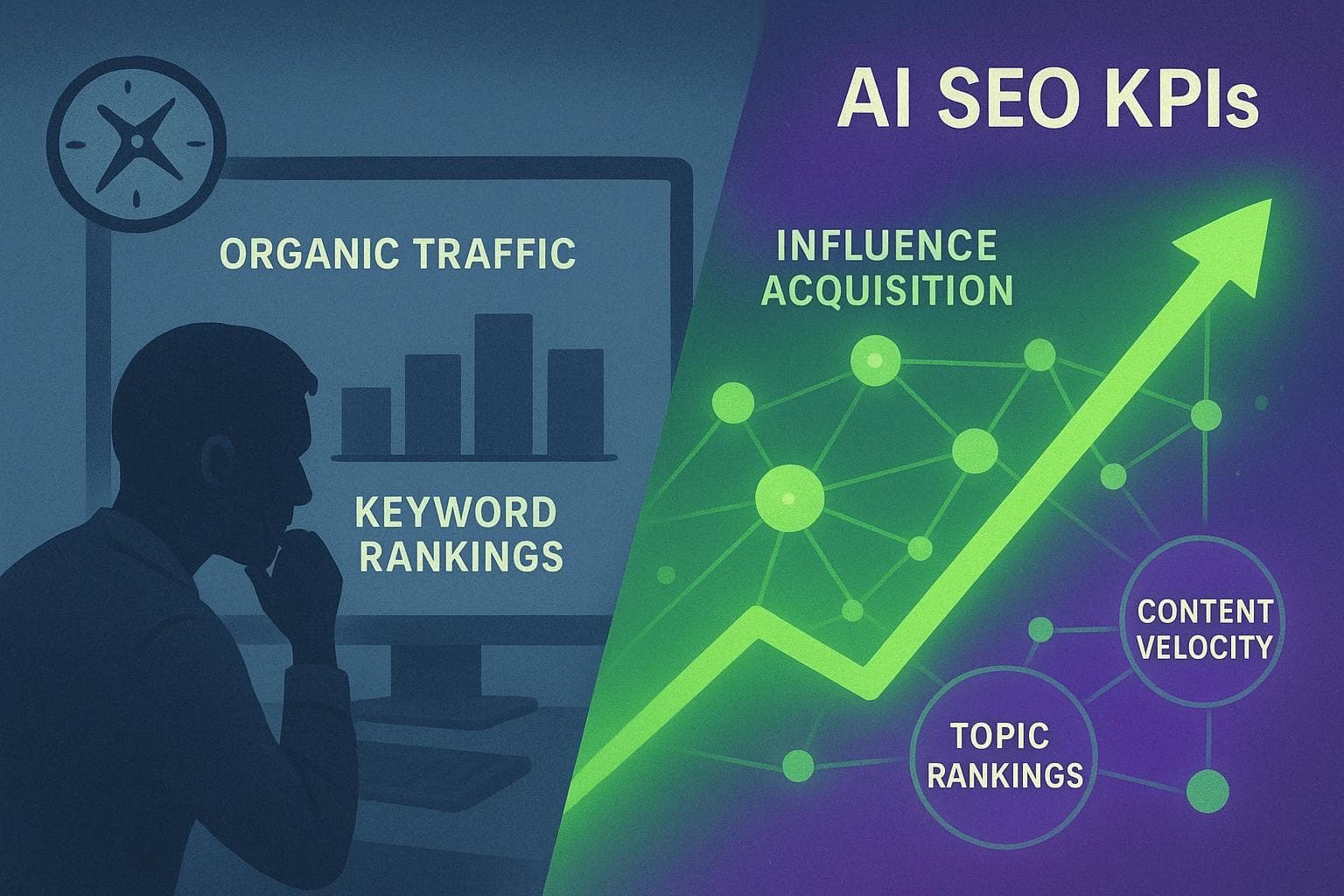
So, if clicks are no longer the ultimate measure of success, what is? It’s time to adapt your strategy and your scorecard. Success is no longer just about traffic acquisition; it's about influence acquisition.

The Big Shift: Why Your Old SEO Dashboard Is Misleading You
For years, the SEO playbook was straightforward: rank for a keyword, get a click, convert the visitor. But Generative AI in search results (like Google's AI Overviews) has fundamentally changed user behavior.
Users now get complex questions answered in conversational paragraphs, often sourced from multiple websites—including yours. They might see your brand name, learn from your expertise, and trust your authority, all without ever visiting your site. This is an incredibly valuable touchpoint, but it’s completely invisible if you're only tracking clicks.
Relying solely on old metrics is like trying to navigate a new city with an old map. You’re missing the most important landmarks. To succeed, you need to measure what actually matters now: your influence and visibility within these new AI-powered answers.
5 Actionable AI SEO KPIs for Busy Marketers
Shifting your entire measurement philosophy sounds daunting, but it doesn't have to be. You don't need a complex, enterprise-level analytics setup to get started. You can begin by focusing on a handful of practical, operational metrics that reveal whether your investment in AI-powered SEO is actually working.
These five KPIs focus on efficiency, quality, and authority—the true drivers of success in the age of AI search.

1. Topic Rankings (The New Keyword Ranking)
Instead of obsessing over the rank of a single keyword, start thinking in terms of "topic rankings." This measures your visibility across a whole cluster of related questions and concepts.
- What it is: A measure of how consistently your domain appears in search results—including AI Overviews and "People Also Ask"—for a broad topic.
- Why it matters: AI doesn't just look for a keyword match; it seeks comprehensive, authoritative sources that cover a topic in depth. Winning the topic is how you become a trusted source for AI-generated answers. Getting featured requires a deep understanding of your subject matter, and what’s the impact of heading structure on ai extractability can be a critical factor in how easily AI can parse and use your information.
- How to track it: Use SEO tools to monitor your visibility for a basket of related keywords. Are you showing up for the core term and the long-tail questions? Your goal is to be the go-to resource for the entire conversation.
2. Content Velocity
AI-powered search engines have an insatiable appetite for fresh, relevant, high-quality content. Content velocity measures your ability to meet that demand.
- What it is: The speed and consistency at which you publish new, optimized content.
- Why it matters: Regularly publishing content signals to search engines that you are an active, current authority in your niche. High velocity allows you to build topical authority faster, cover more ground, and respond to emerging trends.
- How to track it: This is a simple count. How many high-quality articles are you publishing per week or month? The key is maintaining a consistent rhythm that doesn’t sacrifice quality for quantity.
3. Time-to-Publish
This is a pure efficiency metric. How long does it take for a content idea to go from concept to live on your website?
- What it is: The average time elapsed between content ideation and publication.
- Why it matters: A long time-to-publish can be a major bottleneck, slowing down your content velocity and preventing you from capitalizing on timely opportunities. AI tools can dramatically shrink this timeline by automating research, drafting, and optimization.
- How to track it: Measure the stages of your content workflow. Where are the delays? By reducing this metric, you increase your ability to scale content production effectively.
4. Cost-per-Article
Content has always been an investment. The question is, are you getting a good return? AI is changing the economics of content creation.
- What it is: The total cost (including time, tools, and human resources) required to produce a single, published piece of content.
- Why it matters: Lowering your cost-per-article without sacrificing quality means you can produce more authoritative content for the same budget, accelerating your path to topical authority. Platforms like Fonzy AI are designed to automate the entire workflow, significantly reducing both the time and cost involved.
- How to track it: Add up all associated costs for a given period (writer salaries, freelance fees, tool subscriptions) and divide by the number of articles published.
5. Organic Sessions per Article
While total organic traffic can be a misleading vanity metric, looking at it on a per-article basis tells a story about quality and relevance.
- What it is: The average number of organic sessions a single blog post or article receives over a specific period (e.g., the first 30 or 90 days).
- Why it matters: This metric helps you understand the impact of each individual content asset. Even in a zero-click world, high-performing articles that do earn clicks are often those that answer a question so well that the user needs to learn more. It’s a powerful indicator of content that truly resonates.
- How to track it: In your analytics platform, view your organic traffic by landing page. Analyzing the performance of newly published content will help you identify what topics and formats are most effective.
Connecting the Dots: From Operational Metrics to Business Value
These five KPIs give you a clear, ground-level view of your AI SEO engine's performance. They show that you are efficiently and affordably building a library of high-quality content that establishes your topical authority.
This authority is what gets you cited and featured in AI answers, building brand awareness and trust with your audience. The final step is to start connecting that "influence" to tangible business outcomes, even without a direct click.

Frequently Asked Questions (FAQ)
What are AI SEO success metrics?
AI SEO success metrics are key performance indicators (KPIs) that measure your visibility and influence within AI-driven search results. They shift the focus from traditional metrics like clicks and traffic to newer concepts like inclusion in AI answers, brand citations, and overall topical authority.
What are the most important AI SEO KPIs?
For busy marketers, the most important KPIs are actionable ones that measure efficiency and authority. A great starting set includes Topic Rankings, Content Velocity, Time-to-Publish, Cost-per-Article, and Organic Sessions per Article. These metrics show if your content engine is performing effectively.
How do I start measuring AI SEO success?
Start small. Begin by tracking the five KPIs listed above. Audit your current content workflow to measure your Time-to-Publish and Cost-per-Article. Use your existing SEO and analytics tools to track Topic Rankings and Organic Sessions per Article. The goal is to establish a baseline so you can measure improvement over time.
Do traditional metrics like keyword rankings still matter?
Yes, but their meaning has changed. Ranking for a single keyword is less important than having broad visibility across a whole topic. Think of individual keyword rankings as data points that contribute to the larger picture of your "Topic Ranking." They are part of the equation, not the final answer.
Your Next Move: Evolve Your Measurement
The world of search is evolving, and so must our methods for measuring success. By shifting your focus from chasing clicks to building influence, you align your strategy with the future of how people find information.
Start by having a conversation with your team. Pull up your current dashboard and ask: "Is this telling us the whole story?" By adopting these five actionable metrics, you can gain a much clearer picture of your AI SEO performance and make smarter decisions that drive real, sustainable growth.

Roald
Founder Fonzy — Obsessed with scaling organic traffic. Writing about the intersection of SEO, AI, and product growth.
Stop writing content.
Start growing traffic.
You just read about the strategy. Now let Fonzy execute it for you. Get 30 SEO-optimized articles published to your site in the next 10 minutes.
No credit card required for demo. Cancel anytime.
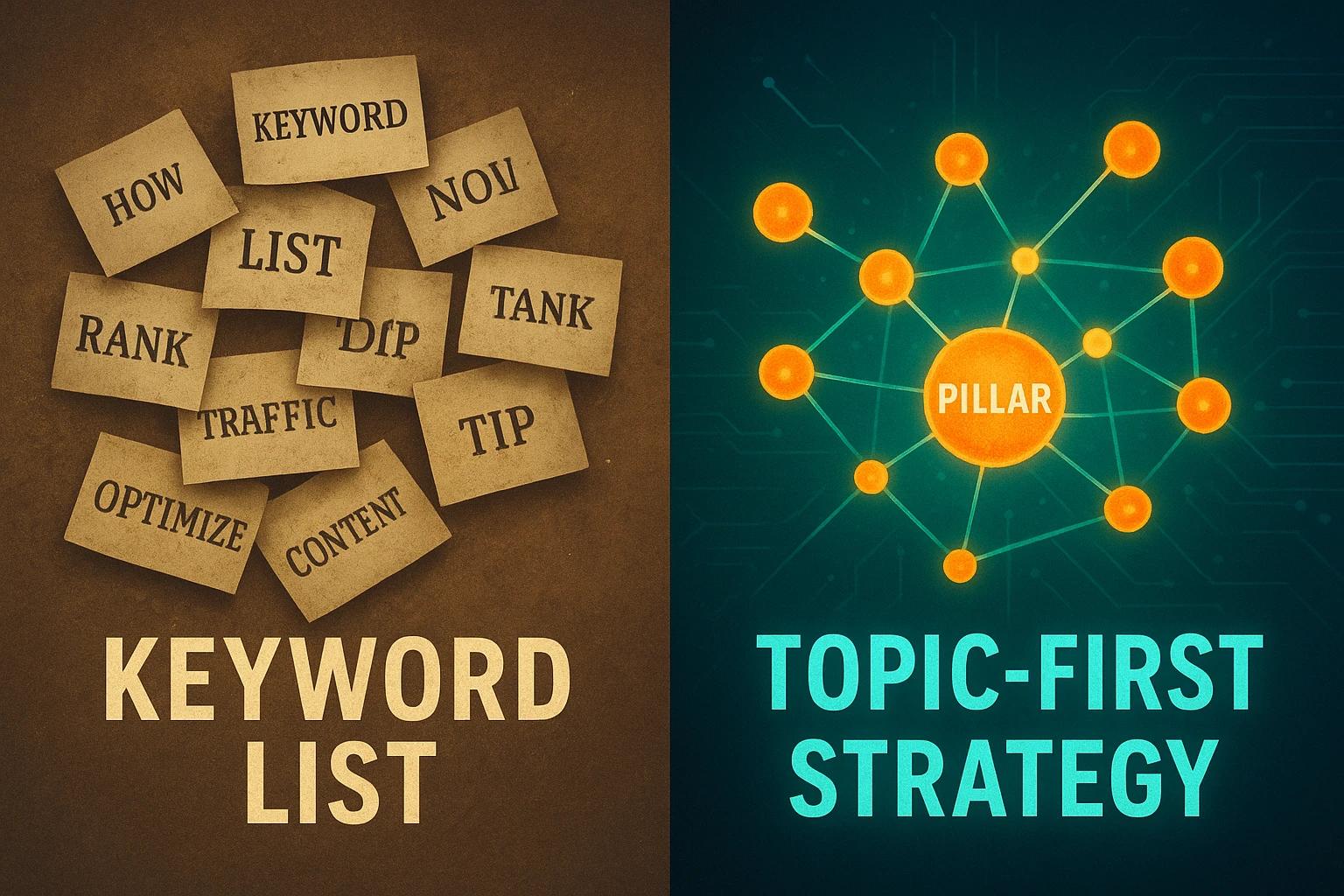
Topic-First Content Strategy for AI-Driven Search
Discover why focusing on topics over keywords drives SEO success in AI-powered search environments.
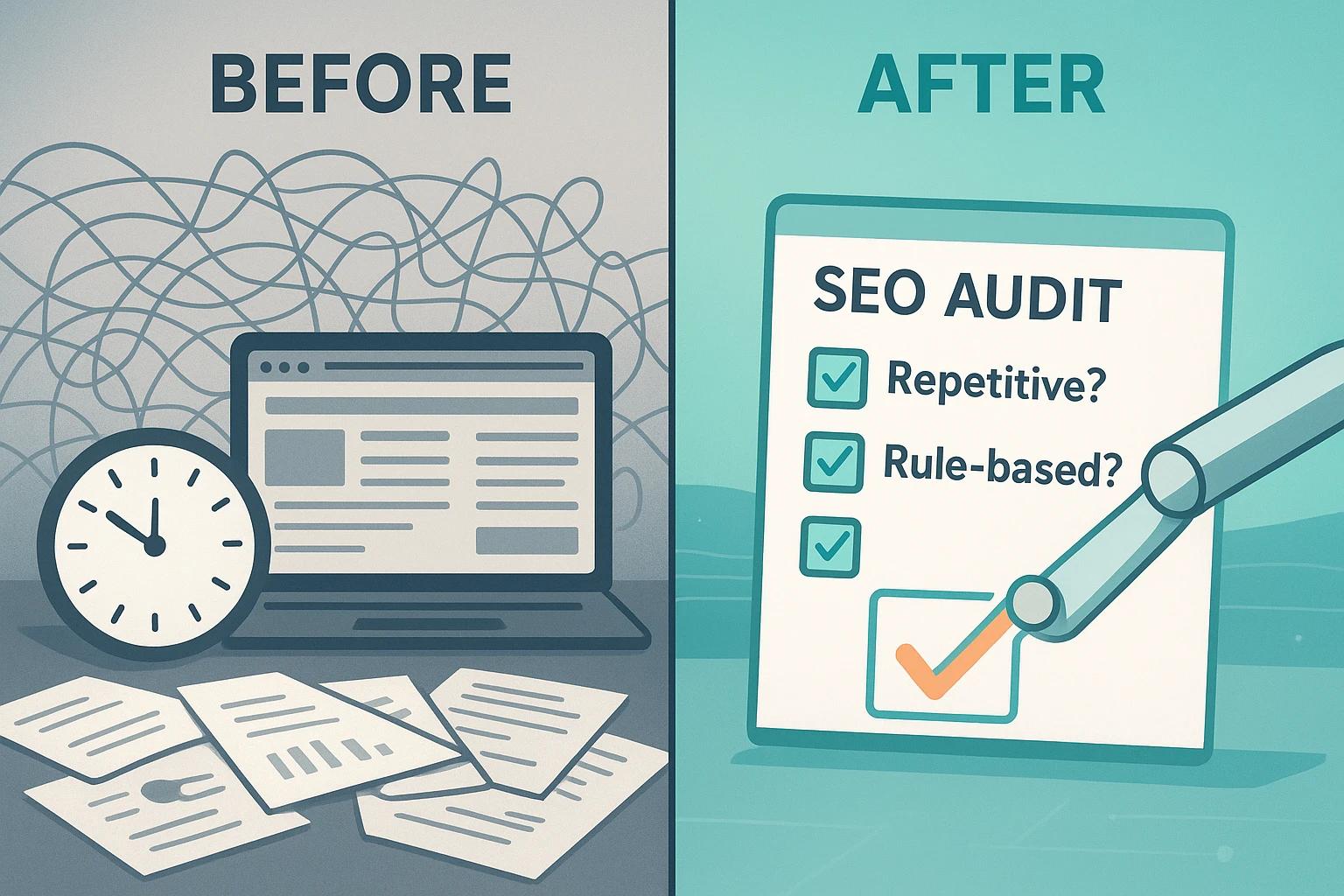
How to Audit SEO for Automation Opportunities
Discover a simple non-technical checklist to identify SEO tasks you can automate and save time for strategic work.

5 Signs Your Content Workflow Is Blocking Growth
Discover common content workflow problems slowing your growth and how automation can help improve efficiency and results.