How to measure AEO impact with key metrics and experiments

From Clicks to Conversations: How to Measure AEO Impact in an AI World
You've spent years mastering the art of Google. You know your keywords, your backlinks, and your SERPs. But lately, you’ve noticed a change. Your customers aren't just searching anymore; they're asking. They're having conversations with AI assistants, getting direct answers that bypass the familiar blue links.
And a new question keeps you up at night: If your brand is mentioned in an AI answer but no one clicks a link, did it even happen?
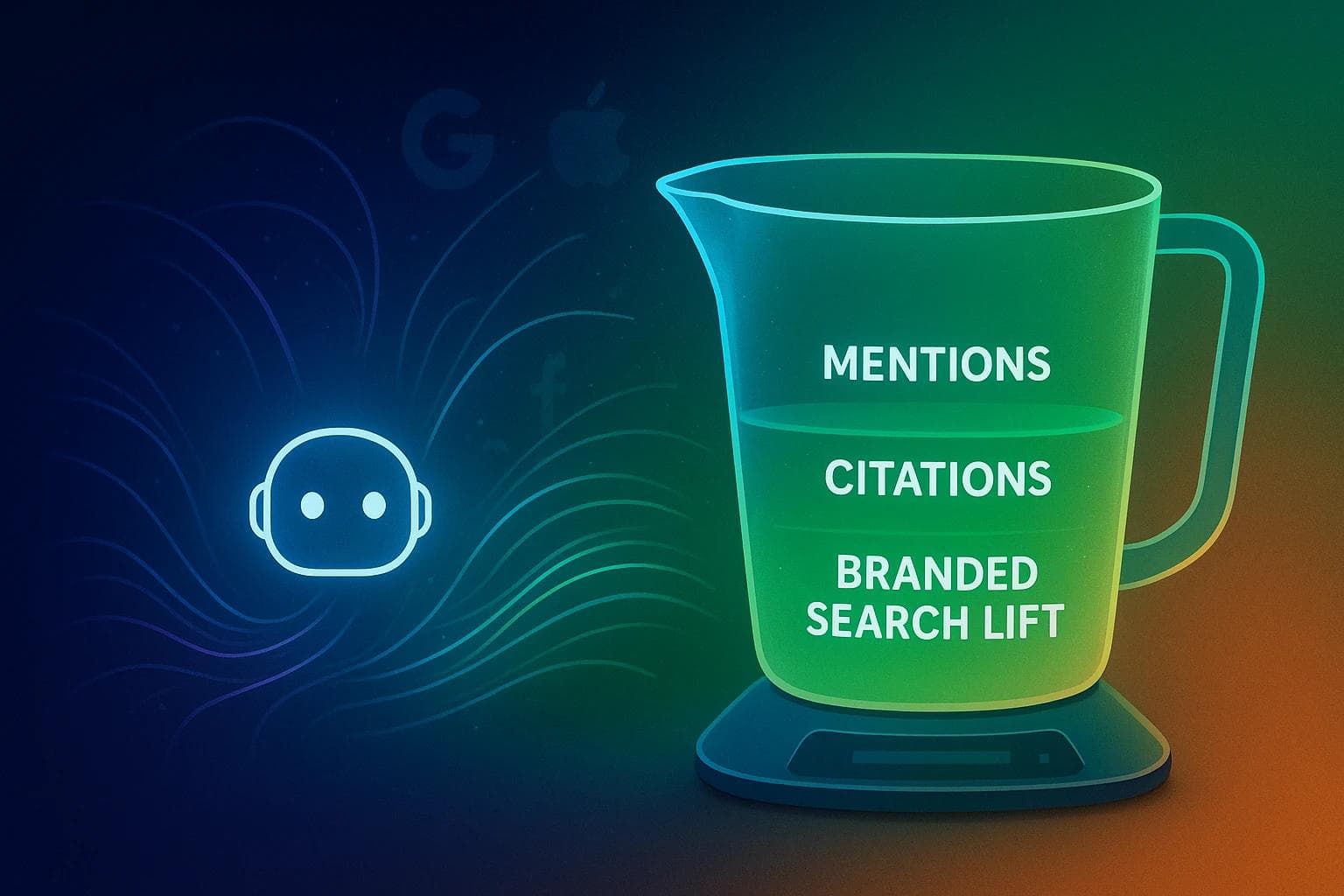
Welcome to the new frontier of digital visibility: Answer Engine Optimization (AEO). The old rules of measurement don't quite fit, and trying to use them is like trying to measure water with a ruler. This guide is your new measuring cup. We’ll walk through how to track the "invisible" impact of AEO, turning vague awareness into tangible data.
What is AEO, and Why is Measuring It So Different?
At its heart, Answer Engine Optimization (AEO) is the practice of creating and structuring your content so that AI-powered search engines and chatbots (like ChatGPT, Gemini, and Perplexity) use it as a primary source for their answers. Instead of just ranking your webpage, the goal is for the AI to cite your information, mention your brand, and position you as an authority directly within its response.
The biggest "aha moment" for anyone moving from traditional SEO to AEO is understanding the shift from a deterministic to a probabilistic world.
- SEO is largely deterministic: If you have the right authority, keywords, and technical setup, you can reliably rank in a specific position for a specific query. The results are relatively stable.
- AEO is probabilistic: An AI's answer can change slightly every time the same question is asked. It depends on the context, the user's previous questions, and the specific data it pulls at that moment. You're not aiming for a fixed #1 spot; you're aiming to become the most probable, trusted source of information.
This fundamental difference means we need a new scorecard.
FeatureTraditional SEOAnswer Engine Optimization (AEO)Primary GoalRank a URL high on a results pageBecome the cited source within an AI-generated answerUser InteractionUser clicks a link to visit a pageUser gets a direct answer, often without clickingKey MetricOrganic Traffic, Keyword Rankings, CTRAnswer Inclusions, Citations, Brand MentionsEnvironmentDeterministic (Relatively stable rankings)Probabilistic (Variable, context-based answers)Content FocusKeywords, backlinks, page authorityFactual accuracy, clear structure, conversational tone
The New Scoreboard: Key Metrics to Track AEO Impact
If clicks and traffic are no longer the whole story, what should you be watching? Your new AEO dashboard focuses on visibility, engagement, and influence—metrics that capture your presence within the AI conversation itself.
Visibility Metrics: Are You Part of the Conversation?
These metrics tell you if AI engines are finding and using your content.
- AI Answer Inclusion Rate: The most fundamental metric. For a set of key questions relevant to your business, what percentage of the time does the AI include information from your website in its answer?
- Brand Mentions: How often is your brand name mentioned in answers, even if your site isn't directly cited? This is a powerful measure of brand awareness.
- Citation Rate (Linked vs. Unlinked): When your content is used, does the AI provide a direct link back to your site? Tracking both linked and unlinked citations is crucial for understanding your visibility.
Engagement Metrics: Is the AI-Driven Traffic Valuable?
When you do get a click from an AI answer, it's often from a highly qualified user. They've already received a summary and are clicking for more detail.
- AI-Driven Referral Traffic: In your analytics platform (like Google Analytics 4), you can start to identify traffic coming from sources like ChatGPT. This is your direct traffic from AEO.
- Quality of AI-Referred Traffic: Look beyond the volume. Is this traffic more engaged? Check metrics like time on page, pages per session, and bounce rate. Often, AEO traffic is higher quality because the user's initial query has already been answered.
Influence Metrics: Are You Changing Minds?
This is where AEO gets really powerful. A positive mention in an AI answer can build trust and influence future behavior, even without a click.
- Sentiment in AI Responses: When your brand is mentioned, is the context positive, neutral, or negative? This qualitative metric is vital for brand reputation management.
- Branded Search Lift: This is a golden metric. After running an AEO initiative for a few months, do you see an increase in people searching directly for your brand name? This suggests that users are seeing you in AI answers and remembering you later.
From Theory to Practice: How to Test and Measure Your AEO Efforts
Knowing the metrics is one thing; influencing them is another. The probabilistic nature of AI can make it feel like you're guessing. But with a simple, scientific approach, you can start making changes and measuring their real impact.
Start with a Manual Audit: Your Baseline
Before you change anything, you need to know where you stand. Grab a spreadsheet and spend 30 minutes being your own customer.
- List 10-15 core questions your customers would ask about your industry or products.
- Ask each question to 2-3 different AI engines (e.g., ChatGPT, Google's AI Overviews, Perplexity).
- Record the results: Does the AI mention you? Does it cite your content? Does it cite a competitor? What is the overall sentiment?
This simple audit gives you a baseline. Now, you can start experimenting.
Designing Your First AEO Experiment
The goal of an A/B test in AEO is to isolate a single change and observe its effect on your inclusion and citation rates.
Let’s walk through a real-world example.
- Observation: Your manual audit shows that for the question "What are the benefits of [your product type]?", a competitor is cited 80% of the time.
- Hypothesis: You believe the competitor's page is structured as a clear, scannable list, while yours is a dense paragraph. Your hypothesis is: "Rewriting our 'Benefits' page with clear H3 subheadings for each benefit and a concluding summary paragraph will increase our citation rate for related queries by 20% over the next 30 days."
- Methodology:Benchmark: Document your current citation rate for the target query (in this case, 0%).
- Implement Change: Update the content on your 'Benefits' page as described in the hypothesis. A successful experiment starts with a solid foundation. Before you start tweaking pages, it's crucial to have a clear plan for [developing a content strategy for AI search]().
- Monitor: Once a week for the next 30 days, repeat your manual audit for that specific question. Record the results.
- Analyze: After 30 days, compare your new citation rate to your benchmark. Did it increase? Did you meet your 20% goal?
This structured approach moves you from guessing to knowing what works.
The Million-Dollar Question: Attributing Value to Zero-Click Mentions
Okay, this is the challenge that brings most marketers to a halt. How do you prove the ROI of a brand mention that didn't result in a click?
Direct, one-to-one attribution is nearly impossible here. Instead, we need to think like brand marketers and look at correlation and influence. We can’t draw a straight line from an AI mention to a sale, but we can draw a dotted line from a pattern of mentions to a lift in business outcomes.
Here's a simple framework to start connecting the dots:
- Track Your AEO Visibility Over Time: Are your answer inclusion rate and brand mentions consistently increasing month over month?
- Overlay Key Business Metrics: On the same timeline, track your branded search volume, direct traffic (people typing your URL directly), and new inbound leads.
- Look for Correlation: Do you see a lift in branded search a month after a successful AEO campaign increased your visibility? Did your direct traffic tick up after you became the primary source for a key industry question?
This isn't about proving that one AI mention led to one sale. It's about building a compelling case that your increased presence in AI conversations is elevating your brand's authority and driving valuable, high-intent traffic down the line. As AI engines get smarter, the future may even lie in [AI-powered content personalization]() to deliver hyper-relevant answers.

Your AEO Measurement Questions, Answered
How is AEO measurement different from SEO?
SEO focuses on ranking and clicks from a list of links. AEO focuses on being the trusted source within a direct answer. This means you measure things like citations and brand mentions, not just traffic.
What's the most important AEO metric to start with?
The AI Answer Inclusion Rate. You can't optimize what you can't see. Start by simply tracking how often you appear in answers for your most important customer questions.
Can I measure AEO without expensive tools?
Absolutely. The manual audit and experimentation process described above can be done with nothing more than a browser and a spreadsheet. It's a great way to start understanding the landscape before you invest in automation.
How often should I check my AEO metrics?
For active experiments, check weekly to monitor progress. For general tracking, a monthly check-in is a good cadence to spot trends without getting lost in the daily fluctuations of the probabilistic AI environment.
What's Next on Your AEO Journey?
You now have the framework to navigate the world of AEO measurement. You understand that it's a new game, one played on a field of conversations, not just search results. You know the key metrics to watch—from inclusion rates to branded search lift—and you have a practical method for running simple experiments to see what actually moves the needle.
The journey doesn't end here. The world of AI search is evolving at a dizzying pace. But by focusing on creating high-quality, authoritative content and learning how to measure its impact, you're not just keeping up; you're building a brand that will be the answer for years to come.
Roald
Founder Fonzy — Obsessed with scaling organic traffic. Writing about the intersection of SEO, AI, and product growth.
Stop writing content.
Start growing traffic.
You just read about the strategy. Now let Fonzy execute it for you. Get 30 SEO-optimized articles published to your site in the next 10 minutes.
No credit card required for demo. Cancel anytime.
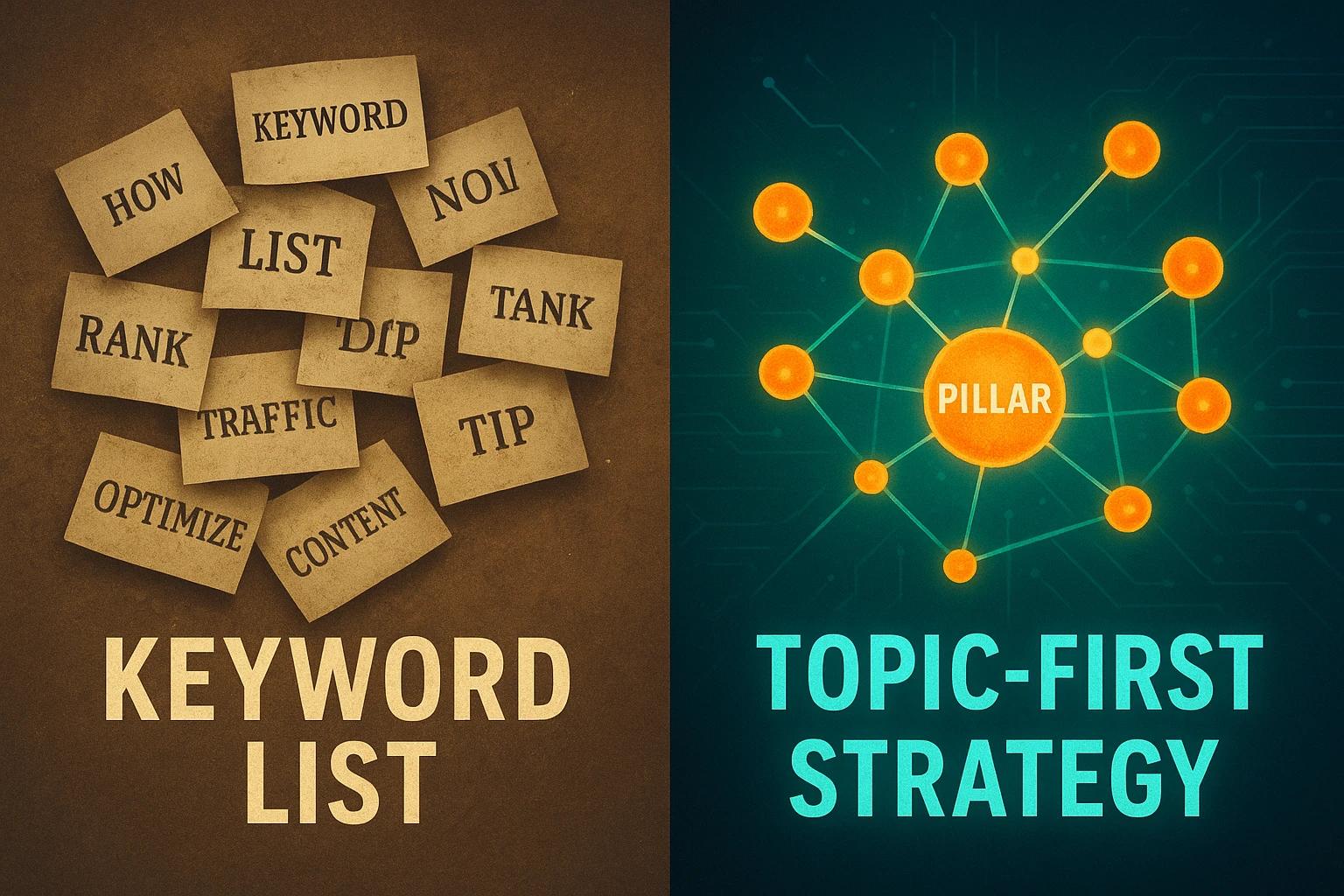
Topic-First Content Strategy for AI-Driven Search
Discover why focusing on topics over keywords drives SEO success in AI-powered search environments.
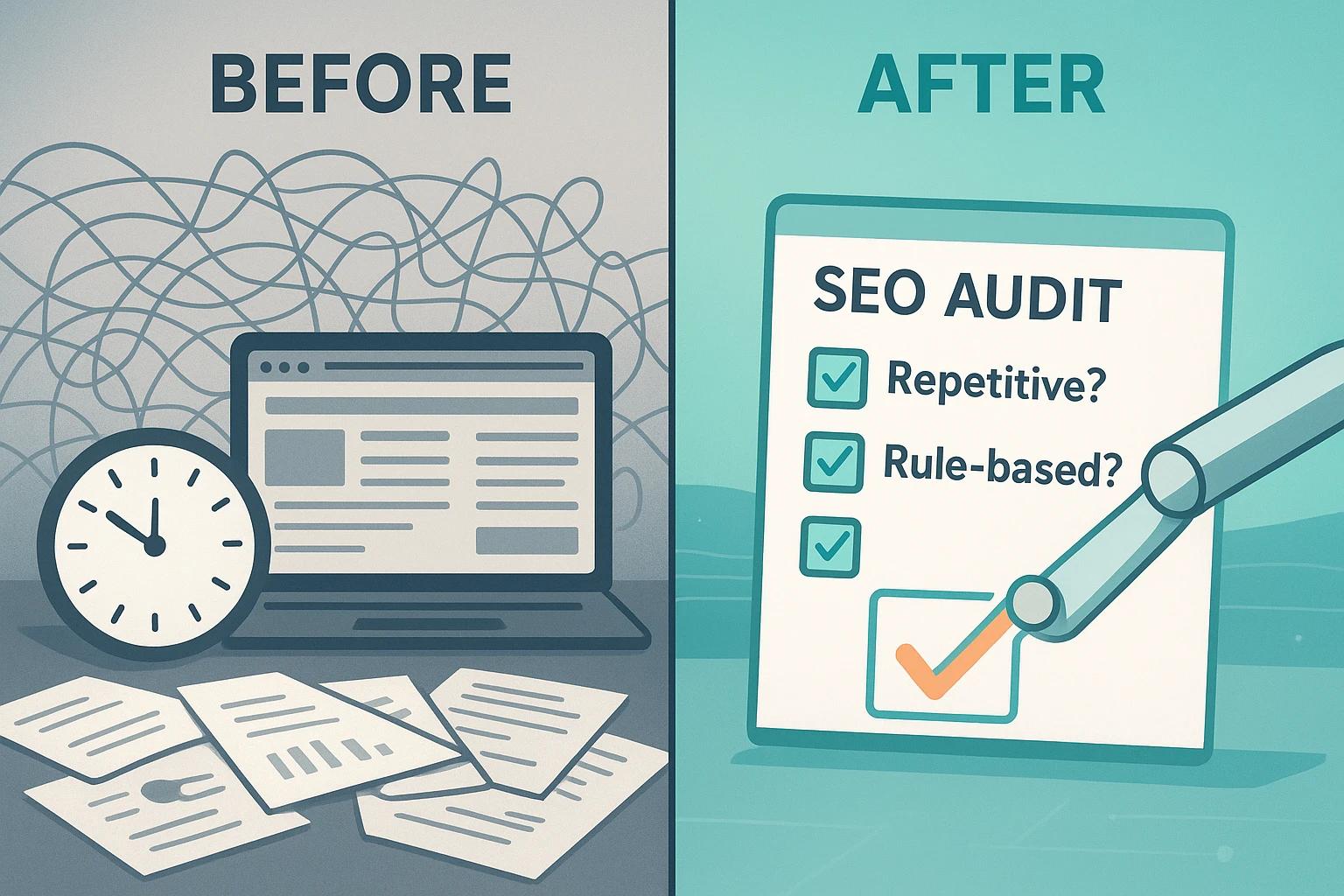
How to Audit SEO for Automation Opportunities
Discover a simple non-technical checklist to identify SEO tasks you can automate and save time for strategic work.

5 Signs Your Content Workflow Is Blocking Growth
Discover common content workflow problems slowing your growth and how automation can help improve efficiency and results.