Beyond Keywords How to Make Your Brand an AI-Trusted Entity


Beyond Keywords: How to Make Your Brand an AI-Trusted Entity
You’re evaluating AI tools, comparing features, and looking for a competitive edge. But what if the most powerful advantage isn't found in another "alternative to" list? While your competitors are stuck comparing specific tool features, a fundamental shift is happening: AI systems are becoming the new gatekeepers of information, and they don't just rank content—they recognize and trust entities.
If your brand isn't explicitly defined and consistently reinforced for these AI systems, you risk becoming invisible. The real challenge isn't just finding a better AI tool; it's teaching AI to recognize your brand as an authority worth citing. This guide provides the strategic framework to move beyond simple SEO and build a robust brand entity that AI systems understand, trust, and amplify.
Why Your Current SEO Strategy Is Falling Short
The digital landscape is crowded with tactical advice. A quick search reveals a focus on direct comparisons, with pages from companies like ClipGOAT and Maestra AI ranking for queries like "Crayo AI alternatives." This reflects a common user intent: discovery and comparison of tools. However, this approach is reactive and misses the bigger picture.
Winning in the AI era requires a proactive strategy. AI systems, from search engines to generative assistants, rely on vast, interconnected webs of information called Knowledge Graphs. They don't just count keywords; they connect concepts, facts, and relationships to understand who you are, what you do, and how authoritative you are in your niche. If your brand signals are weak, inconsistent, or undefined, you simply won't be part of that conversation.
The Three Pillars of AI Brand Recognition
To build a brand that AI trusts, you need to move beyond tactical SEO and focus on three strategic pillars. This framework helps you assess your current efforts and prioritize what truly matters for establishing a durable, authoritative presence.
Pillar 1: Explicit Definition Through Structured Data
You cannot expect an AI to understand your brand if you don't define it in a language it speaks. Structured data, specifically Schema markup, is that language. It's a vocabulary you add to your website's code to explicitly tell AI systems:
- Who you are: Using
Organizationschema to define your company name, logo, social profiles, and official contact information. - What you offer: Using
ProductorServiceschema to detail your offerings, features, and pricing. - What you know: Using
ArticleandFAQPageschema to structure your content and assert your expertise.
This isn't about gaming an algorithm; it's about providing clear, unambiguous facts that form the bedrock of your brand entity in AI knowledge bases.
Pillar 2: Building Authority with a Consistent Content Ecosystem
AI systems build confidence in an entity through consistent, high-quality information. A single great blog post isn't enough. You need to create a dense, interconnected ecosystem of content that establishes your topical authority. This means publishing consistently on subjects core to your business, demonstrating deep expertise, and maintaining a uniform brand voice.
This relentless focus on creating authoritative content is where automation becomes a strategic advantage. It’s a challenge of scale and consistency that manual processes struggle to meet. The ability to plan, produce, and publish expert-level articles daily is what separates recognized entities from the noise. This is the exact process that a platform like Fonzy AI is designed to automate, building your content pillar without the manual overhead.
Pillar 3: Earning Trust Through Citations and Mentions
Just like in academia, AI systems verify authority through citations. In the digital world, these citations come in the form of backlinks, brand mentions on reputable sites, and inclusion in industry discussions. AI views these external signals as third-party validation. When other trusted entities refer to you, it reinforces the claims you make about yourself through your own content and structured data. Building this pillar involves a long-term strategy of digital PR, guest contributions, and creating unique research that others want to cite.

A Practical Roadmap to Becoming an AI-Trusted Entity
Moving from theory to implementation requires a clear, phased approach. Instead of a scattered list of tactics, this roadmap helps you build a strong brand entity methodically, ensuring foundational elements are in place before scaling your efforts.
Phase 1: Foundation (The First 90 Days)
This phase focuses on quick wins that establish a clean, consistent baseline for AI systems to interpret.
- Brand Consistency Audit: Review all online properties—your website, social media profiles, and directory listings—to ensure your company name, address, and core descriptions are identical everywhere.
- Schema Markup Implementation: Conduct a full audit of your website's structured data. Implement or refine
Organization,Product, andServiceschema to explicitly define your core entity.
Phase 2: Expansion (Months 4-12)
With a solid foundation, you can now focus on building authority and expanding your entity's footprint.
- Develop a Knowledge Graph Strategy: Actively work to secure and optimize a Google Knowledge Panel for your brand. This is a clear sign that Google recognizes you as a distinct entity.
- Automate Content Authority: Implement a system for consistent, daily publication of high-quality content centered on your core topics. This is the engine of your authority-building efforts.
Phase 3: Optimization & Maintenance (Ongoing)
Entity building is not a one-time project. It requires continuous effort and adaptation.
- Monitor Brand Perception: Use tools to track how AI systems are interpreting and citing your brand. Look for your brand name in AI-generated summaries and search results.
- Adapt and Refine: As AI technologies evolve, your strategy must too. Stay informed about changes in how AI processes information and be prepared to adjust your content and data strategies accordingly.

Measuring Success: How to Know Your Brand Entity is Strengthening
Unlike traditional keyword ranking, measuring brand entity recognition requires looking at a different set of signals. Success isn't just about being #1 for a search term; it's about being the recognized authority.
Key indicators that your strategy is working include:
- Knowledge Panel Presence: Your brand has a stable, accurate Knowledge Panel in Google search results.
- Increased Branded Search Volume: More users are searching for your brand name directly.
- AI-Generated Citations: Your brand, data, or content appears as a source in AI-powered summaries and answers.
- Improved Topical Rankings: You begin to rank for high-level, non-branded keywords within your niche because AI systems associate your entity with that topic.
This data provides the tangible proof needed to validate your investment in building a strategic brand entity.

Frequently Asked Questions
Isn't this just advanced SEO?
While it uses many SEO principles, brand entity recognition is a strategic layer on top. Traditional SEO often focuses on ranking individual pages for keywords. Entity building focuses on elevating the authority of your entire brand in the "mind" of AI systems, making you the default answer, not just one of the search results.
How long does it take to see results?
Foundational work like implementing schema can be recognized by AI systems within weeks. However, building true, unshakeable authority—the kind that gets you cited consistently—is a long-term commitment. Meaningful results from content and citation strategies typically begin to emerge after 6-12 months of consistent effort.
My business is small. Is this really necessary for me?
Absolutely. For SMEs and startups, establishing a strong brand entity in a specific niche is one of the most effective ways to compete against larger, established players. Instead of competing on massive keyword volume, you can become the definitive, AI-recognized authority for a more focused topic, building a moat that budget alone cannot cross.
Can't I just use an AI tool to do this?
AI tools are powerful enablers, but they are not the strategy itself. You need a comprehensive plan that governs how you define your brand, create authoritative content, and build trust. The most effective approach combines a clear strategy with powerful automation to execute that strategy at scale, consistently and tirelessly.
From Brand to Authority: Your Next Step
The competitive landscape has moved beyond a simple feature-for-feature comparison of AI tools. The enduring advantage will go to the brands that AI systems recognize as authoritative, trustworthy entities. This requires a deliberate, strategic effort to define who you are, demonstrate what you know, and prove your value through a consistent, high-quality content ecosystem.
Building this level of authority manually is a significant challenge. If you're ready to move beyond tactics and start building a lasting brand entity, it's time to explore how automation can power your content authority pillar.
Discover how Fonzy.ai automates the entire SEO content lifecycle, enabling you to build the topical authority needed to become an AI-trusted entity.
Roald
Founder Fonzy — Obsessed with scaling organic traffic. Writing about the intersection of SEO, AI, and product growth.
Stop writing content.
Start growing traffic.
You just read about the strategy. Now let Fonzy execute it for you. Get 30 SEO-optimized articles published to your site in the next 10 minutes.
No credit card required for demo. Cancel anytime.

The First-Mover Advantage Why Early AI Citation is Your Next Competitive Moat
Gain lasting market share and brand authority by adopting AI citation early. Secure your competitive moat before the window closes.
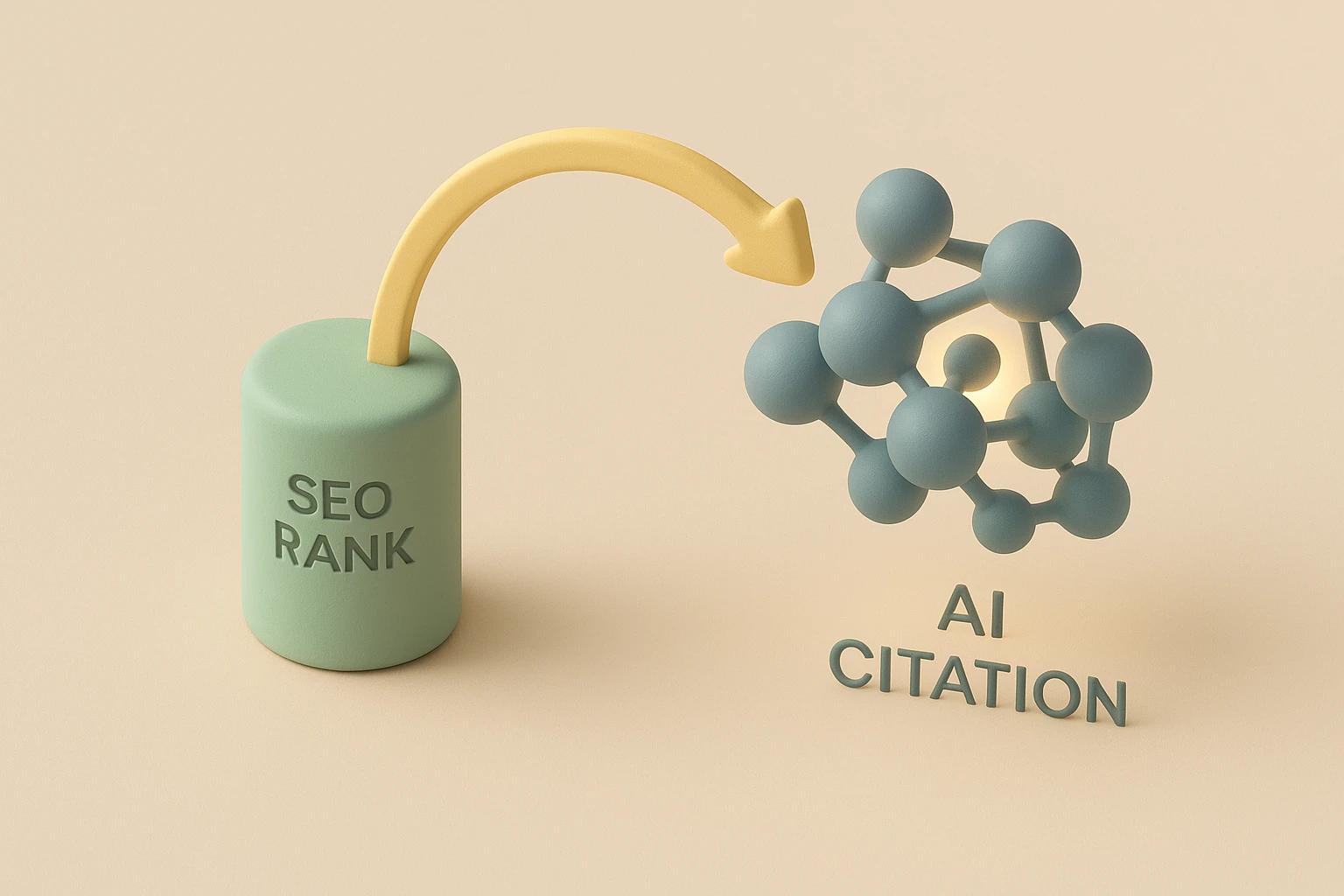
The Evolution of Authority From SEO Ranking to AI Citation
Learn how to shift from traditional SEO to AI citation authority with strategies that boost your visibility in AI-driven search results.

Beyond the Hype A Practical Framework for Measuring AI Citation ROI
Discover a multi-layered framework to measure and prove AI citation ROI, connecting AI visibility to real business and financial results.