How People Use Long-Tail Conversational Queries in AI Search

Beyond Keywords: How People Really Ask Questions in Voice and AI Search
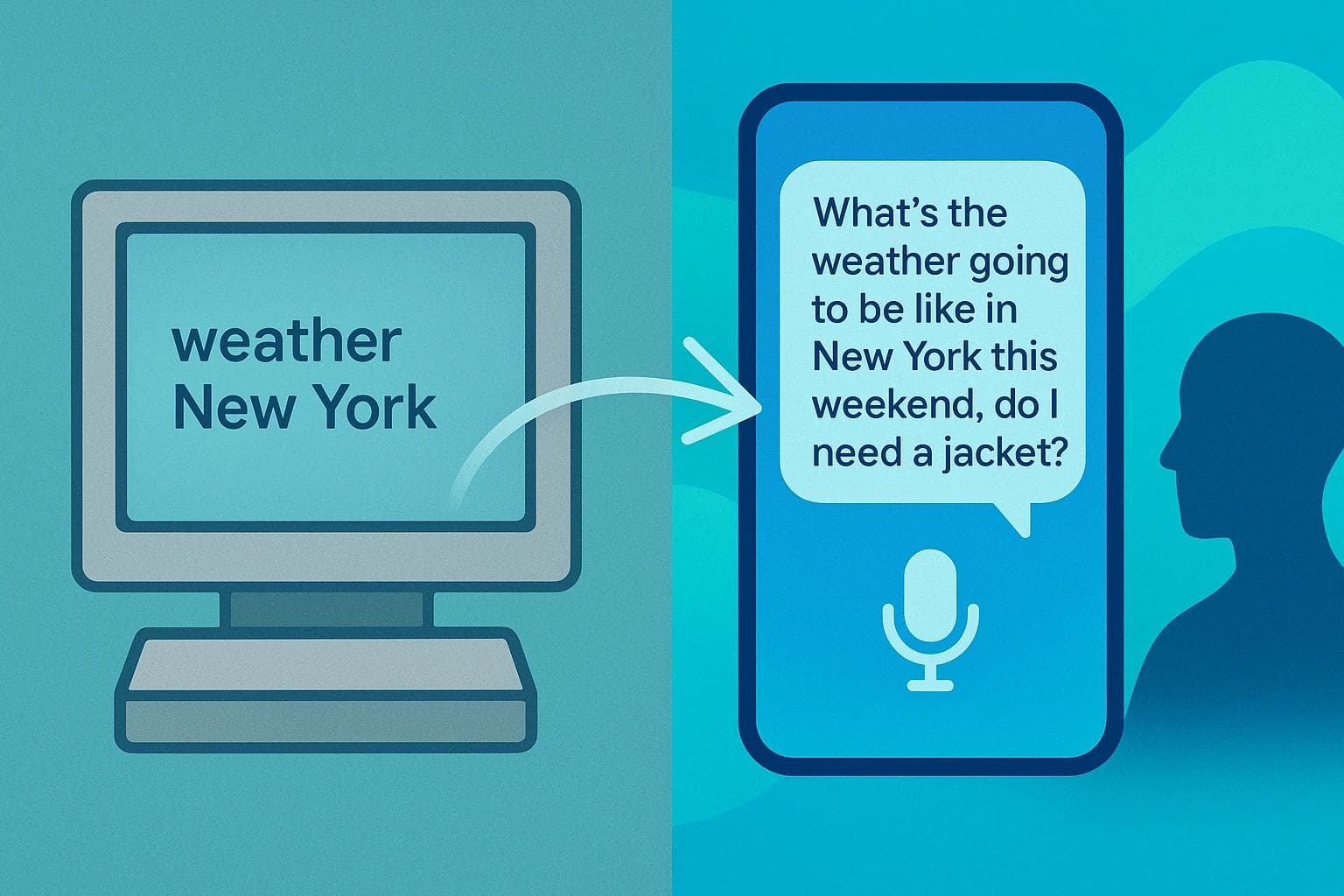
Ever found yourself talking to your smart speaker like it's a person? You don't just say "weather New York." You ask, "Hey, what's the weather going to be like in New York this weekend? I'm trying to figure out if I need to pack a jacket."
You'd never type that full sentence into a Google search bar. For years, we were trained to use a sort of shorthand—"keyword-ese"—to get the answers we needed. But with the rise of voice assistants and conversational AI, that's all changing. We're going back to our most natural form of communication: asking full, detailed questions.
This shift isn't just a fun quirk of new technology; it represents a fundamental change in how people find information. And for businesses and creators, understanding this change is the key to getting found in the new era of search.

What Are Conversational Queries, Really?
Let's get our terms straight. You've probably heard of "long-tail keywords." These are longer, more specific search phrases that tend to have lower search volume but much higher intent. A conversational query is the final evolution of a long-tail keyword.
It's not just a string of words; it's a fully-formed question or statement spoken or typed in natural language.
- Short-Tail Keyword:
running shoes - Long-Tail Keyword:
best trail running shoes for wide feet - Conversational Query:
What are the best trail running shoes for someone with wide feet who mostly runs on rocky terrain?
Notice the difference? The conversational query is packed with context, nuance, and specific intent. It's not just a search; it's the start of a dialogue. We see these queries across a spectrum: from more detailed typed questions in search engines to full-blown conversations with AI chatbots and voice assistants.
Decoding the Human-AI Conversation: The Psychology of Asking
So, why are we talking to our devices like this? It boils down to a few simple human factors:
- It's Easy: It takes less mental effort to speak a full thought than to break it down into keywords.
- It's Fast: We can speak much faster than we can type.
- It Feels Natural: We're wired for conversation. As AI gets smarter, we instinctively interact with it the way we would with a helpful person.
This isn't just about convenience; it's about a shift in perception. We no longer see search engines as simple databases to be queried with code words. We see them as intelligent assistants capable of understanding our real-world needs.

The Linguistic Patterns AI Understands
When we ask questions naturally, we use specific linguistic structures that AI is now incredibly good at decoding.
- Interrogative Words: Who, what, where, when, why, how. These signal a direct question that needs a specific answer.
- Modifiers & Context: Words like "best," "cheapest," "easiest," or phrases like "for a beginner," "near me," and "in 2024" add layers of intent that AI uses to refine the answer.
- Implied Needs: When someone asks, "How do I fix a leaky faucet?" they aren't just asking for steps. They might also need a list of tools, an estimate of how long it will take, and tips on what not to do.
How AI Makes Sense of the Messiness
The magic behind this is that AI doesn't just match keywords anymore. It performs complex tasks to understand the meaning behind your words.
- Entity Recognition: It identifies key "entities" like people, places, products, and concepts. In our earlier example, it knows "Empire State Building" and "Statue of Liberty" are specific locations in New York City.
- Intent Classification: It figures out what you're trying to do. Are you looking for information (navigational), trying to buy something (transactional), or comparing options (investigational)? "Quickest way" clearly signals an informational and navigational intent.
This is a game-changer. It means the most helpful, comprehensive, and clearly explained answer wins—not just the one stuffed with the most keywords.
Mastery: Crafting Content That Answers Before They Ask
So, how do you adapt your content strategy for a world of conversational queries? You have to stop thinking like a list of keywords and start thinking like a helpful expert having a conversation.
Moving From Keywords to Concepts
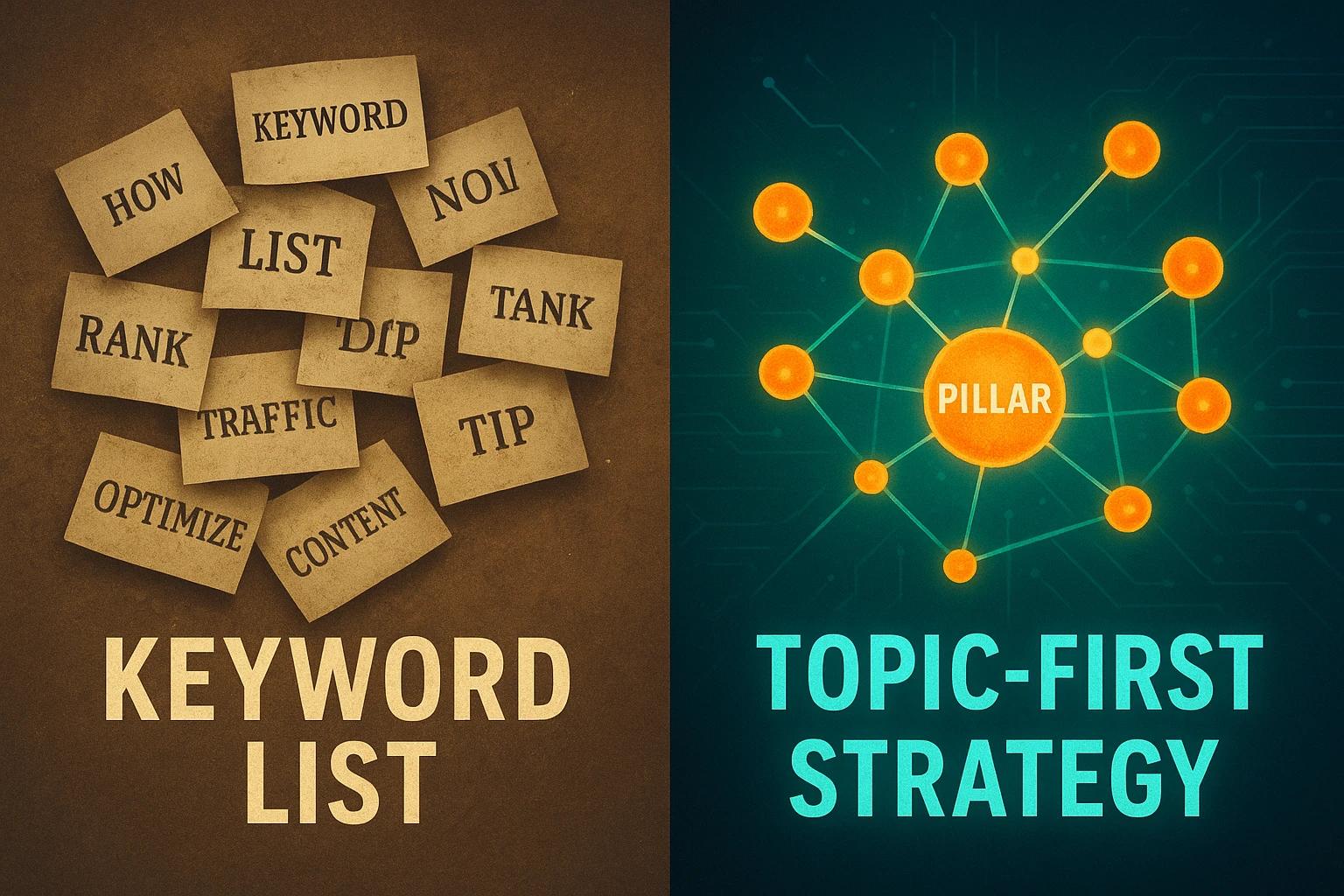
Instead of targeting a single keyword like "content marketing," think about the entire concept and all the questions someone might have about it. What does a beginner need to know? What problems are they trying to solve? What might they ask next? Your goal is to create a resource that covers the topic so thoroughly that it can answer dozens of potential conversational queries from a single page.
Strategic Content Structuring for AI
How you organize your content is now just as important as what you write. This means structuring your articles with clear, question-based headings is no longer just good practice—it's essential. Many creators wonder, what’s the impact of heading structure on AI extractability? The answer is: it's massive. Clear headings (like H2s and H3s) act as signposts for AI, making it easier to pull out the exact snippet that answers a user's specific question for things like Google's AI Overviews or a featured snippet.

Adopting a "Conversational Cadence"
Finally, your writing style needs to adapt. Write like you speak (but, you know, grammatically correct).
- Be Direct: Answer the question right away, then provide the details.
- Use Simple Language: Avoid jargon. Explain complex topics in an accessible way.
- Be Comprehensive: Don't just answer the question asked; answer the next three questions they're likely to have.
The Next Frontier: From SEO to AEO
Mastering conversational queries is the first major step in a much larger strategic shift. Traditional Search Engine Optimization (SEO) is focused on ranking a webpage. But in a world where AI gives you a direct answer, simply ranking #1 isn't enough.
This is where Answer Engine Optimization (AEO) comes in. AEO is the practice of optimizing your content not just to rank, but to be the definitive, cited answer that AI platforms use. It's about becoming the trusted source that Google's AI Overviews, Alexa, and Siri rely on.
Understanding how real people ask questions is the foundation. The next step is building your content strategy to ensure you're the one providing the answers.
Frequently Asked Questions About Conversational Search
What's the main difference between a long-tail keyword and a conversational query?
The key difference is natural language. A long-tail keyword is still a collection of search terms, like women's waterproof hiking boots sale. A conversational query is a complete sentence or question, like Where can I find a sale on waterproof hiking boots for women? It reflects how a person actually speaks.
Do I still need to care about short keywords?
Absolutely. Short keywords (e.g., hiking boots) are still crucial for capturing broad, top-of-funnel awareness. Conversational queries are for capturing users who are further along in their journey and have very specific needs. A good strategy uses both.
How do I even find these long conversational queries?
Start by listening to your audience. Look at the "People Also Ask" section on Google, browse forums like Reddit or Quora, and check your own customer service logs. Tools like AnswerThePublic are also great for visualizing the questions people are asking around a central topic.
Is this just for voice search?
No. While voice search is a huge driver, this trend impacts all forms of AI-assisted search. This includes typed questions into Google that trigger an AI Overview, queries in chatbots like ChatGPT, and any platform where a user interacts conversationally.
Ready to stop chasing keywords and start winning conversations? The first step is to look at your own content. Does it answer questions directly? Is it structured for easy extraction by AI? Is it written in a way that feels like a genuinely helpful conversation? By shifting your mindset, you can prepare your content for the future of search.
Roald
Founder Fonzy — Obsessed with scaling organic traffic. Writing about the intersection of SEO, AI, and product growth.
Stop writing content.
Start growing traffic.
You just read about the strategy. Now let Fonzy execute it for you. Get 30 SEO-optimized articles published to your site in the next 10 minutes.
No credit card required for demo. Cancel anytime.
Topic-First Content Strategy for AI-Driven Search
Discover why focusing on topics over keywords drives SEO success in AI-powered search environments.
How to Audit SEO for Automation Opportunities
Discover a simple non-technical checklist to identify SEO tasks you can automate and save time for strategic work.

5 Signs Your Content Workflow Is Blocking Growth
Discover common content workflow problems slowing your growth and how automation can help improve efficiency and results.