
From Rank to Reference: How Your Internal Links Dictate If AI Cites You
Ever have that moment where you explain something to a friend, and they repeat it to someone else later, saying, "Well, as my friend here was saying…"? That’s a great feeling. You’ve become their trusted source, the reference point for that topic.
In the world of online search, this is the new goal. For years, we’ve been obsessed with ranking #1 on Google. But the game is changing right before our eyes. Now, with AI Overviews and chat-based answer engines, the ultimate prize isn't just being at the top of a list—it's being the cited source within the answer itself.
It's the difference between being a book on the library shelf and being the expert the librarian quotes directly. One gets you visibility; the other makes you the authority. And the map that guides AI to choose you as that authority is hidden in plain sight: your website's internal linking structure.
[INSERT IMAGE 1: A side-by-side visual comparing a traditional Google search result page with a modern AI Overview that clearly shows cited sources with thumbnails and links.]
The Two Audiences: Search Spiders vs. AI Models
For the longest time, we built our websites for one primary non-human audience: the search engine crawler, or "spider." Its job was simple: follow links, index pages, and figure out what our content was about so it could be ranked.
But AI models, like the ones powering Google's AI Overviews or ChatGPT, are a completely different audience.
- Search Spiders Index: They are librarians cataloging books. They follow links to discover pages and use keywords to understand the topic. Link equity flows through these connections, telling the spider which pages are most important.
- AI Models Understand: They are researchers reading every book in the library to write a definitive summary. They don't just follow links; they analyze the relationships between them to build a deep, contextual understanding of your entire website's expertise on a topic.
An internal link is no longer just a pathway for "link juice." For an AI, it’s a sentence in the story you're telling about your authority. A messy, disorganized linking structure is like a story with no plot—the AI will simply look for a more coherent author to cite.
What AI Really Sees in Your Site Structure
If you could put on "AI Goggles" and look at your website, you wouldn't just see pages and links. You'd see a web of interconnected ideas. Here’s how to ensure that web looks like the work of an expert.
It's Not a Path, It's a Map of Your Expertise
Imagine you're trying to learn about sourdough bread. You land on a blog post about "Sourdough Starters for Beginners." A good internal link doesn't just point to a random article on "10 Sandwich Recipes." It creates a logical path.
- From the beginner's guide, a link takes you to a deep dive on "The Science of Fermentation."
- From there, another link guides you to "Troubleshooting a Weak Starter."
- Finally, you're led to "Baking Your First Loaf."
For a human, this is a helpful user journey. For an AI, this is a powerful signal. It sees a tightly-knit group of articles that comprehensively cover a topic from every angle. According to research from the Content Marketing Institute, these structures demonstrating topical depth significantly influence an AI's citation patterns. You're not just providing a single answer; you're providing a complete education, making you a far more reliable source to cite.
The Power of the Hub: Creating a "Library" for AI
The single most effective way to demonstrate this comprehensive knowledge is by organizing your content into topical hubs (also known as pillar pages and content clusters).
Think of it like this:
- The Pillar Page (or Hub): This is your definitive, cornerstone guide on a broad topic—say, "The Ultimate Guide to Digital Marketing." It covers all aspects of the topic at a high level.
- The Cluster Content: These are more detailed articles that explore specific sub-topics mentioned in the pillar, like "Beginner's SEO," "Social Media Advertising," or "Email Campaign Strategy."
Crucially, every cluster article links back up to the main pillar page, and the pillar page links out to all the supporting cluster articles.
[INSERT IMAGE 2: A clean diagram showing a central "Pillar Page" with lines connecting out to several "Cluster Content" articles, which in turn have lines linking back to the pillar.]
This hub-and-spoke model is incredibly powerful for AI. It creates an organized, easy-to-understand "library" on a subject. When an AI needs a trustworthy source on digital marketing, it can see your entire collection, recognize its depth, and feel confident citing your pillar page as the primary authority.
Canonical Confusion: Telling AI Which Page is the "Professor"
Sometimes, you might have similar or identical content on different URLs. This can happen with e-commerce product pages (a red shirt and a blue shirt with the same description) or if you have versions of a page for printing.
This is where the canonical tag comes in. It's a snippet of code that tells search engines, "Hey, of all these similar pages, this one is the main version—the original, the professor."
For AI, this is even more critical. AI models are trying to find a single, definitive source of truth. If they find three slightly different versions of the same information on your site without a clear canonical tag, their confidence in your content drops. They don't know which one to trust, so they may choose to cite none of them. By using canonical tags correctly, you are explicitly telling the AI, "This is the definitive answer. Cite this one."
Actionable Strategies to Become an AI's Favorite Source
Understanding the theory is one thing, but putting it into practice is what gets results. Here are a few ways to start optimizing your site structure for AI citation.
Rethink Your Anchor Text for Deeper Meaning
Anchor text is the clickable text in a hyperlink. For years, the mantra was "use your exact-match keyword." But AI thinks more like a human.
Instead of linking with just "internal linking," try using more descriptive or question-based anchors:
- "learn more about how to build a strategic internal linking plan"
- "we cover the basics of what makes a good internal link for SEO"
- "this process is key to strengthening your website's topical authority"
This gives the AI much richer context about what the linked page contains, reinforcing the semantic relationship between the two pages.
Audit Your Site Through an "AI's Eye View"
Take a step back and look at your site's structure. Ask yourself:
- Is there a clear hierarchy? Can an AI easily identify my main "hub" pages on important topics?
- Are my links logical? Do my internal links guide a user (and an AI) on a coherent learning journey, or are they just scattered?
- Do I have "orphaned" pages? Are there valuable articles on my site with few or no internal links pointing to them? For an AI, these pages look like isolated, unimportant thoughts.
- Are my canonical tags in order? Am I clearly telling AI which page is the master version for any similar content?
The Automation Advantage: Building Authority at Scale
Manually building and maintaining these complex, interconnected content hubs is a monumental task, especially for larger websites. It requires constant planning, writing, and meticulous linking. This is precisely why a new generation of platforms, including Fonzy AI, are emerging to automate the process. By analyzing your site and market, these tools can generate entire topic clusters, create the content, and automatically build the smart internal linking structures that signal deep authority to AI models, helping you get found in Google and AI answers without the manual overload.
Frequently Asked Questions (FAQ)
What is internal linking, and why does it matter for AI?
Internal linking is the practice of connecting one page on your website to another page on the same website. For AI, it matters because these links create a map of your content. A strong, logical linking structure shows the AI that you have deep, well-organized expertise on a topic, making you a more trustworthy source to cite in its answers.
What's the difference between how Google's crawler and an AI model use internal links?
A traditional Google crawler primarily uses internal links to discover new pages and to pass "authority" or "link equity" between them. An AI model goes a step further; it analyzes the pattern and context of your internal links to understand the relationships between concepts, gauge the depth of your knowledge, and build its own knowledge graph of your expertise.
What is a topical hub or pillar page?
A topical hub is a content strategy where you create one major, comprehensive page (the pillar) on a broad topic. Then, you create several more specific articles (the cluster) on sub-topics related to the pillar. All cluster pages link back to the pillar, and the pillar links out to them, creating a highly organized and authoritative "mini-library" on your site.
How can I start improving my internal linking for AI today?
Start small. Pick one of your most important topics. Identify your best, most comprehensive piece of content on that topic to act as your "pillar." Then, find 3-5 related blog posts and ensure they all link back to that pillar page with descriptive anchor text. This simple action begins to build a clear topical signal for AI.
Your Next Chapter: From Learning to Leading
The shift from optimizing for rankings to optimizing for citations is more than a technical change—it's a philosophical one. It forces us to move away from SEO tricks and toward what we should have been doing all along: creating deep, valuable, and well-organized resources that genuinely help people.
By viewing your internal links not as simple connections but as the very architecture of your expertise, you build a website that both humans and AI will recognize as a true authority. You stop being just another result on the page and become the reference itself.

Roald
Founder Fonzy — Obsessed with scaling organic traffic. Writing about the intersection of SEO, AI, and product growth.
Stop writing content.
Start growing traffic.
You just read about the strategy. Now let Fonzy execute it for you. Get 30 SEO-optimized articles published to your site in the next 10 minutes.
No credit card required for demo. Cancel anytime.
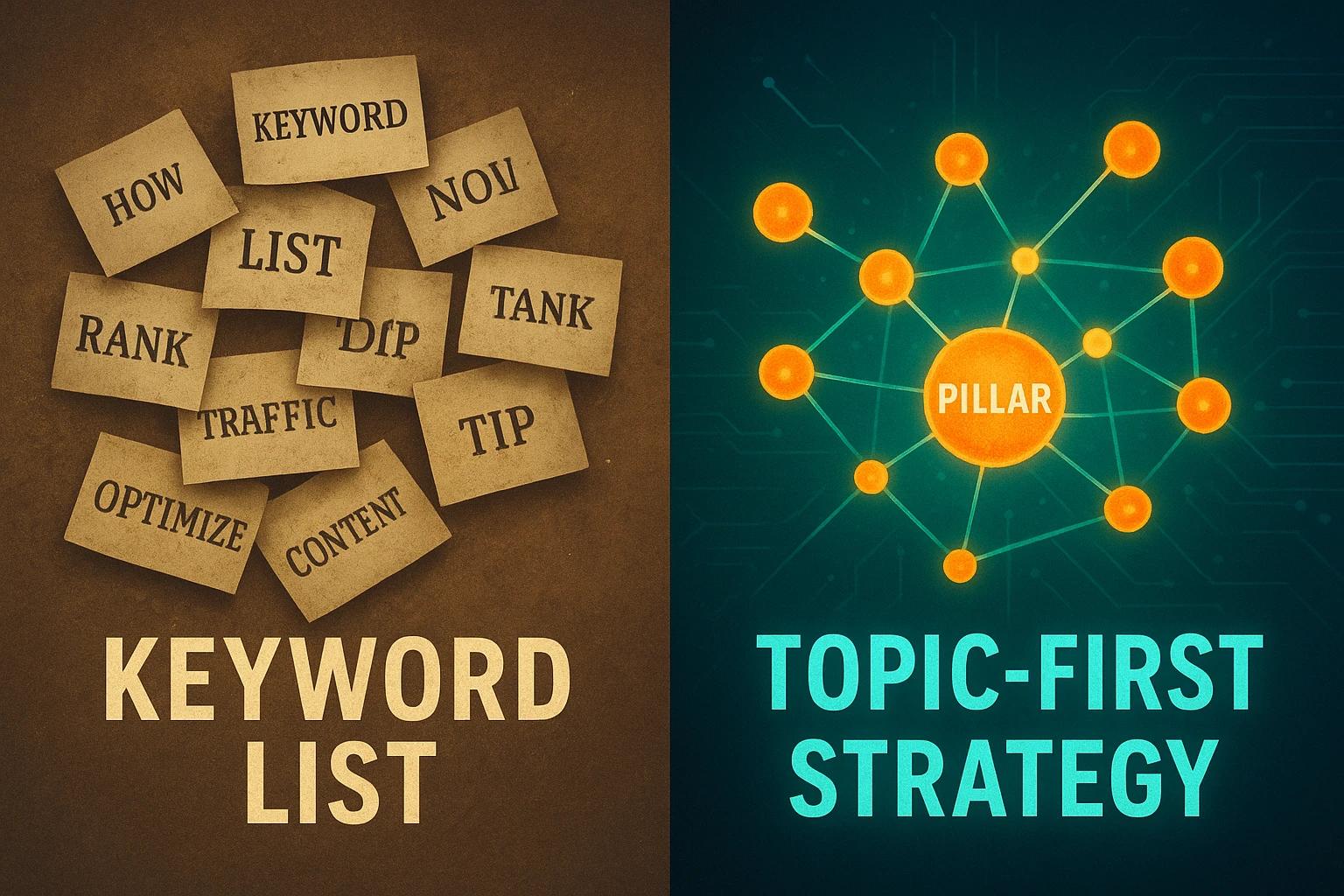
Topic-First Content Strategy for AI-Driven Search
Discover why focusing on topics over keywords drives SEO success in AI-powered search environments.
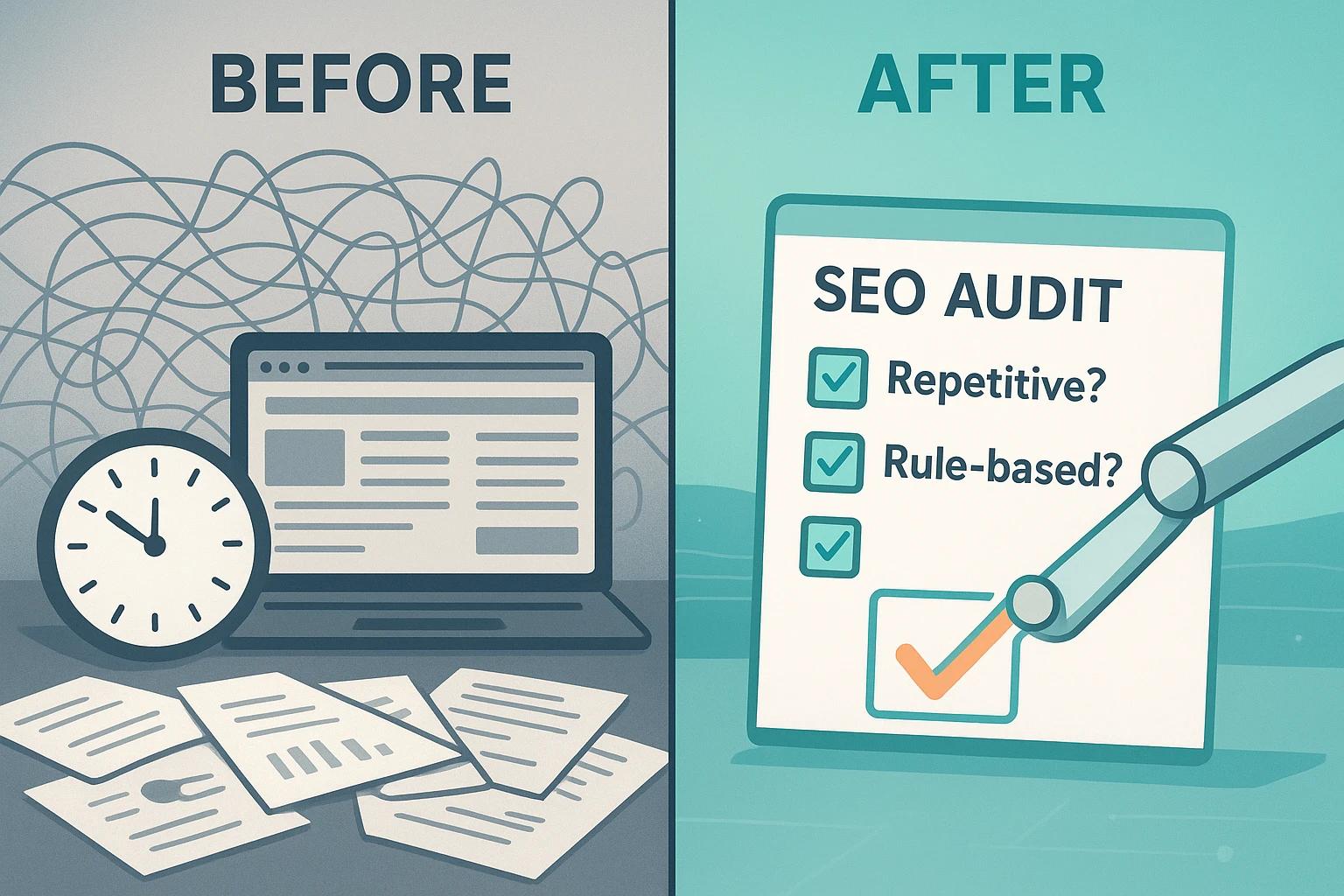
How to Audit SEO for Automation Opportunities
Discover a simple non-technical checklist to identify SEO tasks you can automate and save time for strategic work.
5 Signs Your Content Workflow Is Blocking Growth
Discover common content workflow problems slowing your growth and how automation can help improve efficiency and results.