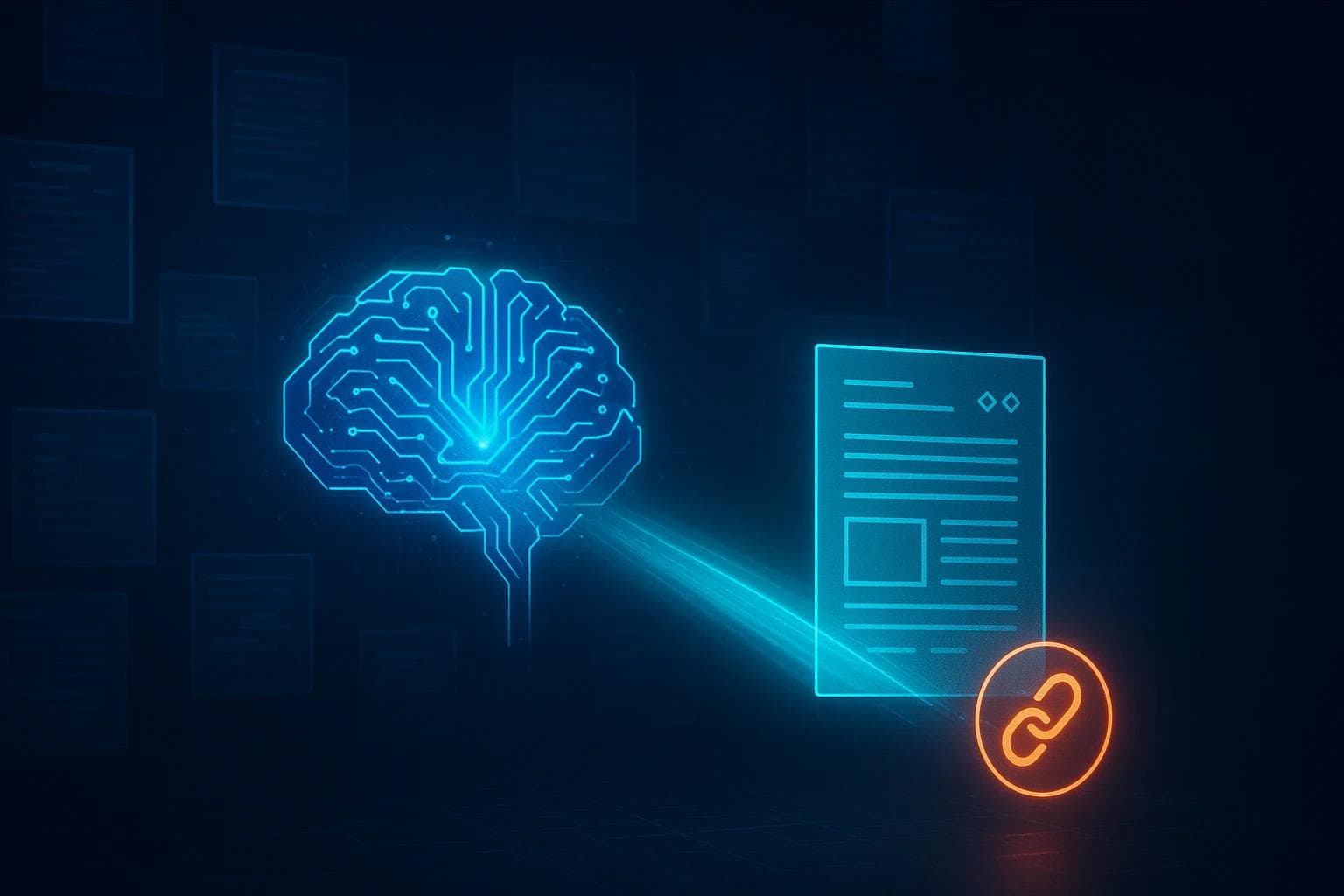
AI Citations Explained: Your Guide to Getting Found in the Age of Answer Engines
You’ve seen it happen. You ask Google a question, and instead of a list of blue links, a detailed, conversational answer appears at the top. You ask ChatGPT for a market analysis, and it synthesizes a report in seconds. These AI assistants are now the front door to the internet for millions of people.
But have you ever stopped to wonder, how does it know that? And more importantly, when it provides a source for its information, why does it choose one article over another?
Welcome to the new frontier of digital visibility. Getting your content cited by an AI is quickly becoming as crucial as ranking on the first page of Google. It’s not just a backlink; it’s a direct endorsement from the world's new information brokers. Understanding how this process works is the first step to ensuring your brand doesn't just survive in the age of AI—it thrives.
The New Currency of the Web: What Are AI Citations?
Let's get our terms straight. A traditional backlink is a clickable link from one website to another. An AI citation, however, is when an AI model like Google's AI Overviews, Perplexity, or ChatGPT directly references your content as the source for the information in its generated answer.
It might look like a footnote, an inline link, or a card in a carousel. But its function is powerful. It positions your content as the authoritative source behind the AI's confident answer. In a world of increasing "zero-click searches"—where users get their answers without ever leaving the results page—these citations are the new traffic drivers and authority signals.
So, how does an AI decide which sources are trustworthy enough to make the cut? It isn't magic. It's a complex evaluation based on a handful of core principles.

Peeking Inside the Black Box: How AI Assistants Choose Their Sources
Imagine an AI assistant as a hyper-intelligent research librarian. It doesn't just grab the first book it sees. It rapidly evaluates the entire library, cross-references facts, and selects the most reliable, relevant, and up-to-date sources to build its answer. Here are the signals it looks for.
1. Authority and Trust (E-E-A-T for Machines)
You’re familiar with Experience, Expertise, Authoritativeness, and Trustworthiness (E-E-A-T) as a concept for traditional SEO. AI takes this to another level. It’s not just looking for signals humans can see; it’s looking for machine-readable proof.
- Corroboration: Does this fact or data point appear on other trusted websites? When multiple high-authority sources in your industry independently state the same thing you do, the AI sees it as a verified fact.
- Entity Consistency: Is your brand (the "entity") consistently associated with your area of expertise across the web? This includes your website, social profiles, and mentions in reputable publications.
- Transparency: Are your authors clearly identified with biographies? Is it easy to find your contact information? Transparency builds trust, and AI models are programmed to value it.
2. Structure and Clarity (Making Your Content Easy to Read for an AI)
An AI doesn't "read" your article like a human. It parses it for data. The clearer and more organized your content is, the easier it is for an AI to understand the key information and trust its accuracy.
This is where structured data (like Schema markup) becomes a superpower. By adding this code to your website, you are essentially providing the AI with a "cheat sheet." You're explicitly telling it: "This number is a product price," "This section is a recipe instruction," or "This text is an answer to a frequently asked question." This removes ambiguity and makes your content a prime candidate for citation.
3. Recency and Freshness
For many topics, the most recent information is the most valuable. AI models are heavily weighted to prefer fresh content. If you're writing about marketing trends, software updates, or breaking news, an article from last week will almost always be chosen over a comprehensive but outdated guide from two years ago.
This doesn't mean you need to publish new content constantly on a whim. It means you need a strategy for keeping your core content updated and signaling those updates to search engines.
Not All AI is Created Equal
A fascinating part of this new landscape is that different AI assistants have different personalities and behaviors when it comes to citations.
- Perplexity often provides inline citations, making it feel like a well-researched academic paper.
- Google's AI Overviews tend to feature a carousel of source cards at the end of its summary.
- ChatGPT might provide sources in a list or as footnotes, but only when it's actively using its web browsing function.
Understanding these nuances is key. You aren't optimizing for a single algorithm anymore; you're optimizing for a variety of AI-driven systems.

Why Good Content Gets Ignored: The Anatomy of a Missed Citation
Have you ever created a piece of content you were incredibly proud of—well-researched, beautifully written, full of value—only to see it get ignored? In the world of AI, the reason often comes down to missed signals.
Let’s say you published a fantastic guide to "The Best Project Management Software for Small Businesses." A competitor, however, published a similar guide. While yours might be better written for a human reader, the competitor's guide was cited by an AI. Why?
It could be that they used Product Schema to clearly label each software, its features, and its pricing, making it easy for the AI to parse. Maybe they included a "last updated" date on the page, signaling freshness. Or perhaps their data was corroborated by three other major tech review sites, while yours was entirely original, lacking that external validation the AI looks for.
Your content wasn't bad. It just didn't speak the AI's language as fluently.

Optimizing for AI citations isn't about a single checklist. It's about building a content ecosystem that consistently sends the right signals. This is a fundamental shift that requires a more strategic approach, often managed by a robust AI-driven platform that can ensure every piece of content is perfectly tuned for machine readability and authority.
FAQ: Your AI Citation Questions, Answered
What's the difference between AI citations, mentions, and backlinks?
A backlink is a direct hyperlink from another site. A mention is when your brand name is named without a link. An AI citation is when your content is explicitly sourced by an AI in its generated answer, often with a link back. It’s a direct signal of topical authority to both users and search engines.
Why is AI citation so important for my business?
As more users receive answers directly from AI, visibility within those answers becomes paramount. Citations drive qualified traffic, build immense brand authority, and ensure you remain relevant as search behavior evolves. They are a key component of achieving consistent organic growth.
Do AI assistants always cite their sources?
Not always. If the AI is pulling information from its general pre-trained knowledge base, it may not cite a specific source. Citations primarily occur when the AI performs a live web search to answer a query that requires current or very specific information.
What kind of content is most likely to be cited?
Content that provides clear, factual, and unambiguous answers is ideal. This includes:
- Original research and data-driven reports.
- In-depth guides that break down complex topics.
- Content with strong structured data (like FAQs, how-to guides, and product details).
- Articles that provide statistics, definitions, and direct answers to specific questions.
From Information to Authority: Your Next Move
The shift to an AI-first information landscape is not a distant future—it's happening right now. Getting your content seen and cited is no longer just about keywords and backlinks. It's about building a deep, interconnected web of authority that speaks directly to the algorithms shaping our answers.
This requires a holistic approach where content strategy, technical SEO, and brand reputation work in perfect harmony. The challenge for many businesses is that this isn't a one-time fix; it's an ongoing process. Manually managing every signal across every piece of content can be overwhelming.
The solution lies in shifting from scattered efforts to a unified strategy. Embracing automated content creation and optimization ensures that every article you publish is built from the ground up to be understood, trusted, and ultimately, cited by AI. This is how you move from simply creating content to building a lasting digital authority.

Roald
Founder Fonzy — Obsessed with scaling organic traffic. Writing about the intersection of SEO, AI, and product growth.
Stop writing content.
Start growing traffic.
You just read about the strategy. Now let Fonzy execute it for you. Get 30 SEO-optimized articles published to your site in the next 10 minutes.
No credit card required for demo. Cancel anytime.
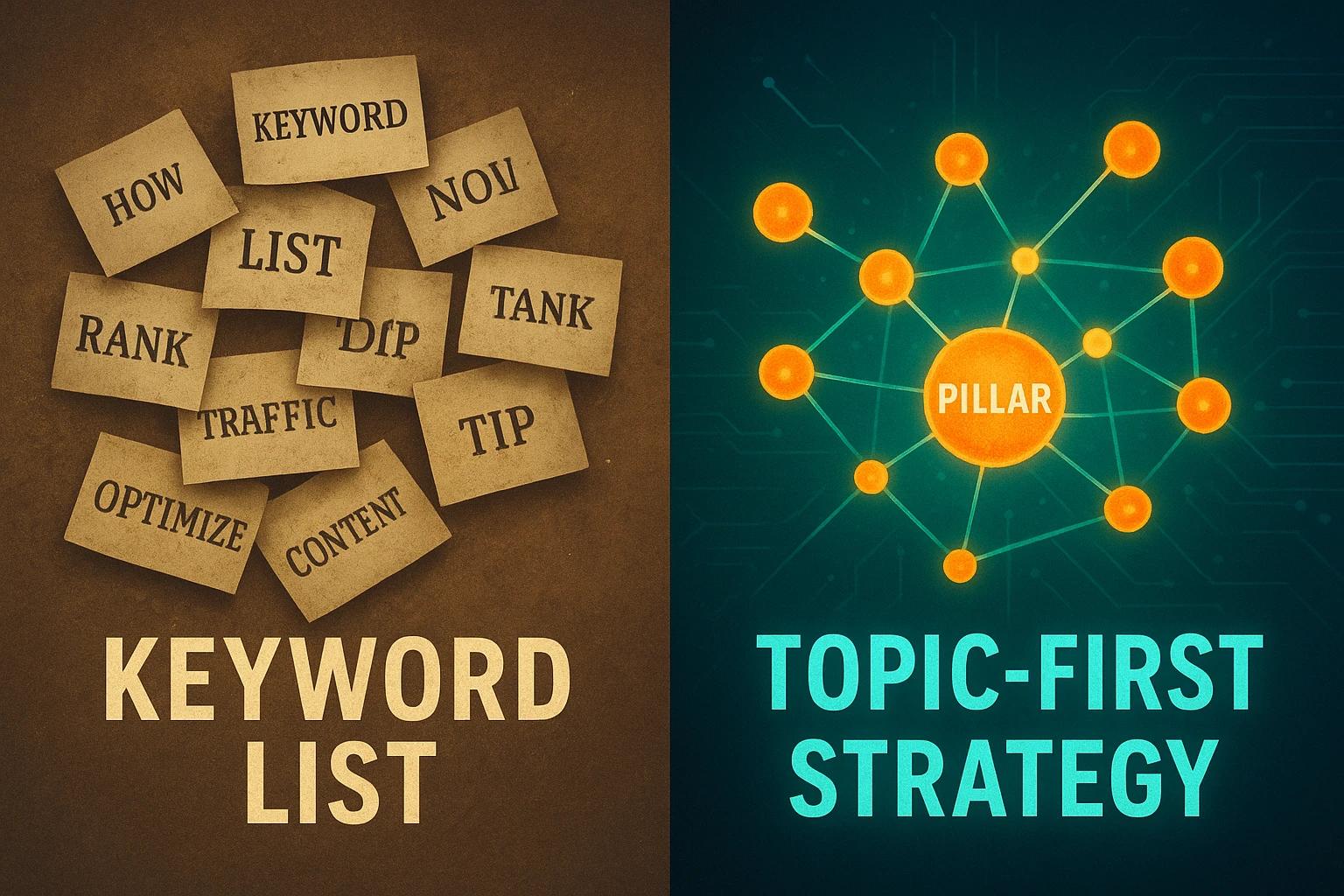
Topic-First Content Strategy for AI-Driven Search
Discover why focusing on topics over keywords drives SEO success in AI-powered search environments.
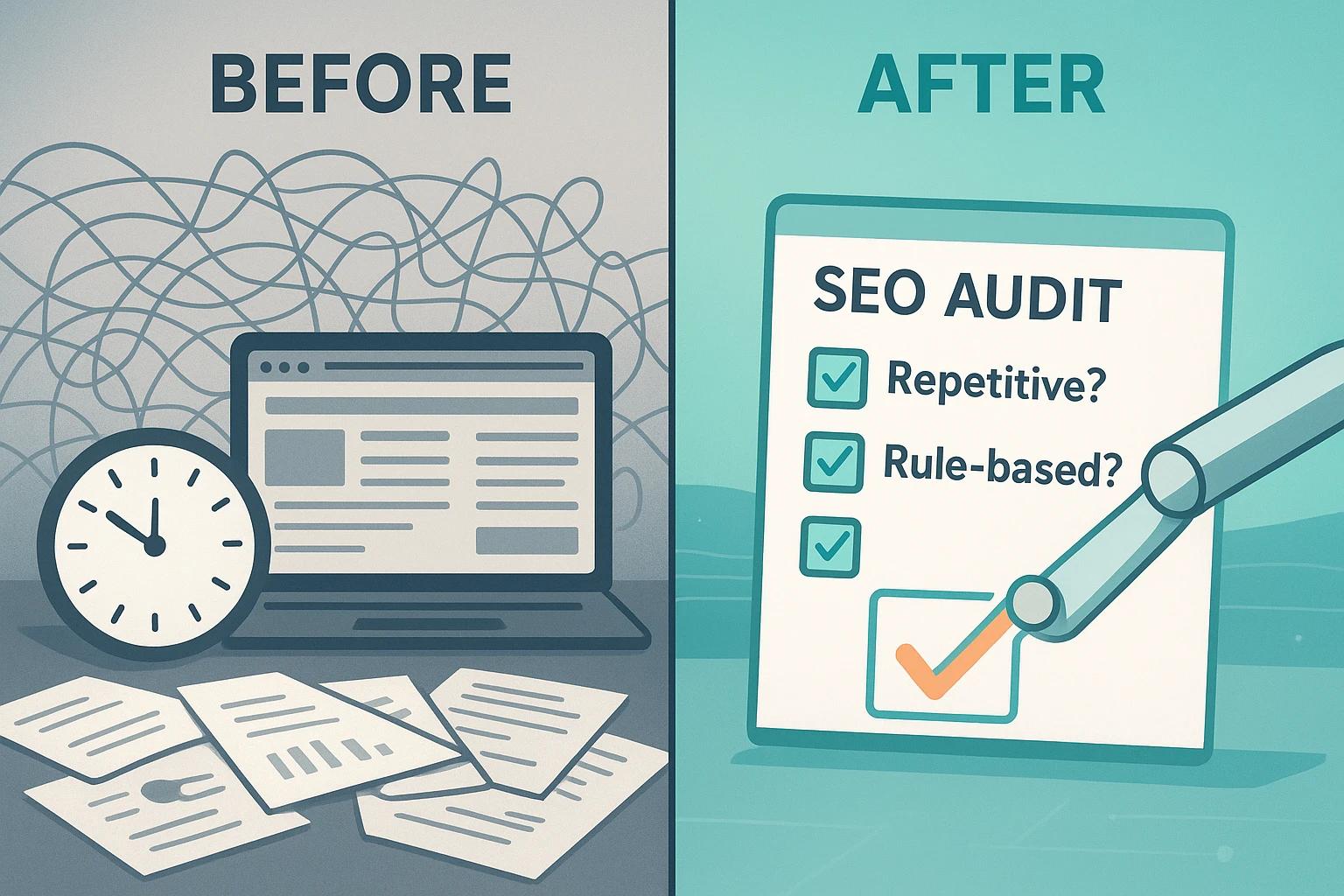
How to Audit SEO for Automation Opportunities
Discover a simple non-technical checklist to identify SEO tasks you can automate and save time for strategic work.
5 Signs Your Content Workflow Is Blocking Growth
Discover common content workflow problems slowing your growth and how automation can help improve efficiency and results.