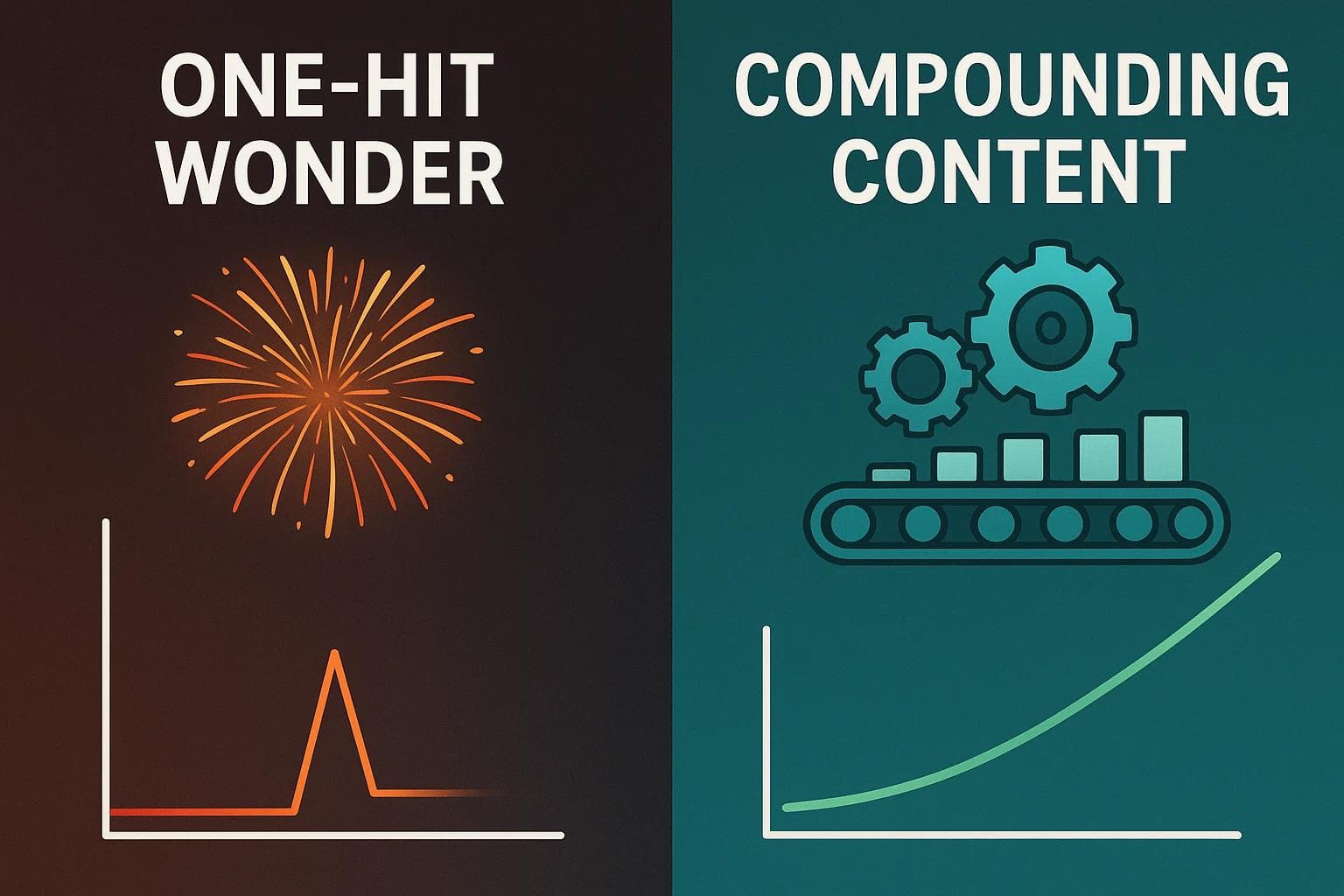
The Compounding Content Playbook: Why Your Publishing Rhythm Beats a One-Hit Wonder
Ever feel like you’re playing the content lottery? You spend weeks crafting the "perfect" blog post, polishing every sentence, and designing the ultimate graphic. You hit publish, cross your fingers, and hope it goes viral. Sometimes you get a nice little spike in traffic, but more often than not, it fades into silence within a week. The next month, you do it all over again.
It’s a frustrating cycle. But what if there’s a more reliable, predictable way to grow your online presence? What if, instead of trying to hit a home run every time, you focused on getting on base, consistently?
This is the power of compounding content. It’s the idea that a steady, strategic rhythm of publishing good content is far more powerful than the occasional "perfect" post. It’s less like a lottery ticket and more like a high-yield savings account for your traffic—the returns start small, but over time, they grow exponentially.
To achieve this, you need to think like an engineer, not just an artist. You need to build a "Content Compounding Engine" for your brand.

This engine has three critical, interconnected parts: content velocity, publishing cadence, and compounding traffic. Let’s break them down.
The Engine of Growth: Understanding the Big Three
To move past the one-hit-wonder mindset, you first need to grasp the core concepts that drive sustainable growth. These aren't just buzzwords; they are the gears of your content machine.
What is Content Velocity? (It’s Not Just About Speed)
When people hear "velocity," they think "speed." But in the world of content, it’s more about efficiency. Content velocity is a measure of how quickly and efficiently you can move a piece of content through its entire lifecycle—from initial idea to research, writing, editing, and finally, publishing.
A low velocity means you have bottlenecks. Maybe your approval process takes weeks, or your writers are constantly blocked waiting for ideas. A high velocity means you have a smooth, repeatable system that allows you to produce quality content without friction or burnout. It’s about being agile, not just fast.
What is Publishing Cadence? (The Strategic Rhythm of Your Brand)
If velocity is your efficiency, publishing cadence is your strategic rhythm. It’s the deliberate, consistent schedule on which you release content. This is a crucial distinction from "frequency." Publishing five articles in one week and then going silent for a month is high frequency but a terrible cadence.
A consistent cadence does two powerful things:
- It trains your audience: They learn when to expect new content from you, building anticipation and loyalty.
- It signals reliability to search engines: Google's algorithms favor sites that consistently publish fresh, relevant content on a specific set of topics. A steady cadence helps you build topical authority and proves you're a serious, active resource in your niche.
What is Compounding Traffic? (The Magic of Evergreen Content)
This is where the magic happens. Imagine you invest $100 and it earns 10% interest. The first year, you make $10. The next year, you earn interest on $110, not just the original $100. That’s compounding.
Compounding traffic works the same way. An article you publish today doesn’t just get traffic this week. If it’s an "evergreen" piece—one that solves a timeless problem or answers a common question—it can attract new readers for months, or even years. As you publish more evergreen content, each piece adds to the last, creating a snowball effect. Your old posts continue to draw traffic while your new ones add fresh momentum, leading to exponential growth.
Building Your Own Content Compounding Engine
Understanding the concepts is one thing; putting them into practice is another. Building your engine requires a systematic approach that balances quality with efficiency. This is how you achieve "quality at speed."

Phase 1: Accelerate Velocity Without Sacrificing Quality
The biggest hurdle for most businesses is the content creation bottleneck. To overcome this, you need a system.
- Standardize Your Workflows: Create clear templates and outlines for your common content types (e.g., blog posts, guides, case studies). This eliminates guesswork and ensures consistency.
- Embrace Modular Creation: Break down content into smaller, reusable blocks. An insight from one blog post could become a social media update or a point in a video script.
- Leverage Modern Tools: The right technology can transform your workflow. Project management tools keep everyone on track, while AI-powered platforms can handle research, outlining, and even first drafts. Systems from a platform like Fonzy AI are designed specifically to automate these workflows, helping you scale content creation reliably.
Phase 2: Find Your Perfect Publishing Cadence
There's no single "correct" cadence. A solo consultant might aim for one high-value article every two weeks, while a larger e-commerce site might publish daily. The key is consistency.
- Start Small and Be Realistic: Choose a cadence you know you can maintain without your quality dropping. It’s better to publish one great article per week, every week, than to attempt daily publishing and burn out after a month.
- Plan with a Content Calendar: A shared calendar is your strategic blueprint. It allows you to plan topics in advance, align your content with business goals, and ensure a steady flow of publications.
- Align with Your Audience: When are your readers most active? What kind of content do they need at different stages of their journey? Let their needs guide your schedule.
Phase 3: Plant Evergreen Seeds for a Compounding Harvest
Not all content is created equal. While timely news posts have their place, the core of your compounding engine should be evergreen assets.
- Focus on Foundational Problems: What are the timeless questions and challenges in your industry? Create definitive guides, how-to articles, and resource pages that will be just as relevant in two years as they are today.
- Build Topic Clusters: Don’t just write random articles. Create a "pillar" page on a broad topic (e.g., "Beginner's Guide to Digital Marketing") and surround it with more specific "cluster" posts (e.g., "How to Write a Great Headline," "Understanding SEO Basics") that all link back to the pillar. This structure tells Google you're an authority on the entire subject.
- Refresh and Repurpose: Your evergreen content isn't "set it and forget it." Schedule annual check-ins to update statistics, add new insights, and ensure the information is still accurate. This keeps the content fresh and signals its continued relevance to search engines.
The Payoff: Watching Your Traffic Snowball
When you combine high velocity with a strategic cadence focused on evergreen content, the results are dramatic. Instead of the spiky, unpredictable traffic that comes from chasing viral hits, you see steady, predictable, and ultimately exponential growth.
The sporadic approach yields temporary bumps, while the compounding approach builds a solid foundation of authority and traffic that grows stronger over time.

Every article you publish becomes another asset working for you 24/7. It's a salesperson that never sleeps, an educator that's always available, and a brand builder that constantly reinforces your expertise. This is how you win the long game of content marketing.
Frequently Asked Questions (FAQ)
How often should I actually be publishing content?
It depends entirely on your resources and your audience. The most important thing is to choose a cadence you can stick to consistently with high quality. For many small businesses, starting with one or two well-researched articles per week is a fantastic goal. Consistency beats frequency every time.
Will publishing more often lower the quality of my content?
It can, if you don't have the right systems in place. This is the "quality at speed" dilemma. The solution isn't to slow down, but to get more efficient. By using templates, streamlining your review process, and leveraging smart tools, you can increase your output without sacrificing the quality your audience expects.
How long does it take to see compounding traffic?
Content compounding is a long-term strategy. You likely won't see massive changes in the first few months. Generally, it takes about 6-12 months of consistent, high-quality publishing to start seeing a noticeable upward curve in your organic traffic. But once it starts, the growth becomes self-sustaining and accelerates.
What's more important: one amazing 5,000-word article or five good 1,000-word articles?
If you could only do one or the other for a year, the five good 1,000-word articles published on a consistent schedule would almost certainly build more topical authority, rank for a wider range of keywords, and drive more sustained, compounding traffic in the long run. The "perfect" article is a myth; the powerful content engine is a reality.
Your Next Step: From Learning to Doing
Stop playing the content lottery. The path to sustainable organic growth isn’t about chasing a single viral hit—it’s about building a reliable engine that runs on a simple formula: efficient production (velocity) + a strategic rhythm (cadence) = exponential results (compounding traffic).
Take a moment to look at your own content process. Where are the bottlenecks? Are you publishing consistently, or only when inspiration strikes?
By shifting your focus from perfection to process, you can turn your content from a monthly chore into your most powerful growth asset. As you explore ways to build your own content engine, remember that the goal is to create a system that makes consistency feel effortless.

Roald
Founder Fonzy — Obsessed with scaling organic traffic. Writing about the intersection of SEO, AI, and product growth.
Stop writing content.
Start growing traffic.
You just read about the strategy. Now let Fonzy execute it for you. Get 30 SEO-optimized articles published to your site in the next 10 minutes.
No credit card required for demo. Cancel anytime.
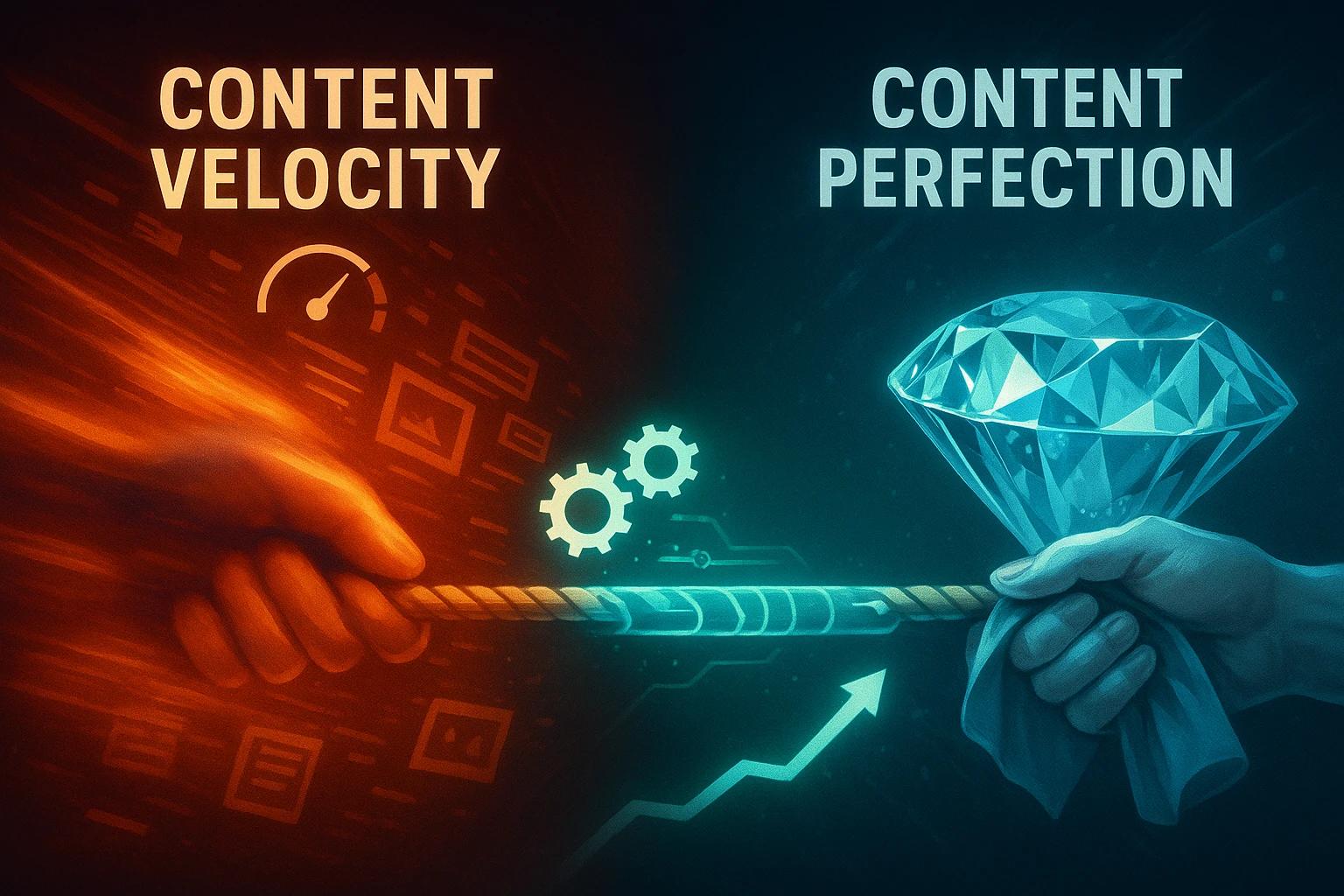
How Content Frequency Affects SEO Rankings and What to Prioritize
Explore how balancing content speed and quality impacts SEO and learn when to focus on velocity or perfection.
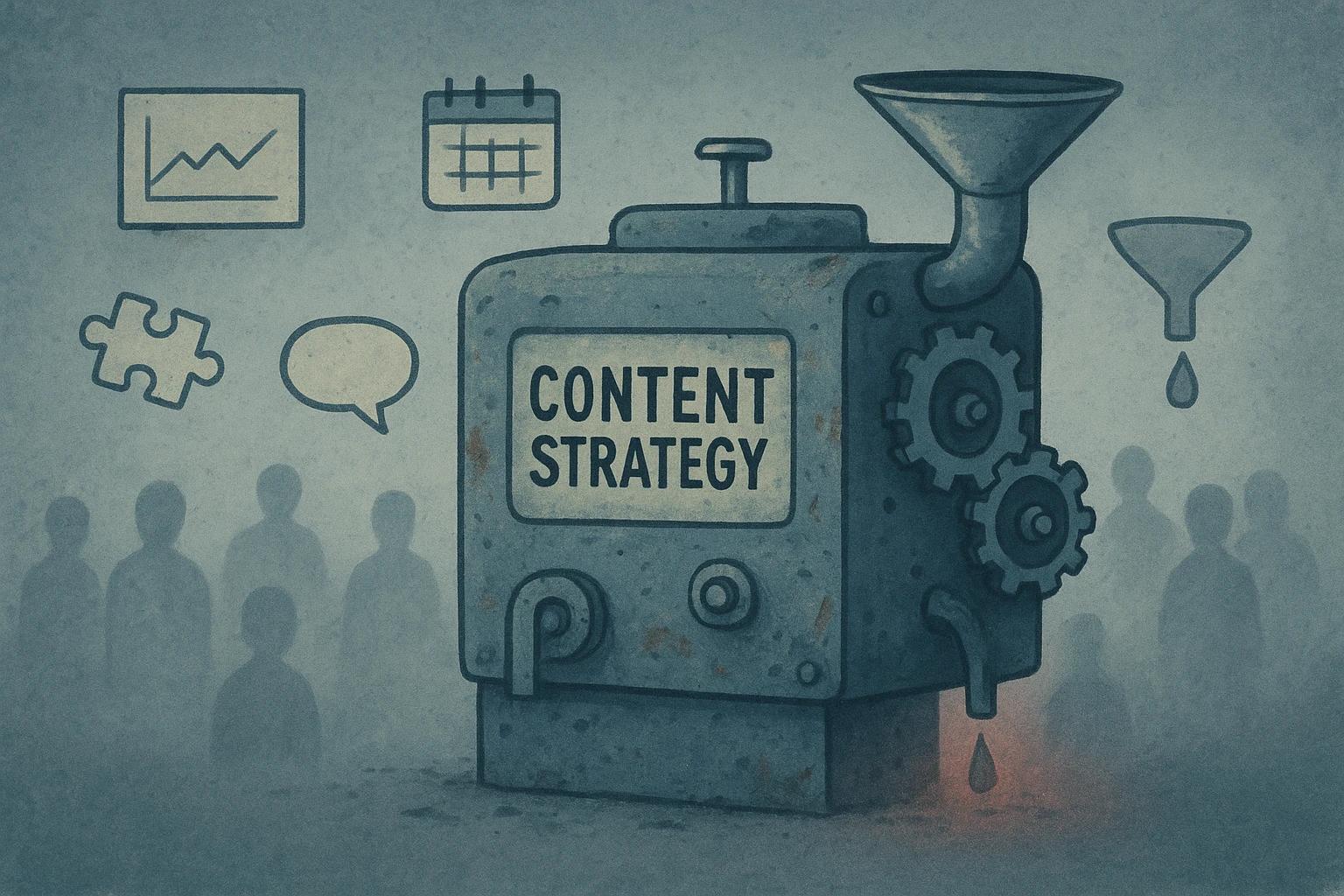
5 Signs Your Content Strategy is Losing Customers
Discover key signs your content strategy is stuck and quietly losing customers before it impacts your growth.
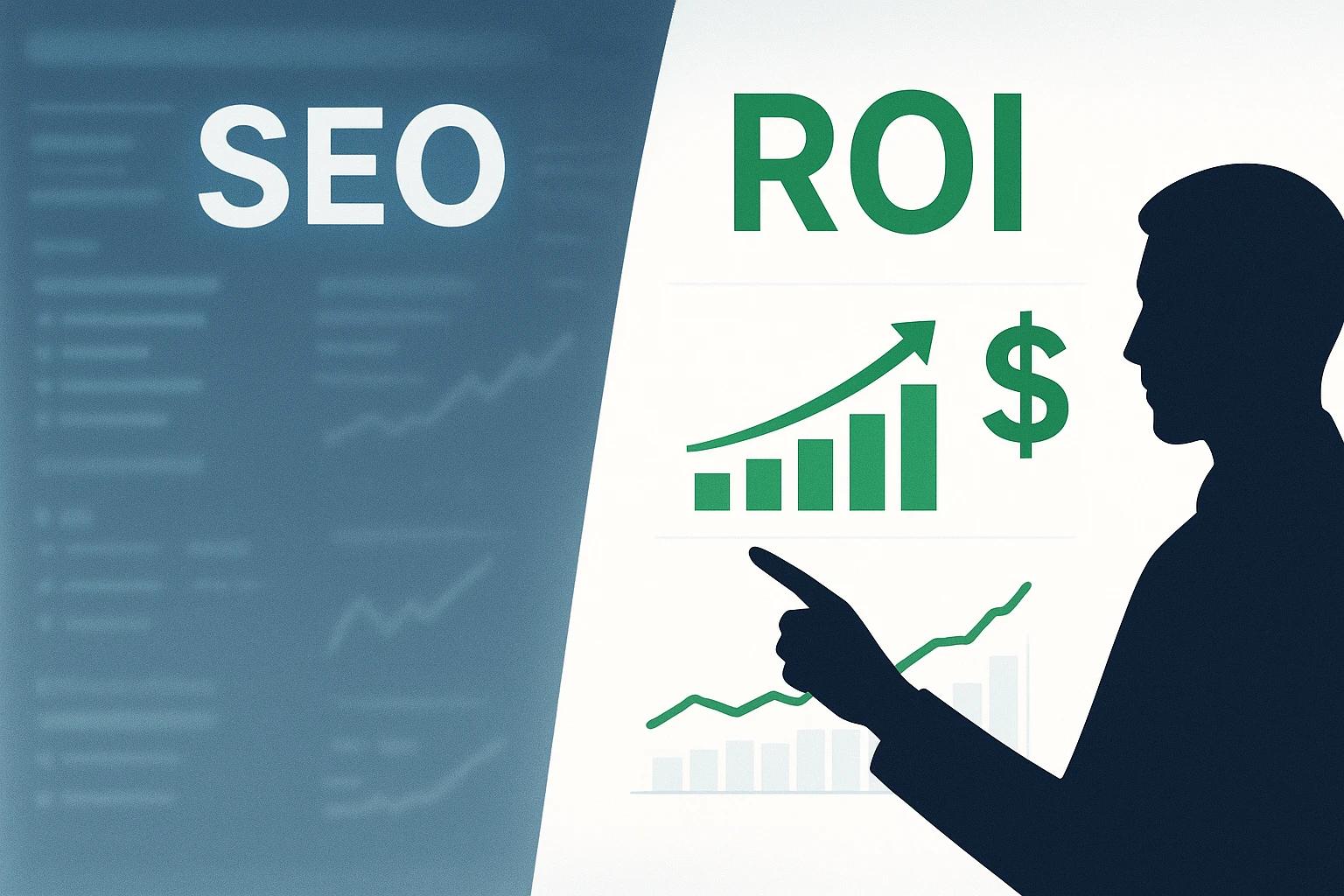
How to Measure SEO ROI with Business Metrics
Learn simple ways to measure SEO ROI focusing on leads, conversions, cost, and customer value beyond keywords and rankings.