Guide to Content Governance and Editorial Templates for AI


From Content Chaos to AI Clarity: A Guide to Governance and Templates
Ever asked an AI tool to write two blog posts on the same topic and gotten back two completely different personalities? One sounds like a university professor, the other like a casual blogger. Both are well-written, but neither sounds exactly like you.
This is "content chaos," and it's the silent challenge many teams face when they start using AI. Without a clear set of rules, AI acts like an endlessly creative but inconsistent new hire. It produces content, but it doesn't build a cohesive brand.
The solution isn't to stop using AI. It's to teach it the rules of the road. This is where content governance comes in—not as a stuffy corporate policy, but as a practical playbook that enables AI to create high-quality, on-brand, and trustworthy content at scale. It’s about transforming your content from a collection of random documents into an organized, AI-ready library of assets.

The Core of AI-Readiness: What Are We Building?
Before diving into templates and rules, let's get on the same page. When we talk about making content "AI-ready," we're not just talking about feeding text into a machine. We're talking about creating a symbiotic relationship between your team's strategy and the AI's execution.
What is Content Governance for AI?Think of it as your brand's constitution for content creation. It's a living document that defines the standards, roles, and workflows for how content is planned, created, published, and maintained. In an AI context, it’s specifically designed to be understood by both humans and machines, ensuring consistency no matter who—or what—is doing the writing.
What is an "AI-Ready Page"?An AI-ready page is a piece of content that is so clearly structured and consistent that an AI can easily understand, analyze, and extract information from it. It has predictable elements, like a concise lead sentence that summarizes the main point, clear headings that outline the argument, and consistent formatting for things like data and sources. This structure is what allows for powerful optimization and automation down the line.
Without this foundation, you end up with a digital garage sale—a messy collection of assets that’s hard for anyone, including AI, to navigate. With it, you create a pristine digital library where every piece of information is findable, usable, and valuable.
The Anatomy of an AI-Ready Editorial Template
The most powerful tool in your governance toolkit is the editorial template. This isn't just a document outline; it's a blueprint that guides the AI (and your human writers) to create perfectly structured and on-brand content every single time. It breaks down a page into its essential, non-negotiable components.

### Style Rules: Defining Your Brand's Voice
Your brand's voice is its personality. Is it witty and informal, or authoritative and formal? AI can mimic any style, but you have to teach it yours first.
- Tone: Define 3-5 keywords for your tone (e.g., "Helpful, clear, and encouraging"). Provide examples of what that sounds like.
- Readability: Set a target reading level (e.g., "8th-grade reading level"). This guides the AI to use simpler sentences and vocabulary.
- Mechanics: Document your specific rules for things like capitalization in titles (AP style vs. sentence case), use of the Oxford comma, or how you format numbers.
### Structure Rules: Building a Scannable Skeleton
AI, just like human readers, needs clear signposts to navigate your content. A consistent structure makes your content more readable and infinitely more "extractable" for search engines and AI tools.
- Headings and Subheadings: Mandate a logical hierarchy (one H1, followed by H2s, then H3s). This is fundamental, as many people wonder what’s the impact of heading structure on ai extractability?. A clear structure provides a roadmap for algorithms to understand the main topics and sub-topics.
- Required Components: Does every blog post need a key takeaways box? Does every product page require a summary bullet list at the top? Define these non-negotiable elements in your template.
- Lead Sentence: A critical, often-overlooked element. Require every article to start with a single, clear sentence that summarizes the core answer or argument. This is prime real estate for search engine snippets and AI-powered answer engines.
### Evidence Requirements: The Trust Layer
In an age of AI-generated content, trust is your most valuable currency. AI can sometimes "hallucinate" or invent facts. Your governance must enforce accuracy.
- Source Callouts: Make it mandatory to cite sources for any data, statistics, or claims.
- Citation Format: Specify exactly how sources should be formatted (e.g., "[Source Name, Year]"). This consistency makes your content look professional and makes it easy for AI to recognize citations.
- Fact-Checking Workflow: Define a process where a human expert reviews all claims and sources before publication. This human oversight is non-negotiable for maintaining credibility.
Putting It All Together: Your Human-in-the-Loop Workflow
So, how do you make this all work without slowing your team down? The key is a smart workflow that blends AI's speed with human oversight.
### The "LLM Appendix": A Cheat Sheet for Your AI
One of the most innovative ideas, popularized by industry leaders like Media Junction, is the "LLM Appendix." Instead of giving an AI your entire 50-page style guide, you create a one-page, machine-friendly summary with simple, binary rules.
Example of an LLM Appendix Rule:
- Rule: Oxford Comma
- Instruction: Always use the Oxford comma in lists of three or more items.
- Example (Do): "We focus on style, structure, and sources."
- Example (Don't): "We focus on style, structure and sources."
You can build this for your brand voice, formatting, and sourcing rules. This simple document becomes a powerful asset you can include in your AI prompts to ensure consistent output.
### Designing Your Workflow
A successful AI content process isn't fully automated; it's intelligently assisted. It has clear checkpoints for human review to ensure quality, accuracy, and brand alignment.
- Audit & Plan: Start by reviewing your existing content. Where are the biggest inconsistencies? This helps you prioritize what to fix first.
- Template Design: Create your first editorial template for your most common content type, like a blog post.
- AI-Assisted Drafting: Use your template and LLM Appendix to guide the AI in generating a first draft.
- Human Review & Edit: This is the critical "human-in-the-loop" step. A writer or editor reviews the draft for accuracy, tone, and strategic alignment. They aren't writing from scratch; they are refining and elevating the AI's output.
- Publish & Monitor: Once approved, the content is published. Your governance model should also include a plan for periodically reviewing and updating content.

FAQ: Your First Steps into AI Content Governance
Getting started can feel daunting, but it's simpler than you think. Here are answers to the most common questions.
### What is content governance in the context of AI?
It’s the set of rules, templates, and workflows you create to ensure that any content generated—whether by a human or an AI—is consistent, accurate, on-brand, and aligned with your business goals. It's the playbook for quality control.
### Why is being "AI-ready" so important for my content?
AI-ready content is structured for the future of search and information discovery. As more users get answers from AI assistants and new search interfaces, content that is easy for machines to parse, understand, and cite will have a massive advantage. It ensures your expertise is visible and correctly represented by the next generation of technology.
### Where is the best place to start?
Don't try to boil the ocean. Start small. Pick one content type (e.g., your blog) and create a single, simple editorial template for it. Document your basic style rules and a required structure. This small win will build momentum.
### How do I ensure quality when using AI?
Quality is a product of two things: clear instructions and human oversight. Your editorial templates and "LLM Appendix" provide the clear instructions. A mandatory human review step before publishing provides the essential oversight to catch errors, refine the tone, and ensure the content meets your strategic goals.
The Path Forward: From Rules to Results
Implementing content governance isn't about adding red tape; it's about building a scalable engine for excellence. By creating clear rules and smart templates, you empower AI to become a true extension of your team—one that understands your brand, respects your standards, and helps you create better content, faster.
You're not just organizing your content; you're future-proofing your strategy. You're ensuring that as AI technology continues to evolve, your brand's voice will remain clear, consistent, and authoritative across every platform. Start with one template, one workflow, and one commitment to quality—and turn content chaos into clarity.
Roald
Founder Fonzy — Obsessed with scaling organic traffic. Writing about the intersection of SEO, AI, and product growth.
Stop writing content.
Start growing traffic.
You just read about the strategy. Now let Fonzy execute it for you. Get 30 SEO-optimized articles published to your site in the next 10 minutes.
No credit card required for demo. Cancel anytime.
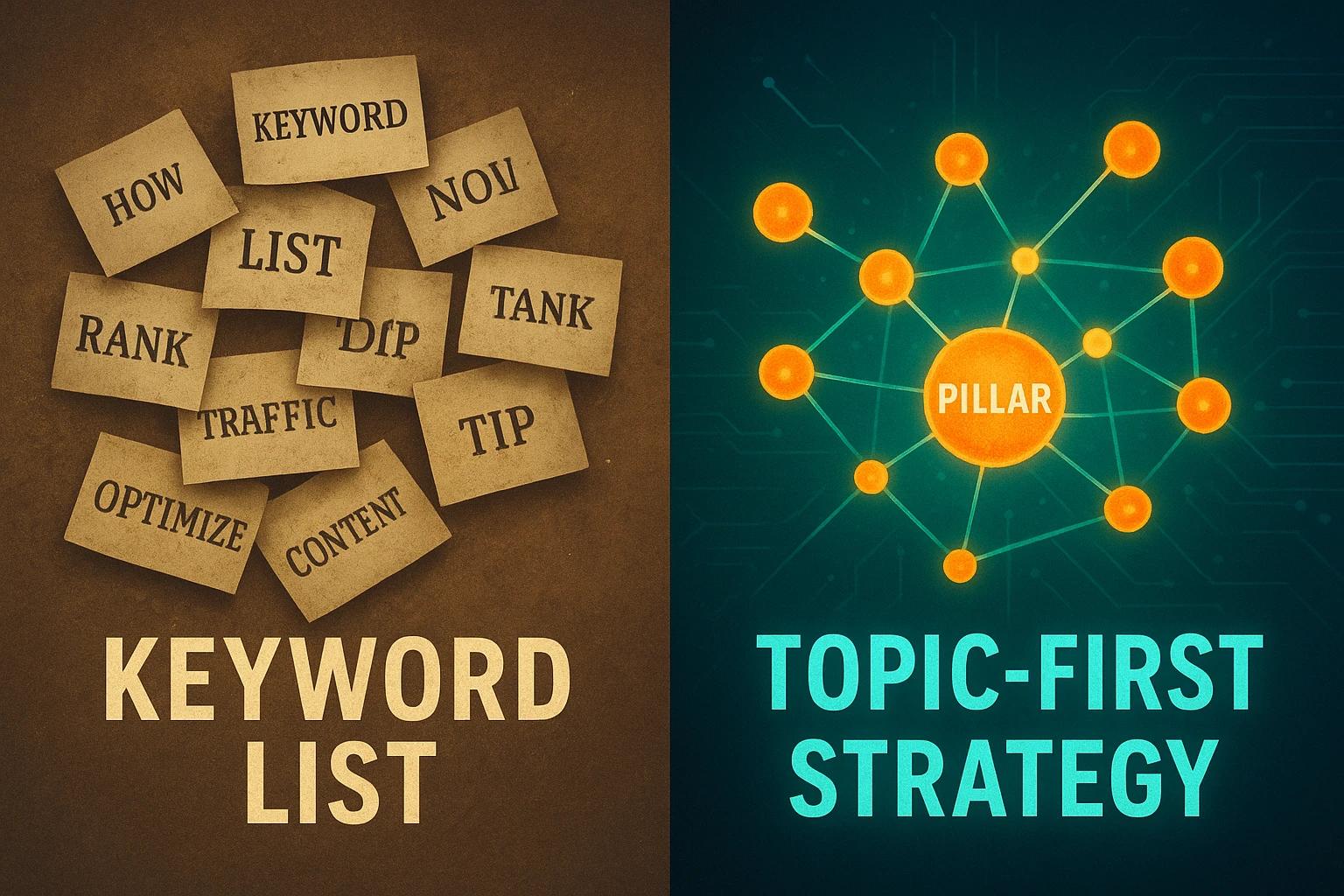
Topic-First Content Strategy for AI-Driven Search
Discover why focusing on topics over keywords drives SEO success in AI-powered search environments.
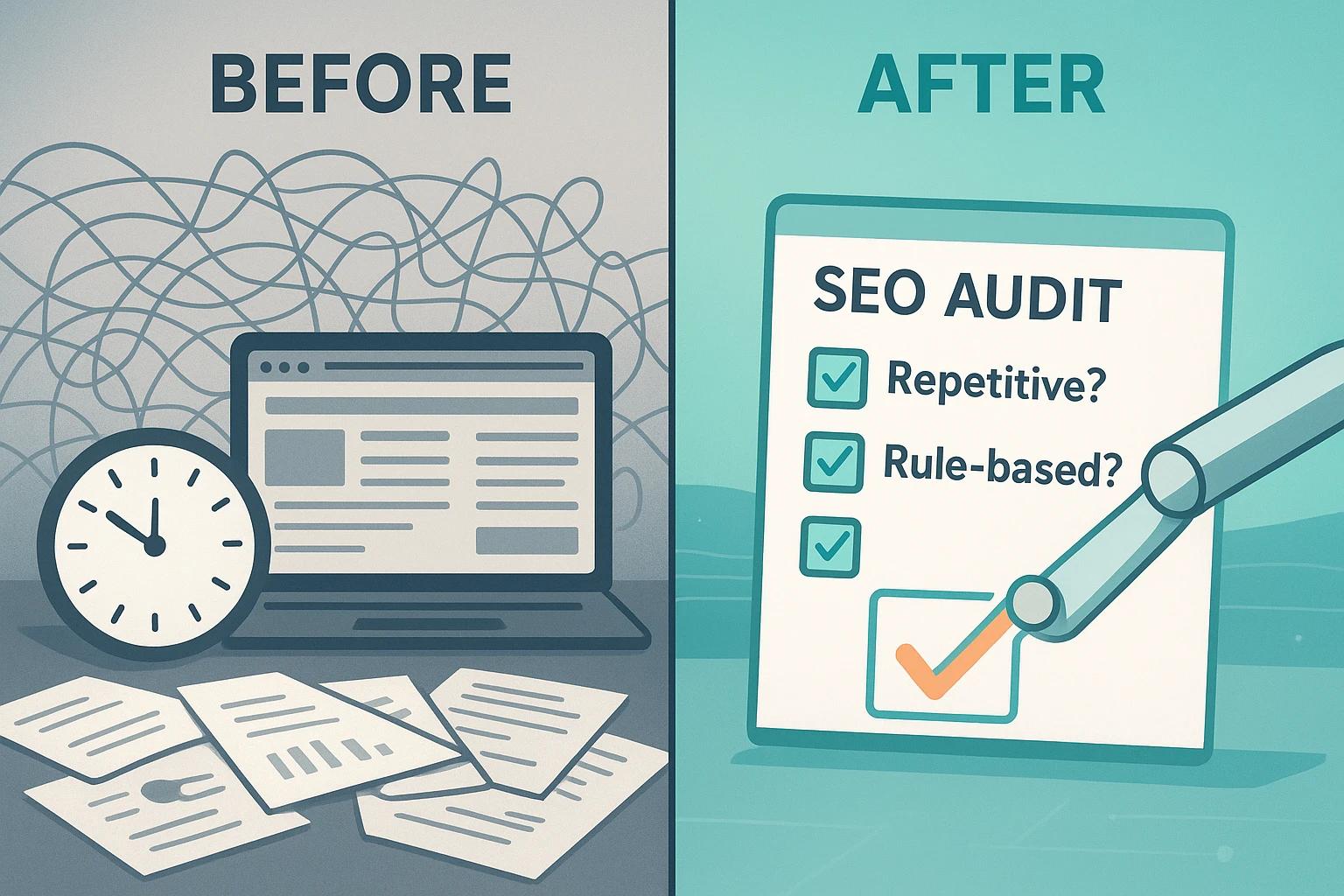
How to Audit SEO for Automation Opportunities
Discover a simple non-technical checklist to identify SEO tasks you can automate and save time for strategic work.
5 Signs Your Content Workflow Is Blocking Growth
Discover common content workflow problems slowing your growth and how automation can help improve efficiency and results.