Content Formats AI Answer Engines Prefer for Citable Content


The AI Answer Engine Playbook: Get Your Content Cited with Snippets, Structure, and Atomic Answers
Ever feel like you’re creating great content, but it’s just shouting into the void? You’ve followed all the traditional SEO rules, but you’re still not showing up where it counts: in the direct, summarized answers at the top of Google, Perplexity, and other new AI-powered search tools.
If this sounds familiar, you’re not alone. The rules of the game have changed.
The "aha moment" for many marketers and business owners today is realizing that AI doesn't read content like a human does. Humans appreciate narrative flow and descriptive language. AI, on the other hand, scans for usability. It’s looking for clean, structured, and easily extractable pieces of information to build its answers.
To win in this new era of search, you don't just need to be discoverable; you need to be citable. This guide will show you how to format your content to become a trusted source for AI answer engines.
What Are AI Answer Engines, Anyway?
Think of AI answer engines as hyper-intelligent research assistants. Instead of just giving you a list of links (like traditional Google), they read and synthesize information from multiple sources to give you one direct, conversational answer.
This is a massive shift. Your goal is no longer just to rank #1. Your new goal is to have your content selected, extracted, and cited within that AI-generated answer.
To do that, you need to think less about long, winding paragraphs and more about "atomic answers."
The Big Idea: What Are Atomic Answers?
"Atomic answers" are the fundamental building blocks of AI knowledge. It’s a concept that’s missing from most conversations about AI SEO, but it’s the most important one to grasp.
An Atomic Answer is: A concise, self-contained unit of content that definitively answers a single, specific question.
Think of it like a Lego brick. One brick is a simple, complete unit. When combined with other bricks, you can build something complex and amazing. AI answer engines are looking for these perfect, individual bricks to construct their responses.
An atomic answer isn't a 500-word explanation. It’s typically:
- Concise: Often between 40-60 words.
- Singular in focus: It answers one question and one question only.
- Authoritative: It presents information as a clear fact.
- Easy to cite: It’s formatted in a way that’s simple for an AI to grab and attribute.
When you start creating content made of these atomic units, you’re not just writing an article; you’re building a database of citable facts for AI to use.
The 4 Content Formats AI Engines Love
So, how do you put atomic answers into practice? It comes down to structure. AI prefers content that is organized, predictable, and scannable. Here are the formats you should prioritize.
1. Q&A Blocks and FAQ Sections
This is the most direct way to create atomic answers. By pairing a specific question with a concise answer, you’re essentially handing the AI exactly what it’s looking for on a silver platter.
Why it works: The question-and-answer format is unambiguous. An AI model can easily identify the user's intent (the question) and the corresponding information (your answer).
How to do it right:
- Use clear, full questions as subheadings (H2s or H3s). Instead of "Our Process," use "What is Your 5-Step Client Onboarding Process?"
- Provide a direct answer immediately below the heading. Get straight to the point in the first sentence.
- For advanced users: Implement FAQ schema (a type of structured data) on your page to explicitly tell search engines, "Hey, this is a list of questions and answers!"
2. Concise Snippets and Summaries
Have you ever noticed the short paragraph at the top of a Wikipedia article that summarizes the entire topic? That’s a perfect example of a citable snippet. These are dense, information-rich summaries that answer the core question of the page right away.
Why it works: AI models are designed for efficiency. A well-written summary at the beginning of your content allows the AI to quickly verify that your page is relevant and grab the essential information without having to parse the whole article.
How to do it right:
- Right after your main title (H1), write a 2-3 sentence paragraph that defines the core topic.
- Bold the key term you are defining. For example: "Answer Engine Optimization (AEO) is the process of creating and formatting web content so that it can be easily understood, extracted, and cited by AI-powered answer engines."
3. Lists and Tables
When information can be broken down into steps, components, or comparisons, lists and tables are your best friends. They transform messy paragraphs into structured data that AI can easily parse.
Why it works: Lists (bulleted or numbered) and tables have a clear, hierarchical structure. An AI can understand the relationship between items, making it perfect for answering questions like "What are the steps to…" or "How does X compare to Y?"
How to do it right:
- Bulleted Lists: Use for features, benefits, or items that don't need a specific order.
- Numbered Lists: Use for step-by-step processes or rankings.
- Tables: Use for direct comparisons of features or data points.
4. Logical Heading Structure
While not a "format" in the same way, your heading structure (H1, H2, H3, etc.) is the skeleton that holds your content together. A clear, logical hierarchy acts as a table of contents for an AI.
Why it works: Headings signal the importance and relationship of content sections. An AI can follow your H2s and H3s to understand the flow of your argument and pinpoint the exact section that answers a specific query. This is also where you might be asking, what’s the impact of heading structure on ai extractability?. A well-defined structure dramatically improves the chances of a specific section being pulled as a source.
How to do it right:
- Use one H1 for your main title.
- Use H2s for major subtopics.
- Use H3s for points that fall under an H2.
- Ensure your heading text accurately describes the content that follows.
Why Isn't AI Citing Your Content? A 3-Step Diagnostic
If you're already doing some of this but still not seeing results, your content might be failing one of these three simple tests, inspired by the diagnostic frameworks used by top AEO experts.
- Is it Findable? (Technical Visibility): Can AI crawlers even access your page? Check your
robots.txtfile to ensure you aren't accidentally blocking them. - Is it Understandable? (Structural Extractability): Is your content trapped in long paragraphs, images without alt text, or complex jargon? If an AI can't easily parse it, it can't cite it. This is where formatting with snippets, lists, and Q&A blocks is critical.
- Is it Trustworthy? (Source Authority): Does your content demonstrate expertise? Citing sources, linking to authoritative studies, and showcasing author credentials (E-E-A-T) are powerful signals that tell an AI your information can be trusted.
Frequently Asked Questions (FAQ)
What’s the difference between SEO and AEO?
SEO (Search Engine Optimization) is about helping search engines find and rank your content, primarily for a list of blue links. AEO (Answer Engine Optimization) is about making your content easy for AI to understand and cite within a direct answer. They work together, but AEO requires a much greater focus on structure and clarity.
Do I have to rewrite all my old content?
Not at all. A great place to start is by auditing your top 5-10 performing articles. Identify the main questions each article answers and add a concise Q&A block or a summary snippet at the top. Break up long paragraphs into bullet points. These small changes can have a big impact.
Will formatting for AI make my content robotic and bad for humans?
It's a common concern, but the opposite is often true! Content that is well-structured, scannable, and gets straight to the point is also a better experience for human readers, especially on mobile devices. You can still tell compelling stories and provide deep analysis—just be sure to frame it with clear, extractable summaries and answers.
Your Next Step: From Knowledge to Action
Understanding the principles of AI-first content is the first major step. You now have the playbook for creating content that doesn't just rank—it answers.
Start small. Pick one piece of content this week and revise it using these formats. Add a clear summary, turn a dense paragraph into a list, and frame a key concept as a direct question and answer.
As you begin this process, you’ll quickly see the power of structured content. You'll also realize that applying this to your entire content library manually can be a significant undertaking. The logical next question becomes: how can you scale this effort to ensure every piece of content you produce is perfectly formatted for the age of AI?
Exploring solutions that automate the creation of these extractable formats is the natural next step in building a truly future-proof content strategy.
Roald
Founder Fonzy — Obsessed with scaling organic traffic. Writing about the intersection of SEO, AI, and product growth.
Stop writing content.
Start growing traffic.
You just read about the strategy. Now let Fonzy execute it for you. Get 30 SEO-optimized articles published to your site in the next 10 minutes.
No credit card required for demo. Cancel anytime.
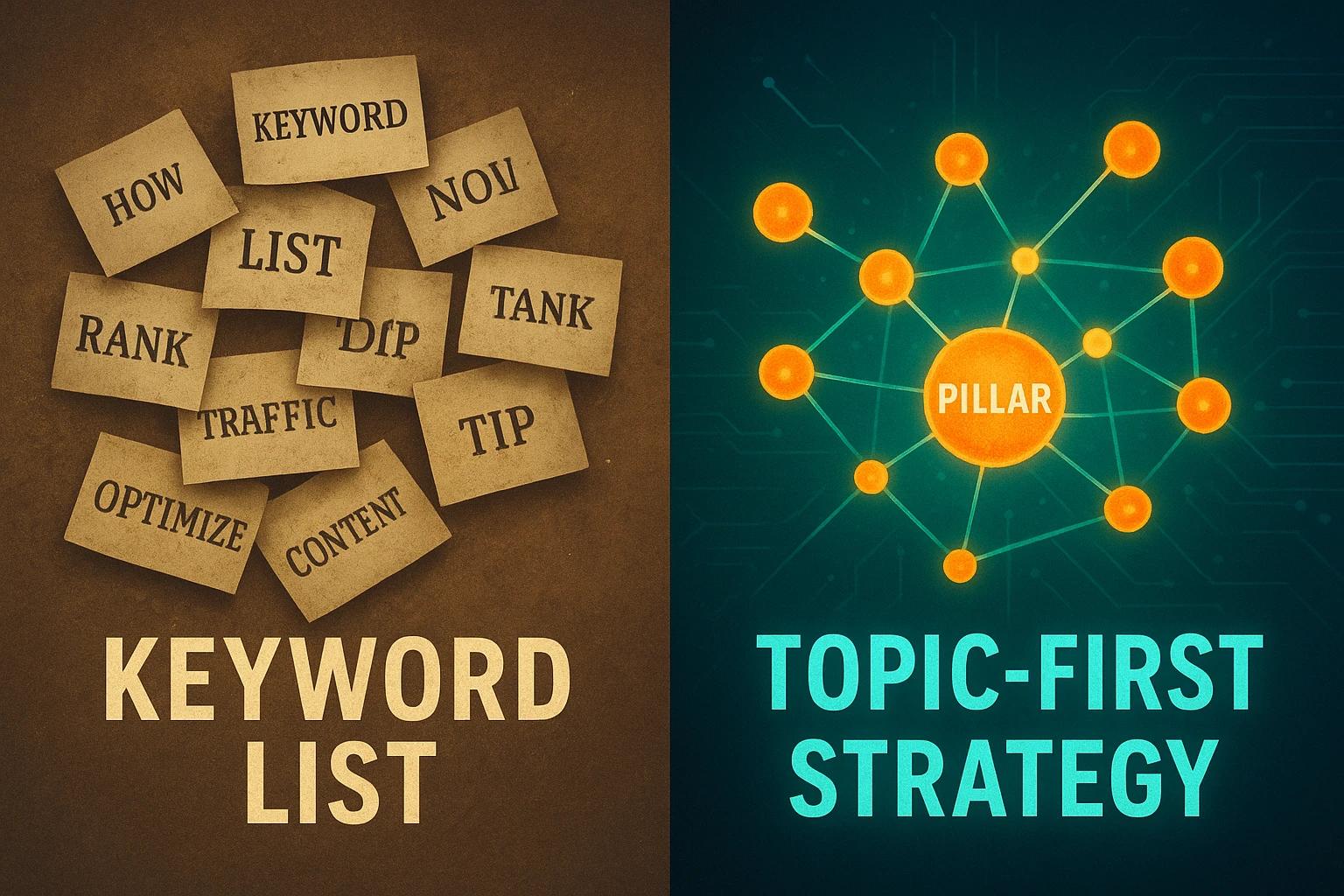
Topic-First Content Strategy for AI-Driven Search
Discover why focusing on topics over keywords drives SEO success in AI-powered search environments.
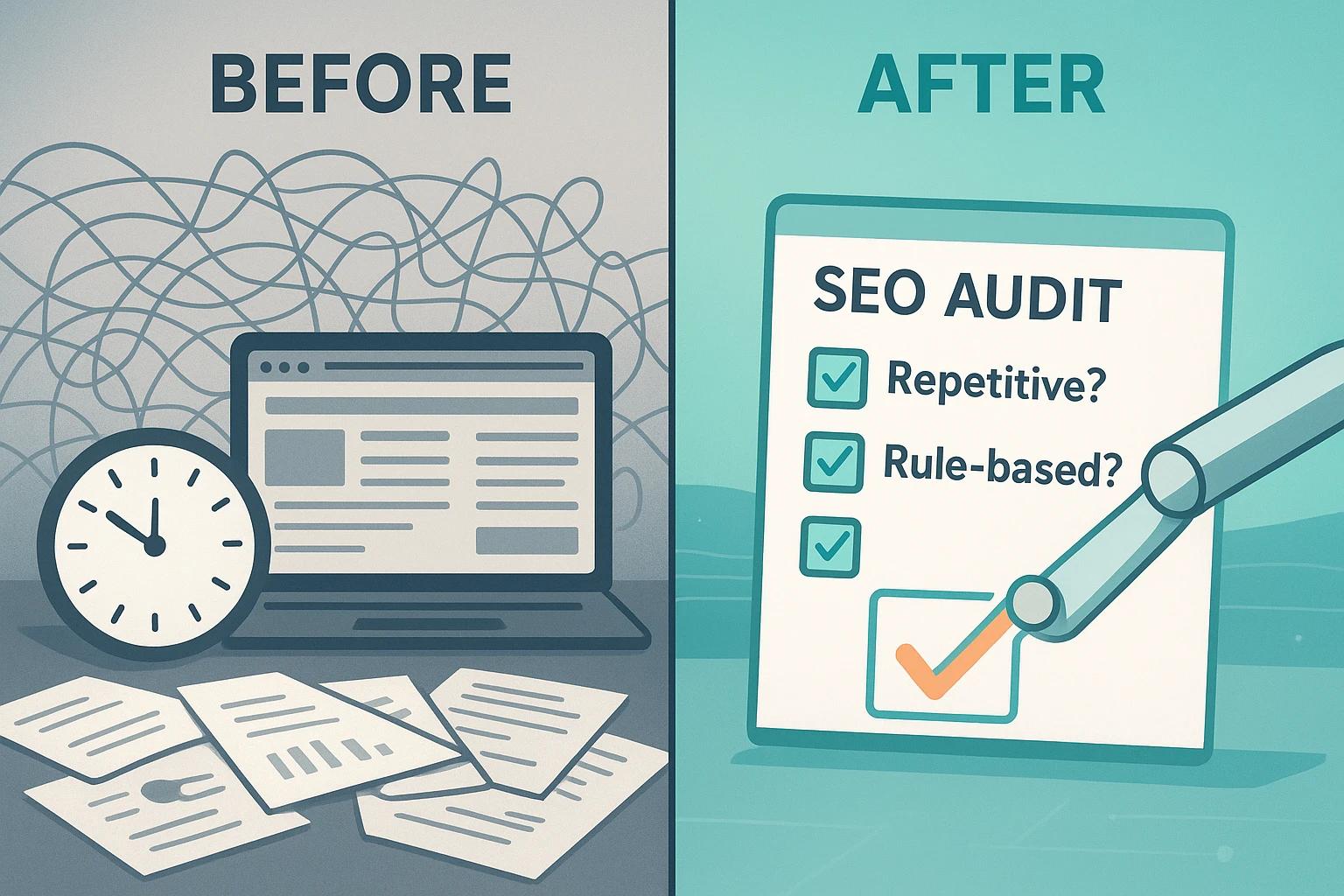
How to Audit SEO for Automation Opportunities
Discover a simple non-technical checklist to identify SEO tasks you can automate and save time for strategic work.
5 Signs Your Content Workflow Is Blocking Growth
Discover common content workflow problems slowing your growth and how automation can help improve efficiency and results.