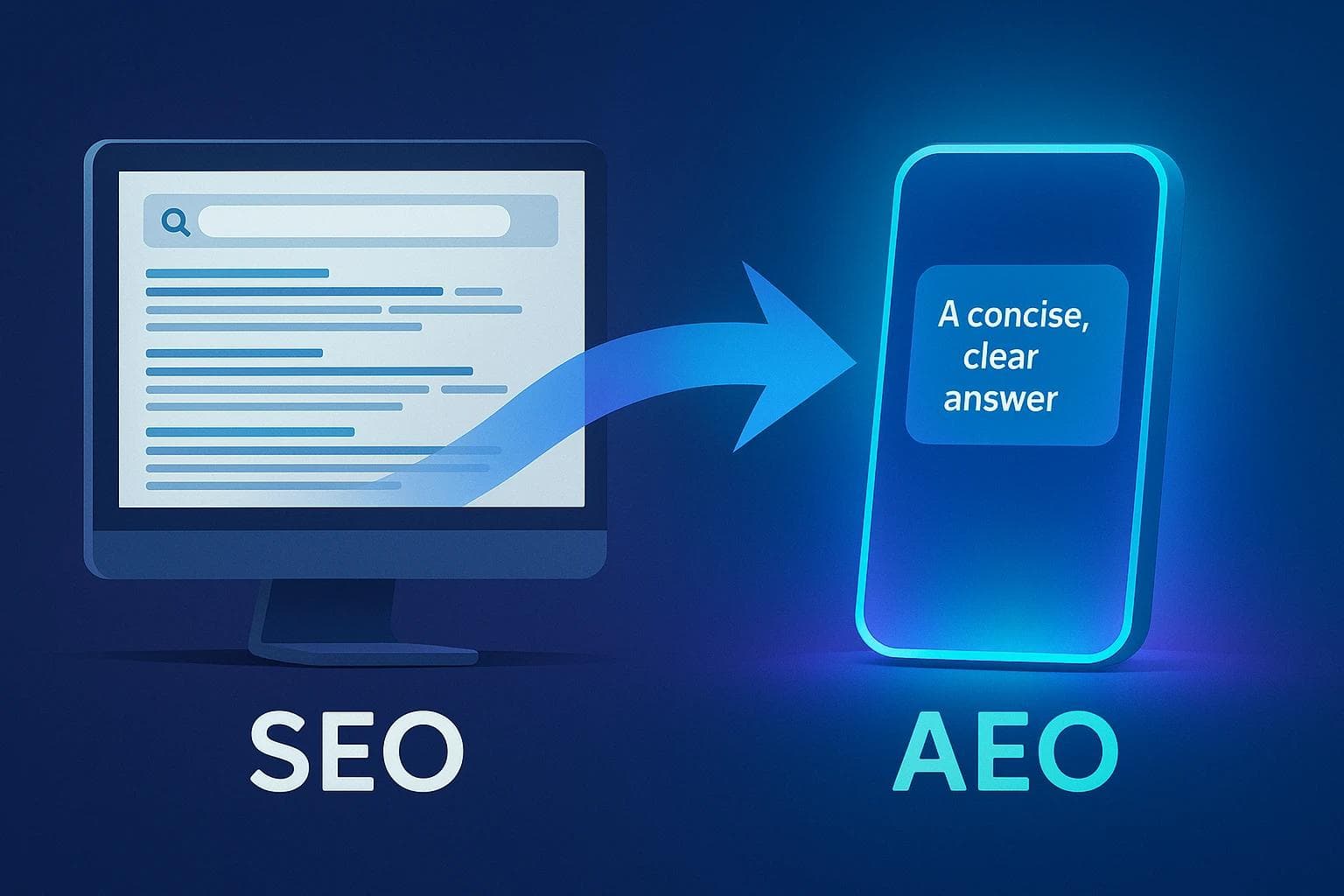
What is Answer Engine Optimization (AEO)? A Plain-English Guide to Being the Answer
Ever ask your phone for the weather, your smart speaker for a recipe, or your laptop "how to fix a leaky faucet?" You probably didn't get a list of ten blue links. You got a direct answer.
Welcome to the new reality of the internet. We've shifted from searching for information to asking for answers. Research firm Gartner predicts that by 2026, traditional search engine volume will drop by 25%, replaced by AI chatbots and other virtual agents.
This isn't just a small change; it's a fundamental rewiring of how customers find businesses. If your strategy is still only about climbing a list of search results, you're preparing for a game that's already ending. The new game is about becoming the answer itself. And the strategy for winning is called Answer Engine Optimization (AEO).

The Big Shift: From Search Engines to Answer Engines
For two decades, the goal was simple: get your website on the first page of Google. This was Search Engine Optimization (SEO). It was a race for visibility in a ranked list.
But today, the platforms people use are evolving. They are becoming Answer Engines.
An answer engine’s job isn't to give you options; it's to give you a single, definitive, conversational answer. Think about the tools you use every day:
- Google's AI Overviews: The summarized answer that now appears at the top of many search results.
- AI Chatbots: Platforms like ChatGPT, Perplexity, and Claude that synthesize information to answer complex questions.
- Voice Assistants: Siri, Alexa, and Google Assistant, which read answers aloud.
These systems don't just "search." They understand the question, scour the web for trustworthy information, synthesize it, and present a finished answer. Your goal is no longer just to be on the list—it's to be the credible source the AI trusts to create that answer.
AEO vs. SEO: What's the Real Difference?
It’s tempting to think AEO is just "the new SEO," but that's like saying a car is just a faster horse. They get you places, but how they work and what you do to use them effectively are completely different.
Here’s a simple breakdown:
FeatureTraditional SEO (Search Engine Optimization)AEO (Answer Engine Optimization)Primary GoalRank a webpage in the top 10 blue links.Get your content featured as the direct answer.User's GoalTo find the best resource (webpage) to click on.To get an immediate answer without clicking anything.FocusKeywords, backlinks, technical site health.Answering specific questions, factual accuracy, clear structure.Metric of SuccessClicks, traffic, time on page.Citations, brand mentions, being the source of truth.The Mindset"How can I get them to click on my page?""How can I provide the clearest, most trustworthy answer?"
SEO is about winning the "click." AEO is about winning the "trust" of the AI so your brand is presented as the authority. The two strategies can and should work together, but ignoring AEO means you're becoming invisible to a massive—and growing—audience.

How Answer Engines Actually Work (and How to Win Their Trust)
To optimize for answer engines, you need to think like one. They are constantly asking themselves three questions when they find content:
- Does this directly answer the user's question?
- Is this information structured in a way I can easily understand?
- Can I trust this source?
Here’s how you can make sure your content answers a resounding "yes" to all three.
1. It Starts with the Question (User Intent)
Forget "keywords." Start thinking in terms of "questions." Your customers aren't typing "content marketing ROI" into ChatGPT. They're asking, "How do I prove the value of content marketing to my boss?"
Your content needs to mirror this. Structure your articles around the real questions your audience is asking. Use tools like AlsoAsked or simply look at the "People Also Ask" section on Google to find these questions, then dedicate clear sections of your content to answering them directly.
2. Write for Both Humans and AI (Content Structure)
An AI doesn't "read" your article for pleasure. It scans it for data. Clear, logical formatting is essential for making your content easy for an AI to parse and extract.
- Use Clear Headings and Subheadings: Organize your content with a logical hierarchy (H1, H2, H3). For example, an H2 could be the question, and the following paragraph could be the direct answer. Many business owners ask, what’s the impact of heading structure on ai extractability? The answer is simple: it’s massive. A good structure is a roadmap for the AI.
- Leverage Lists and Tables: Bulleted lists, numbered steps, and tables break down complex information into a simple, digestible format that AI loves.
- Answer Concisely First: Provide a short, direct answer to the question right at the beginning of the section before elaborating. This "inverted pyramid" style is perfect for being snippeted.
3. Build "AI Trust Signals" (Authority)
AI models are designed to fight misinformation. They are actively looking for signals that your content is credible. This is where the classic SEO concept of E-E-A-T (Experience, Expertise, Authoritativeness, and Trustworthiness) becomes even more critical.
An AI determines trust by looking for:
- Factual Accuracy: Is your information consistent across your site and aligned with other authoritative sources? Inconsistent data is a red flag.
- Authoritative Links: Are other respected websites linking to yours? This is still a powerful vote of confidence.
- Brand Reputation: What are people saying about you? Reviews, business listings, and mentions in reputable publications all contribute to your digital authority.
Building these trust signals is also your best defense against "AI hallucinations"—when an AI confidently presents incorrect information. By providing clear, factual, and well-sourced content, you make it easy for the AI to cite you correctly instead of making things up.
4. Use a Technical Handshake (Schema Markup)
Schema markup is a type of code you add to your website that acts like a translator for search engines. You’re essentially labeling your content so the AI doesn't have to guess.
For example, you can use FAQPage schema to explicitly tell an AI, "Hey, this is a list of frequently asked questions and their answers." Or you can use HowTo schema to label a step-by-step guide. It's a technical handshake that makes your content instantly understandable and far more likely to be used in an answer.
Why You Can't Afford to Wait on AEO
The rise of "zero-click searches"—where a user gets their answer on the results page without ever visiting a website—used to be a worry for SEOs. With AEO, it’s an opportunity.
Being the source of that zero-click answer puts your brand directly in front of the user at their moment of need. It’s not just about traffic; it's about becoming the go-to authority. When a user sees your business name cited as the source for a helpful answer, you build brand recognition and trust that a simple blue link never could.
The challenge, of course, is that success looks different. You can't just count clicks anymore. You have to start tracking brand mentions, citations in AI answers, and the indirect impact on direct traffic and conversions. It’s a new way of thinking, but the businesses that adapt first will build an incredible competitive advantage.

Frequently Asked Questions about AEO
What is AEO in the simplest terms?
Answer Engine Optimization is the process of creating and structuring your content to be found, understood, and trusted by AI systems, so it can be used to provide direct answers to user questions.
Is SEO dead because of AEO?
Not at all. SEO is still essential for visibility in traditional search results, which remain important. Think of AEO as a critical new layer you must add to your digital strategy. A solid technical SEO foundation is actually a prerequisite for great AEO.
Can a small business do AEO?
Absolutely. AEO is less about a huge budget and more about a smart strategy. By focusing on a specific niche, answering customer questions better than anyone else, and building local authority, small businesses can effectively compete and become the trusted answer in their field.
How is AEO different from GEO (Generative Engine Optimization)?
This is a great question. They are closely related. AEO is focused on making your existing factual content findable and citable by AI. GEO (Generative Engine Optimization) is a broader term that can include creating new content with AI and optimizing how users interact with generative models. For most businesses, AEO is the practical, foundational first step.
The Future is Answers, Not Links
The shift from searching for links to asking for answers is permanent. Users want speed, convenience, and trust—and answer engines are built to deliver just that.
Ignoring this change is like insisting on shipping goods by horse and buggy after the invention of the railroad. You might still get there, but you'll be slower, less efficient, and ultimately left behind.
By understanding the principles of AEO, you can stop fighting for clicks and start positioning your brand as the definitive source of truth in your industry. You can become the answer your customers have been looking for.

Roald
Founder Fonzy — Obsessed with scaling organic traffic. Writing about the intersection of SEO, AI, and product growth.
Stop writing content.
Start growing traffic.
You just read about the strategy. Now let Fonzy execute it for you. Get 30 SEO-optimized articles published to your site in the next 10 minutes.
No credit card required for demo. Cancel anytime.
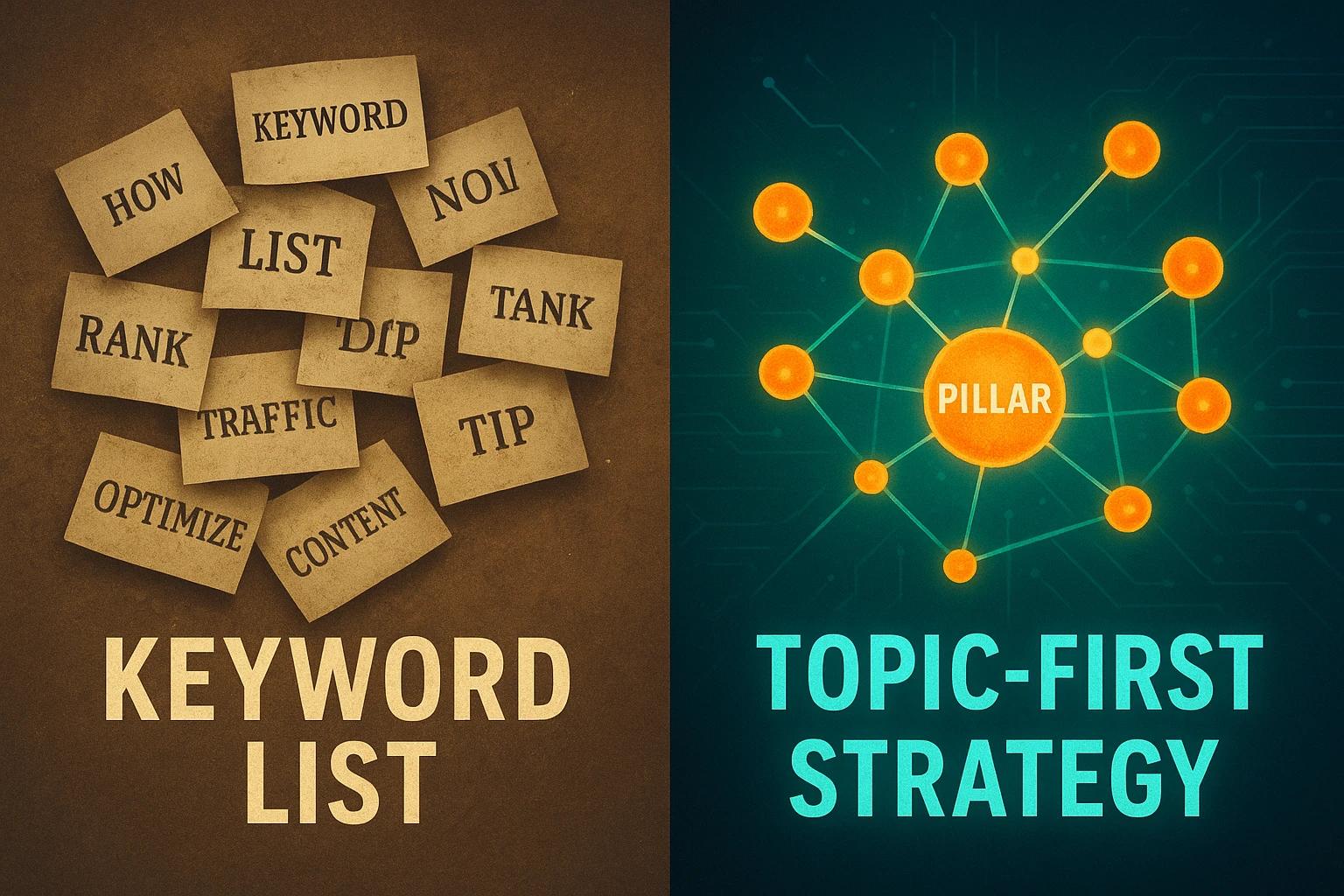
Topic-First Content Strategy for AI-Driven Search
Discover why focusing on topics over keywords drives SEO success in AI-powered search environments.
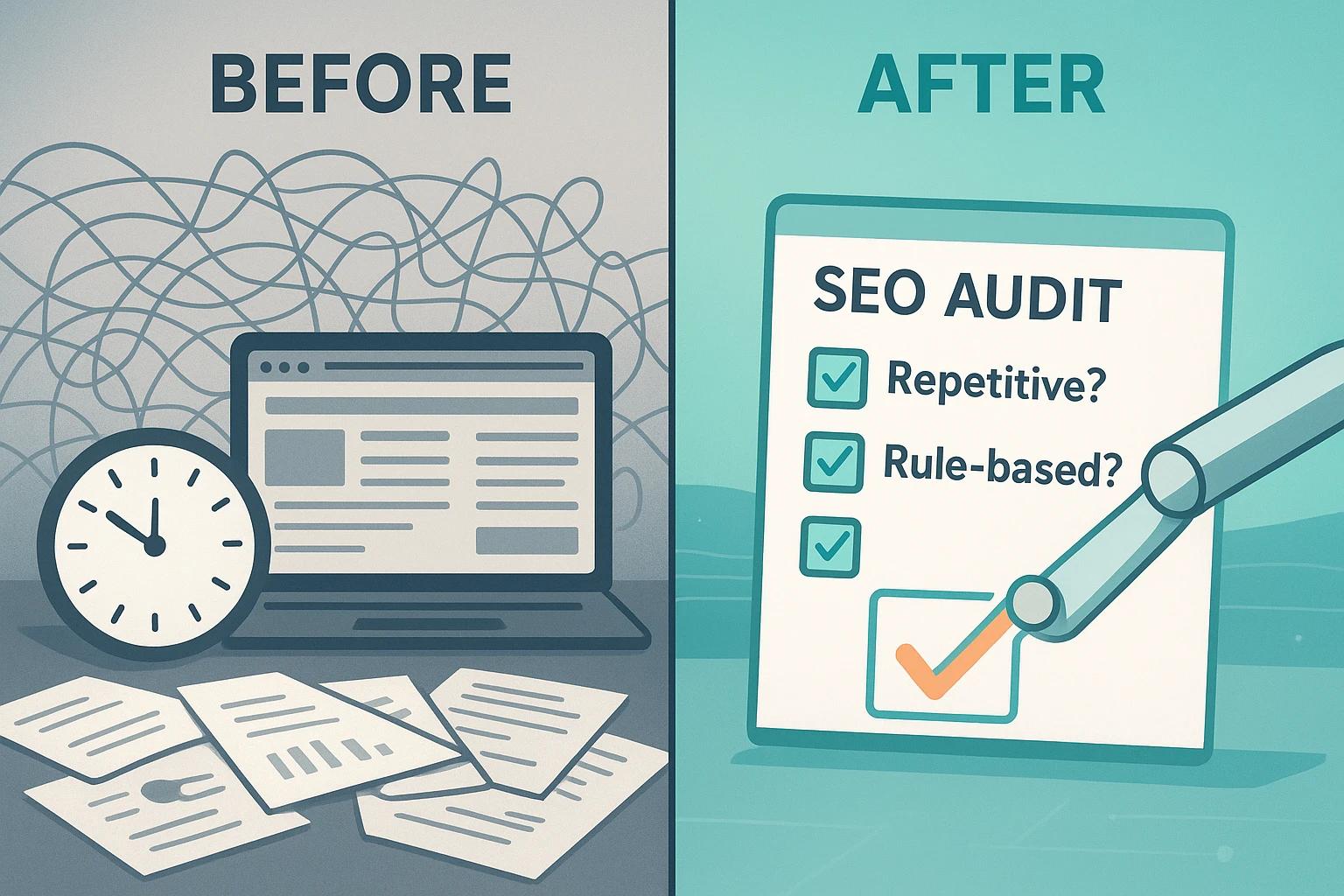
How to Audit SEO for Automation Opportunities
Discover a simple non-technical checklist to identify SEO tasks you can automate and save time for strategic work.
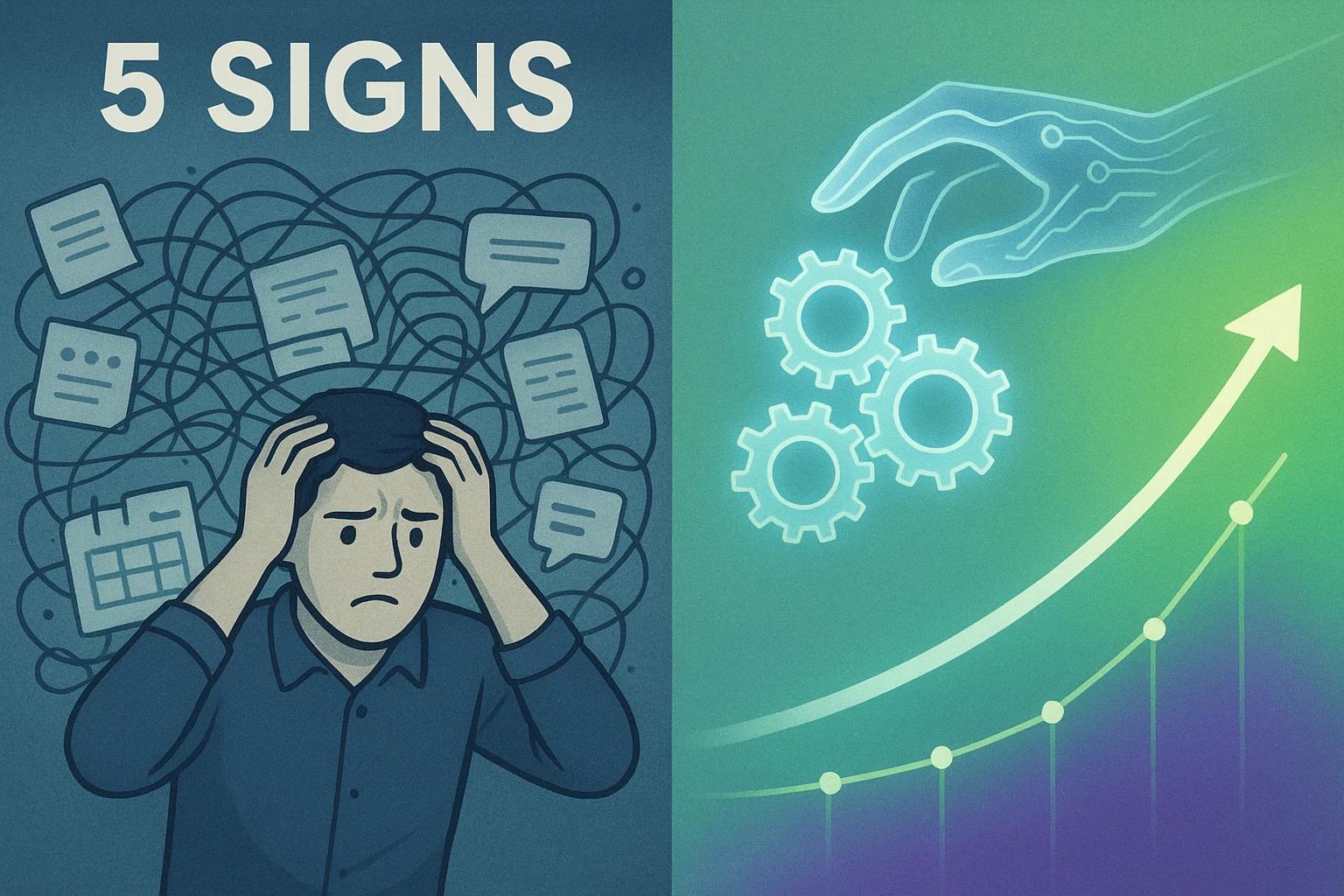
5 Signs Your Content Workflow Is Blocking Growth
Discover common content workflow problems slowing your growth and how automation can help improve efficiency and results.