Align SEO Content and Product Teams for AI Overview Success

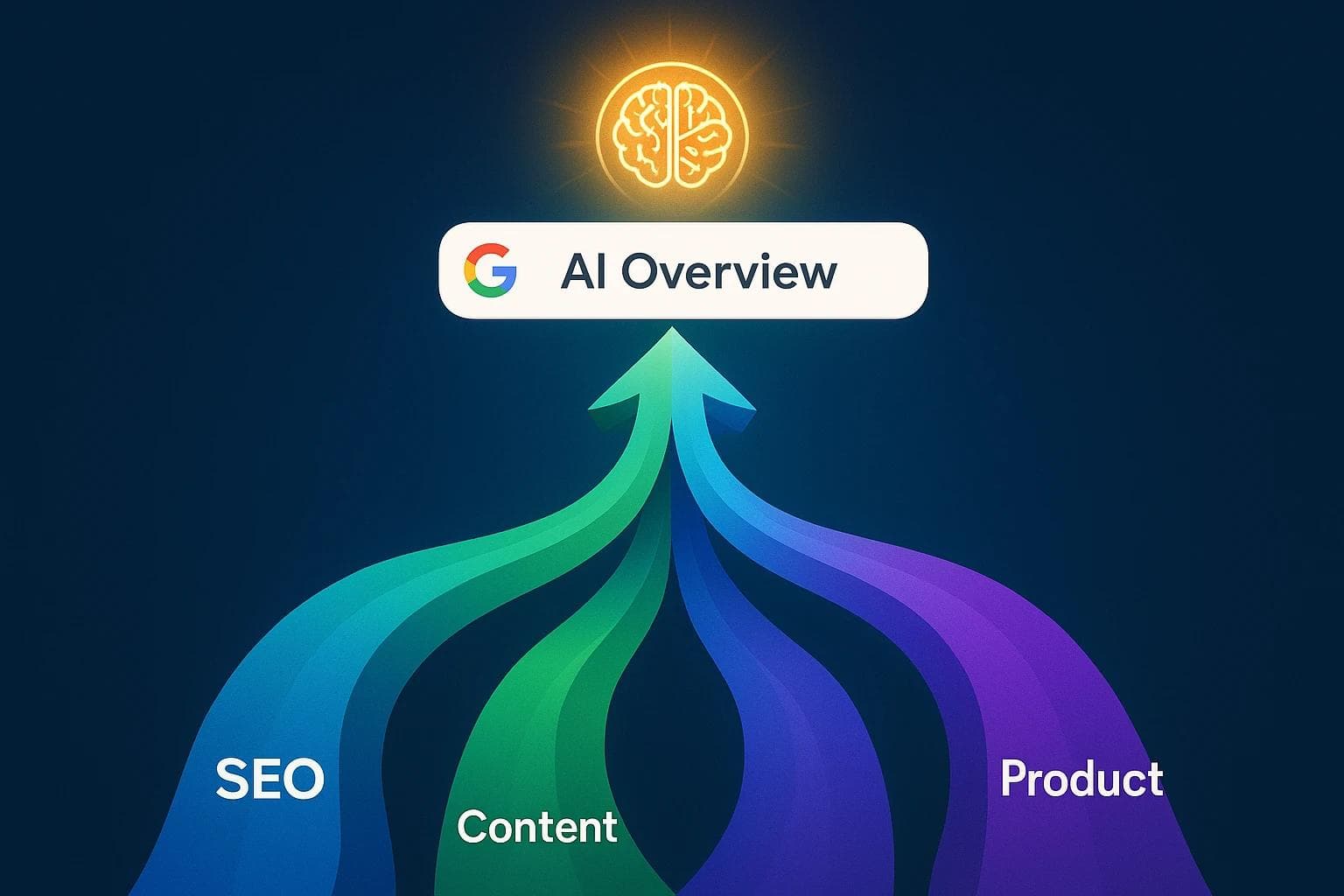
Stop the Chaos: How to Align SEO, Content, and Product for AI Overview Success
Ever feel like your teams are running a relay race, but everyone is running in a different direction? Your SEO team identifies a golden opportunity. The content team writes a brilliant article about it. And the product team launches a related feature. All are great efforts, but they don't quite connect. In the end, it feels like shouting into the wind.
If this sounds familiar, you're not alone. As Daniel Horowitz, a leader in the space, aptly put it, misalignment can feel like "automating confusion at scale." This problem has always existed, but with the rise of Google's AI Overviews, it has gone from a minor frustration to a major threat to your online visibility.
AI Overviews are changing the search game. Instead of just listing links, Google is now providing direct, synthesized answers at the top of the page. To be the source for these answers, your brand must speak with one clear, authoritative voice. This isn't just an SEO task or a content challenge; it's an organizational one. The good news? The teams that solve this alignment puzzle will not only survive—they will dominate the new search landscape.

The New Reality: Why Silos Fail in the Age of AI
For years, digital teams have operated in well-defined, yet separate, lanes. SEO focused on keywords, content focused on creation, and product focused on features. This model is now obsolete. Here’s why:
AI Thinks in Entities, Not Just Keywords
Google's AI doesn't just see a string of words; it understands concepts and relationships. It views your brand as an "entity"—a collection of all the information it can find about you, your products, and your expertise.
When your content, product pages, and technical SEO send conflicting or disconnected signals, the AI gets a fuzzy picture of your entity. It won't trust you as an authoritative source. Conversely, when all three teams work in concert, they reinforce your brand's expertise, making you a prime candidate for citation in AI Overviews.
The User Journey Has Changed
The classic user journey of "search, click, browse" is being short-circuited. Many users will get their answer directly from the AI Overview. This means the opportunities to capture attention are fewer but more valuable.
- SEO's role is no longer just about ranking #1. It's about being the cited source within the AI's answer.
- Content's role is no longer just about long-form articles. It's about creating structured, easily digestible information that an AI can parse and synthesize.
- Product's role is no longer isolated from search. The user experience and features on your site must directly answer the high-intent questions that lead users to click through from an AI Overview.
A siloed approach simply can't create the cohesive, authoritative presence required to win in this new environment.
The Unified Framework: A Blueprint for Seamless Collaboration
So, how do you break down these walls? It starts with a shared framework that redefines roles and aligns everyone toward a common goal. Think of it as moving from three separate solo artists to a finely tuned orchestra.
Redefining Team Roles for an AI-First World
Success in the AI era requires an evolution of responsibilities. As the experts at Backlinko note in their guide to building an AI-ready SEO team, new skills and mindsets are essential.
- SEO Team: The Entity Strategists. They move beyond keywords to identify the core concepts and user questions your brand needs to own. They analyze AI Overviews to find opportunities and define the technical requirements (like schema) needed to get cited.
- Content Team: The Information Architects. They are no longer just writers but designers of information. Their job is to structure content—using clear headings, lists, and data—so that it's perfectly primed for AI extraction. A critical piece of this is understanding what the impact of heading structure on AI extractability is, as it directly influences how machines interpret your content.
- Product Team: The User Journey Architects. They ensure the product experience delivers on the promise made in the search results. They embed useful tools, features, and clear value propositions that align with the content and answer the user's ultimate need, turning a simple visit into a conversion.
Establishing Shared Goals & KPIs
You can't manage what you don't measure. Siloed teams often have competing KPIs (e.g., traffic vs. feature adoption). A unified team needs shared metrics that reflect AI Overview success:
- Citation Frequency: How often is your brand cited as a source in relevant AI Overviews?
- Branded Search Growth: As your authority grows, are more people searching for you by name?
- AI Visibility Score: A custom metric tracking your presence across a basket of target AI Overview queries.
- Post-Click Conversion Rate: Of the users who do click through from an AI Overview, how many are converting? This directly ties the product experience to SEO success.

Putting It Into Practice: A Workflow That Removes Friction
Theory is great, but success comes from execution. The biggest gap most organizations face is the lack of a clear, operational workflow. Here is a simple, effective process to connect your teams.
Step 1: The Unified AI Opportunity Brief
This is your single source of truth. Instead of three separate documents, you have one collaborative brief that starts with the SEO team and is enriched by the others.
- SEO Input: Identifies the target user query, the existing AI Overview, competing sources, target entities to mention, and necessary schema markup.
- Content Input: Outlines the narrative flow, key headings, data points, and the core "aha moment" the content should deliver. It defines how the information will be structured for clarity and AI consumption.
- Product Input: Details which product features, tools, or value propositions directly solve the user's problem. It ensures the content is grounded in the tangible value your product provides.
Step 2: A Clear Handoff and Feedback Loop
Forget throwing tasks over the wall. A collaborative workflow ensures quality at every stage.
- Ideation (All Teams): SEO identifies an opportunity based on data.
- Briefing (SEO Lead, Content & Product Review): SEO drafts the unified brief. Content and Product teams review and add their requirements.
- Creation (Content Lead, Product & SEO Review): The content team drafts the asset. Product reviews it for technical accuracy and alignment with the user experience. SEO reviews it for on-page optimization.
- Publication & Optimization (All Teams): Once live, all three teams monitor performance against the shared KPIs and collaborate on iterative improvements.
Step 3: Overcoming Conflict with a Shared Purpose
What happens when teams disagree? The product team wants to highlight a new feature, but the SEO team's data says users are asking about an old one. With shared KPIs, these conflicts become strategic discussions, not turf wars. The question is no longer "What's best for my team?" but "What's best for answering the user's question and increasing our citation frequency?"
Your First Steps to a Unified Strategy
Getting started doesn't require a massive reorganization. It starts with a pilot project.
- Assess: Get leaders from SEO, Content, and Product in a room. Map out your current process and identify the most obvious points of friction.
- Pilot: Choose one important AI Overview opportunity to tackle with the new unified brief and workflow. Treat it as a learning experience.
- Scale: Document what worked and what didn't. Refine the process and roll it out to more projects, leveraging collaboration tools to streamline communication.

Frequently Asked Questions
What are AI Overviews?
AI Overviews are AI-generated answers that appear at the top of Google's search results for many queries. They synthesize information from multiple web pages to provide a direct, concise summary for the user.
How do they really affect traditional SEO?
They reduce the number of "zero-click" searches by answering questions directly on the results page, which can decrease clicks to traditional organic listings. This makes being cited within the overview critically important for visibility and authority.
What's the very first step my team should take?
Schedule a 1-hour meeting with the leads of your SEO, Content, and Product teams. The only agenda item: "How do we currently work together on a new content initiative?" Mapping your existing (and likely broken) process is the best way to see the immediate need for a new one.
How do we convince our product team they have a role in SEO?
Frame it in their language. Explain that high-intent users coming from search are often the most qualified leads. If the product experience they land on is disconnected from the search that brought them there, conversion rates will suffer. Their involvement directly impacts user activation and business goals.
The Future is Aligned
Aligning your SEO, Content, and Product teams is no longer a "nice-to-have." In the world of AI-driven search, it is the fundamental requirement for building a brand that Google recognizes as an authority.
By moving from siloed execution to a unified strategy, you stop automating confusion and start building a clear, consistent voice that AI—and your customers—will trust. The journey begins with a single conversation and a shared goal. Start that conversation today.
Roald
Founder Fonzy — Obsessed with scaling organic traffic. Writing about the intersection of SEO, AI, and product growth.
Stop writing content.
Start growing traffic.
You just read about the strategy. Now let Fonzy execute it for you. Get 30 SEO-optimized articles published to your site in the next 10 minutes.
No credit card required for demo. Cancel anytime.
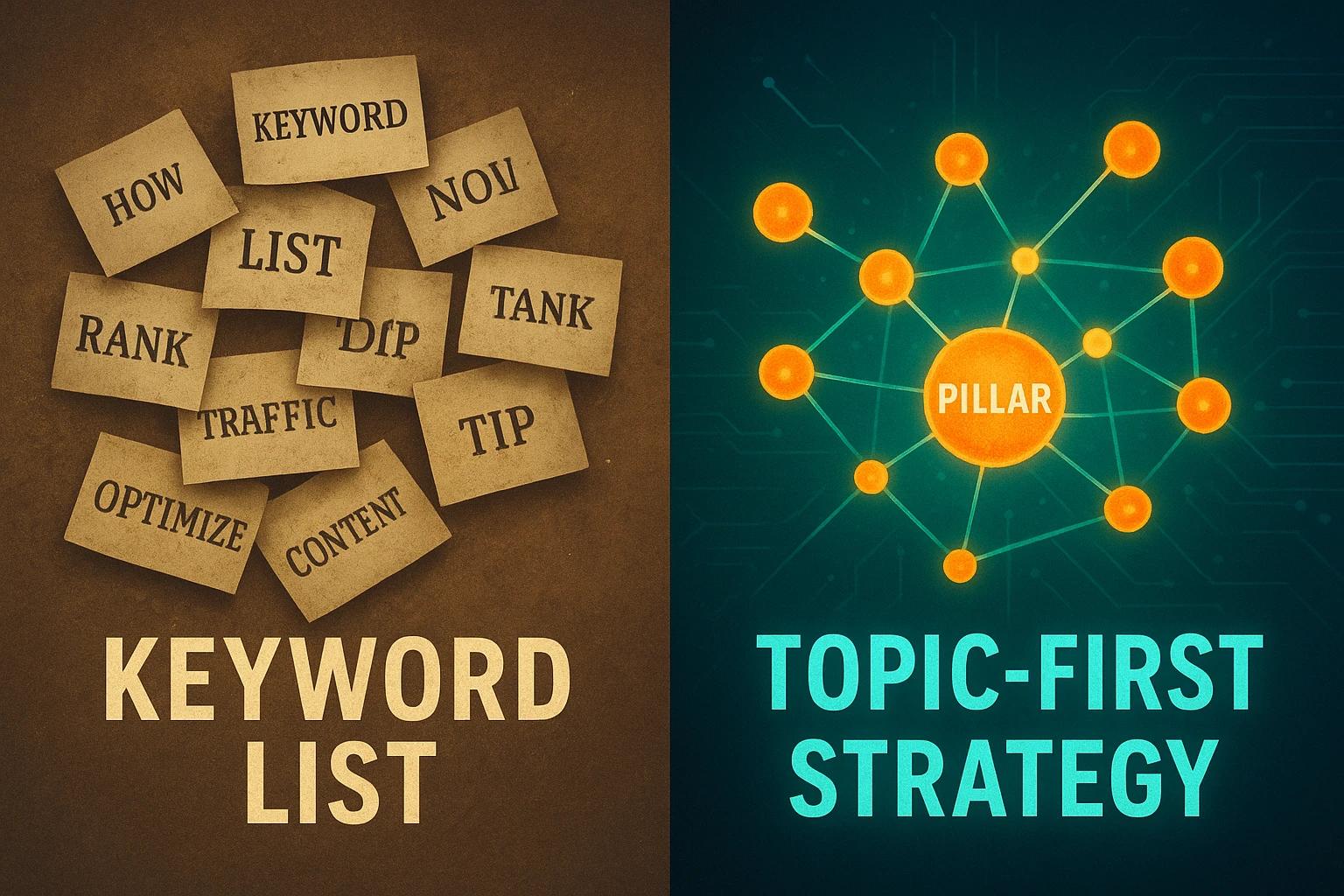
Topic-First Content Strategy for AI-Driven Search
Discover why focusing on topics over keywords drives SEO success in AI-powered search environments.
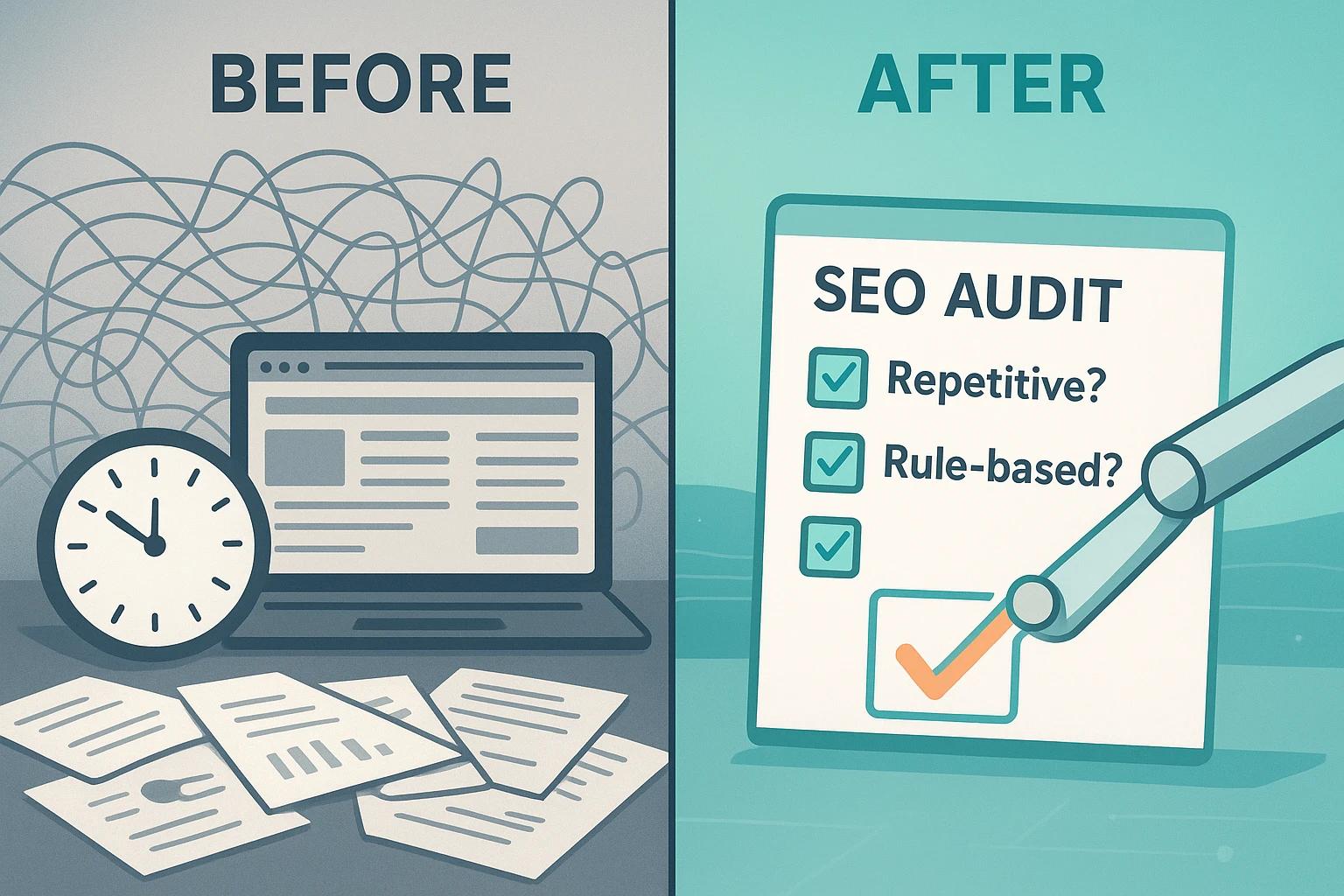
How to Audit SEO for Automation Opportunities
Discover a simple non-technical checklist to identify SEO tasks you can automate and save time for strategic work.
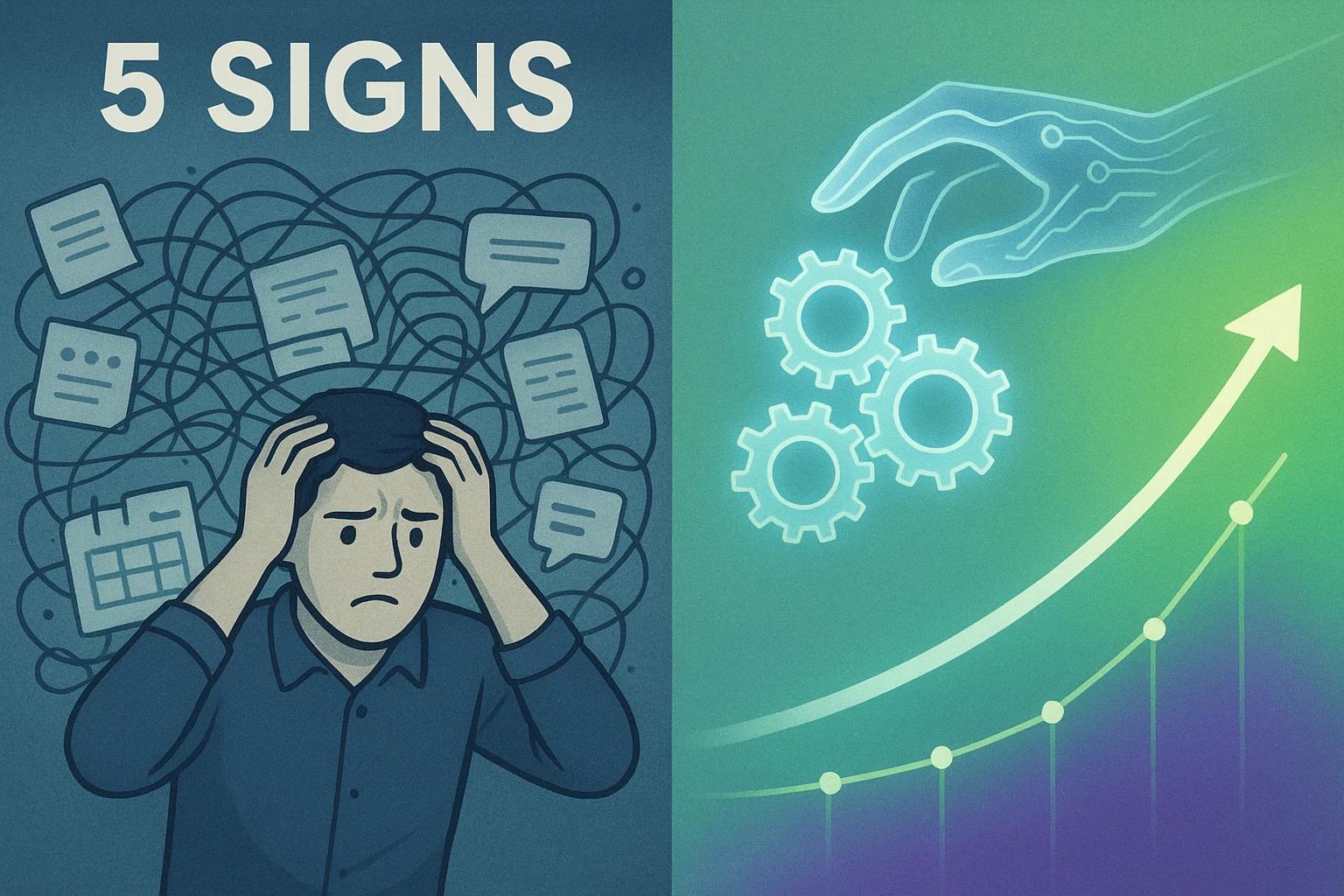
5 Signs Your Content Workflow Is Blocking Growth
Discover common content workflow problems slowing your growth and how automation can help improve efficiency and results.