
Five Signs Your Website Is Invisible to AI Assistants (And How to Check in 5 Minutes)
You’ve poured time and resources into your website. You've optimized for keywords, built backlinks, and watched your Google rankings climb. But when you ask ChatGPT, Gemini, or even a Google AI Overview about your industry, your business is nowhere to be found. Your competitors get cited as sources, but your site is met with digital silence.
It’s a frustrating and increasingly common problem. Welcome to the new era of search, where simply ranking isn’t enough. You need to be citable.
The rise of AI assistants has fundamentally changed how information is discovered. These tools aren't just scanning keywords; they are actively seeking trustworthy, well-structured information to construct direct answers. If your website doesn't speak their language, you're effectively invisible. This new discipline is called Answer Engine Optimization (AEO), and it's about making your content the definitive source that AI turns to.
But before you can optimize, you need to diagnose. Here are five telltale signs that AI assistants are ignoring your site, along with quick, non-technical audits you can run right now.
How AI "Reads" the Web: A Quick Primer
First, it helps to understand that AI doesn't "see" your website the way a human does. You see a beautiful design, compelling images, and engaging copy. An AI sees the underlying structure: the code, the headings, the data connections, and the links.
It’s on a mission to find the most reliable, unambiguous facts to answer a user's question. It's looking for clarity and authority, not clever design. This fundamental difference is why a site can perform well in traditional search results but be completely overlooked by generative AI.

Think of it this way: a human reader might be impressed by a fancy restaurant menu, but a chef (the AI) just wants a clear, well-organized ingredient list to cook with. Is your site giving AI the ingredients it needs?
The 5 Telltale Signs Your Site Is an AI Blind Spot
Let's run through a simple checklist to see if your website is set up for AI visibility or if it's hiding in plain sight.
Sign 1: You're Getting Zero Citations in AI-Generated Answers
The Symptom: This is the most direct sign. You ask AI assistants questions that are directly related to your expertise, and they consistently cite your competitors—or broad sources like Wikipedia—but never you.
Why It Matters to AI: AI models are built on trust signals. A citation is a vote of confidence. When an AI cites a source, it's essentially saying, "This is an authoritative place to get information on this topic." If you're never cited, the AI has not yet identified you as a trusted authority. It’s the digital equivalent of being the smartest person in the room that no one ever asks for an opinion.
Quick Audit (2 minutes):
- Open ChatGPT, Google Gemini, or Perplexity AI.
- Ask 5-10 specific questions that your ideal customer would ask. For example, if you're a financial planner, ask, "What are the first steps to creating a personal budget?" or "How much should I have saved for retirement by age 40?"
- Review the answers. Note which websites, if any, are linked or mentioned as sources. If your domain name never appears after several queries, you have a citation problem. This is a clear indicator that you need a better [What is Answer Engine Optimization (AEO)?]() strategy.
Sign 2: Your Content Rarely Appears in Featured Snippets
The Symptom: On Google, when you search for a question related to your industry, you never see your content in the "answer box" at the top of the results page, also known as "Position Zero."
Why It Matters to AI: Featured snippets are a major training ground for large language models. Google has already done the work of identifying a clear, concise, and accurate answer to a common question. AI models often use these snippets as a primary source because the content is already "answer-shaped." Missing out on snippets means you're missing a critical opportunity to feed AI models the exact kind of content they're looking for.

Quick Audit (1 minute):
- Go to Google.
- Search for a question using one of your main keywords. For example, "what is content marketing automation?" or "how to repot a fiddle leaf fig."
- Look at the very top of the results. Is there a box with a direct answer pulled from a website? Is that website yours? Repeat this for 5-10 of your core topics.
Sign 3: Your Website Lacks Structured Data (Schema Markup)
The Symptom: To a human, your "About Us" page clearly explains who you are. Your product page clearly lists the price. But without structured data, an AI has to guess. It might see a number and wonder, "Is that the price, the model number, or the quantity in stock?"
Why It Matters to AI: Schema markup is a type of code that acts as a universal translator for search engines and AI. It explicitly labels your content. For example, it tells an AI, "This string of text is the author's name," "This number is the product's price," and "This is a recipe, and the cook time is 30 minutes." AI prefers certainty over guesswork. Sites with rich, descriptive schema are far more likely to be understood correctly and trusted as a source. A comprehensive [The Ultimate Guide to AI SEO]() must include a strong foundation of structured data.
Quick Audit (1 minute):
- Copy the URL of one of your key website pages (like a blog post, product page, or service page).
- Go to Google's free Rich Results Test tool.
- Paste your URL and run the test.
- Look at the results. If you see a green checkmark and a list of "detected items" (like Article, FAQ, or Product), you're on the right track. If you see an error or the message "No items detected," AI is having to work too hard to understand your content.
Sign 4: Your Content is "Thin" or Poorly Organized
The Symptom: Your blog posts are short (under 500 words), cover topics superficially, and lack clear organization with headings and subheadings. There are very few links pointing from one article to another relevant article on your site.
Why It Matters to AI: AI builds its understanding of a topic by analyzing comprehensive content and following the connections between concepts. Short, shallow articles don't provide enough data to establish your authority. Furthermore, a lack of clear headings (H2s, H3s) and internal links makes it difficult for an AI to understand the hierarchy of information and how your different pieces of content relate to one another. It's like trying to assemble a puzzle with half the pieces missing.
Quick Audit (30 seconds):
- Open your most recent blog post.
- Check the word count. Is it substantial enough to cover the topic in detail?
- Scan the structure. Does it have a clear H1 title? Are the main points broken down with descriptive H2 and H3 subheadings?
- Does the article link to other relevant pages or posts on your website to provide more context? If not, your content may be too "thin" for an AI to take seriously.
Sign 5: Your Content is Stale and Rarely Updated
The Symptom: Your company blog hasn't been updated in six months. Your core service pages were written three years ago and haven't been touched since. Your site feels more like a static brochure than a living resource.
Why It Matters to AI: The world changes, and AI models are constantly updated to reflect that. They have a built-in preference for fresh, current information because it's more likely to be accurate and relevant. A website that is consistently updated signals to AI that it is an active, reliable, and current source of authority. Stale content, on the other hand, is a red flag that your information may be outdated and untrustworthy.
Quick Audit (30 seconds):
- Go to Google and type
site:yourdomain.cominto the search bar. - Click on "Tools" below the search bar.
- Click on "Any time" and change the filter to "Past month."
- How many results do you see? If the answer is zero or only one or two, it’s a strong sign that your content publishing cadence isn't frequent enough to signal freshness to AI crawlers.
From Invisible to Influential: Your Next Steps
If you nodded along to one or more of these signs, don't panic. You've just completed the most important step: diagnosis. Recognizing that your site isn't communicating effectively with AI is the first step toward fixing it.
The solution isn't a single quick fix but a shift in mindset. It's about consistently creating content that is structured for machines and valuable for humans. It means building a content engine that prioritizes depth, freshness, and clarity. By focusing on these areas, you can transform your website from an AI blind spot into a go-to authority, ensuring you're not just seen but cited in the new age of search. Understanding [How AI is Reshaping Content Marketing]() is key to building a strategy that will keep you visible for years to come.
Frequently Asked Questions (FAQ)
Q1: What's the difference between traditional SEO and this new "AEO"?Think of it as the difference between being on the list and being in the answer. Traditional SEO focuses on ranking your webpage high on a list of blue links. AEO (Answer Engine Optimization) focuses on getting your content selected as the direct source for an AI-generated answer. SEO gets you visibility; AEO gets you authority and citation.
Q2: Can I just block AI crawlers from my site?You can, using your website's robots.txt file, but it's generally not a good idea if you want to be visible in AI answers. Blocking crawlers from services like OpenAI and Google is like putting a "do not enter" sign on your door for the very entities you want to influence. A better approach is to provide them with high-quality, structured content so they use your information correctly.
Q3: Which of these five signs is the most important to fix first?If you have to start with one, focus on Sign #3: Lacking Structured Data (Schema Markup). This is a foundational, technical fix that provides the most clarity to AI crawlers. Implementing schema is like giving the AI a blueprint to your website, making every other content improvement you make more powerful and easier for it to understand.
Q4: Do I really need to be on Reddit or other forums to get cited by AI?While not a direct requirement, the presence of your brand and content on high-authority, user-generated content (UGC) platforms like Reddit is becoming an increasingly important signal. AI models are learning that real conversations and recommendations happen on these platforms. When users organically reference your content or brand as a solution on a forum, it acts as a powerful, third-party endorsement that AI can recognize as a strong authority signal.

Roald
Founder Fonzy — Obsessed with scaling organic traffic. Writing about the intersection of SEO, AI, and product growth.
Stop writing content.
Start growing traffic.
You just read about the strategy. Now let Fonzy execute it for you. Get 30 SEO-optimized articles published to your site in the next 10 minutes.
No credit card required for demo. Cancel anytime.
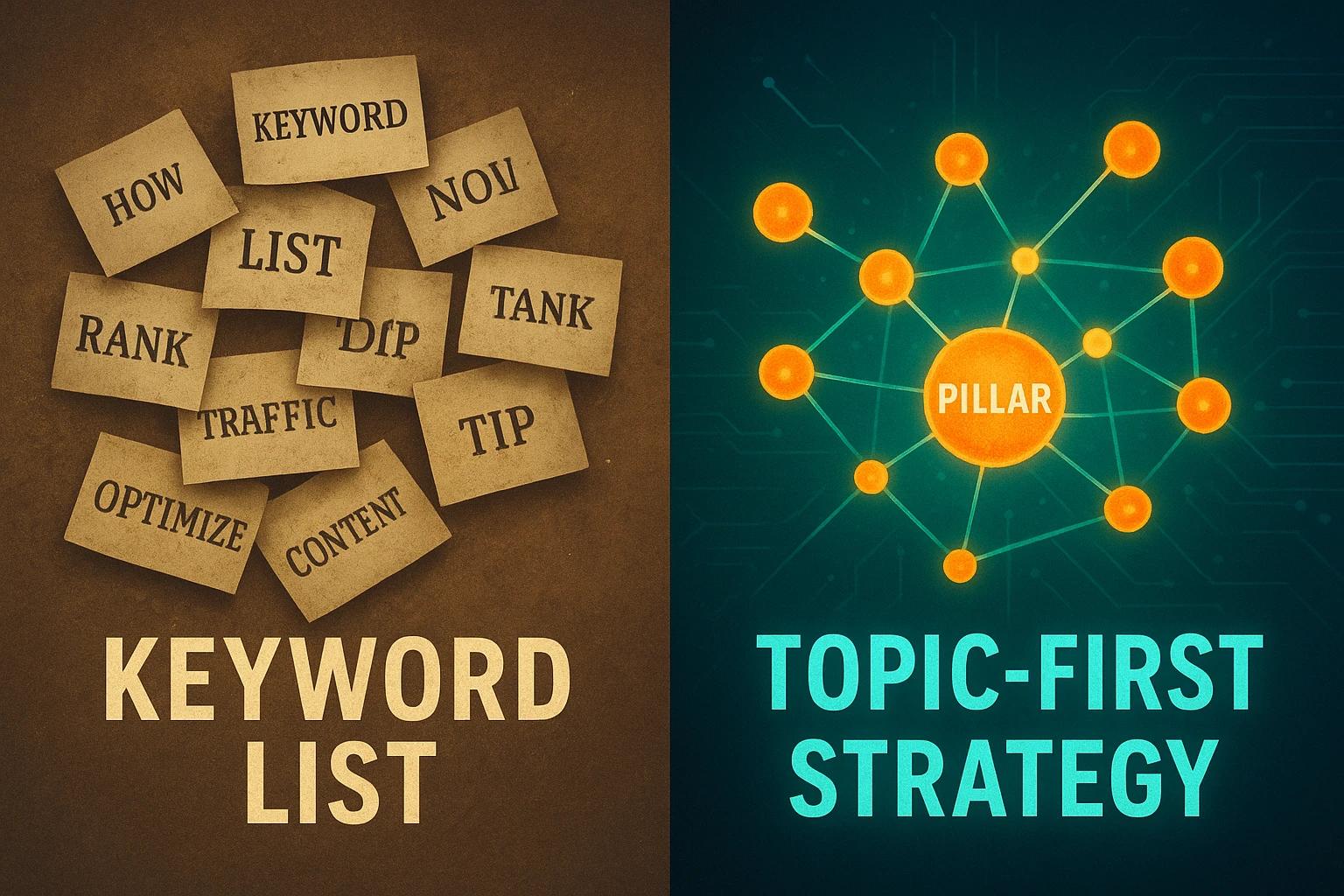
Topic-First Content Strategy for AI-Driven Search
Discover why focusing on topics over keywords drives SEO success in AI-powered search environments.
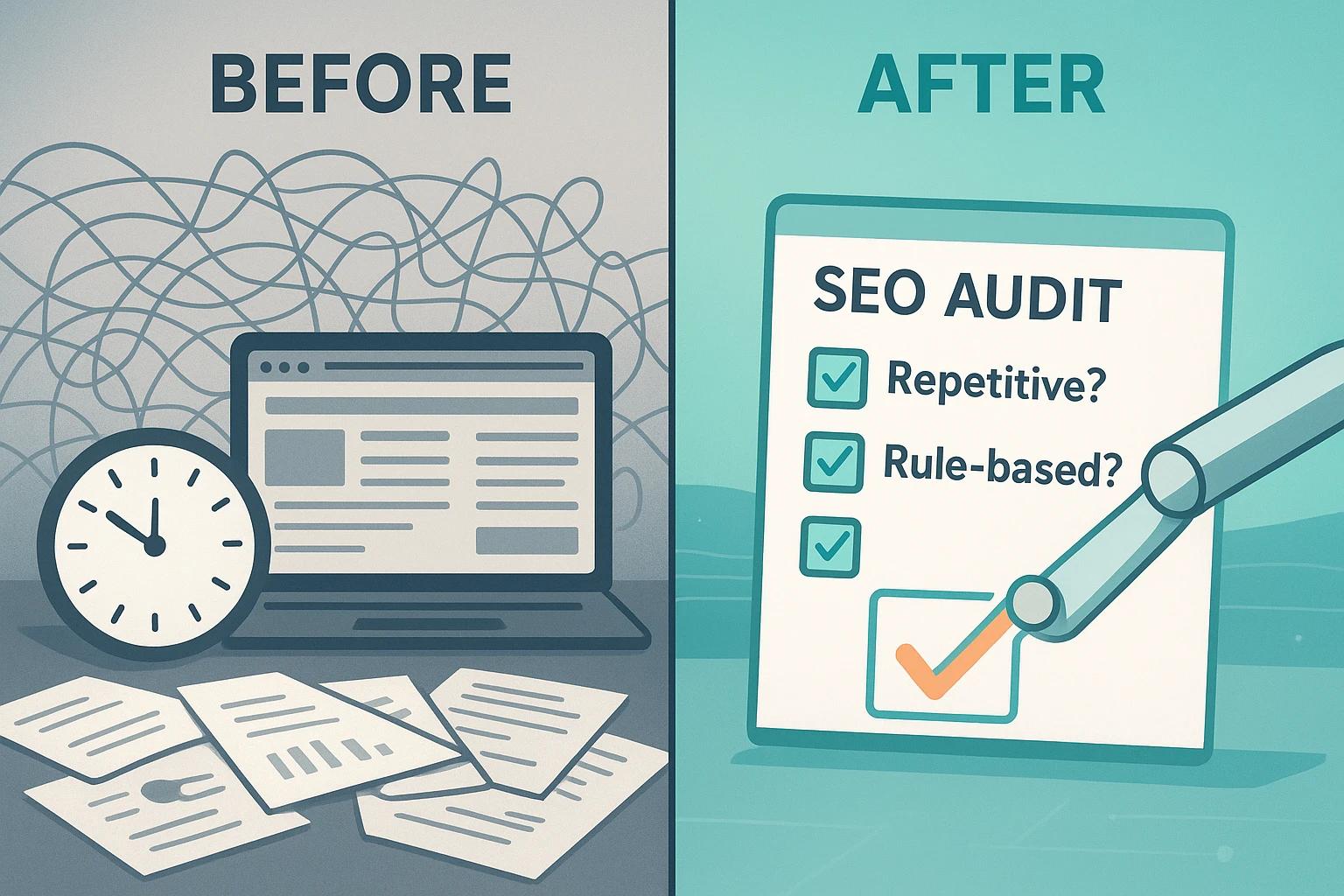
How to Audit SEO for Automation Opportunities
Discover a simple non-technical checklist to identify SEO tasks you can automate and save time for strategic work.
5 Signs Your Content Workflow Is Blocking Growth
Discover common content workflow problems slowing your growth and how automation can help improve efficiency and results.