How Non-Technical Marketers Can Use AI for Faster Research


Your New Marketing Sidekick: How Non-Technical Marketers Can Use AI for Faster Research and Better Angles
You have 17 browser tabs open, a half-finished cup of coffee, and a looming deadline. You're deep in the content research rabbit hole, trying to find a fresh angle for your next blog post, but all you've found are the same tired ideas rehashed across a dozen competitor sites.
Sound familiar? For many marketers, research is a frustrating bottleneck—a time-consuming process of sifting through dense articles, deciphering customer feedback, and brainstorming ideas that feel anything but original.
What if you had a brilliant research assistant who could read everything in seconds, spot hidden patterns in customer conversations, and brainstorm unique angles on command? That's not science fiction; it's the practical reality of using AI. And you don't need a degree in computer science to do it. This guide is for you, the non-technical marketer, to show you how to turn AI into your most powerful tool for faster research and genuinely better content.

The ABCs of AI for Marketers: No Jargon Allowed
Before we jump into the "how-to," let's clear up some of the buzzwords. Forget the complex definitions; here’s what these terms mean for your marketing tasks.
- Generative AI: Think of this as your creative brainstorming partner. It's the technology behind tools like ChatGPT and Gemini. You give it a prompt—a request or a piece of information—and it generates something new, like a blog post outline, a list of customer pain points, or an email subject line.
- Natural Language Processing (NLP): This is AI's ability to read and understand human language. When you ask an AI to summarize an article or pull out the main themes from customer reviews, you're using NLP. It's the "comprehension" engine that makes sense of all the text.
- Machine Learning (ML): This is the "learning" part of AI. The more data an AI processes, the better it gets at identifying patterns. For a marketer, this means AI can help you spot emerging trends or predict which content angles are most likely to resonate with your audience over time.
The big takeaway? AI isn't some abstract, technical beast. It’s a set of tools designed to understand language, generate ideas, and find patterns—all things you already do, just at a superhuman speed and scale.
AI in Action: 3 Simple Workflows to Revolutionize Your Research
Theory is nice, but results are better. Let's walk through three step-by-step examples of how you can use simple AI prompts to solve common research headaches. You can use these prompts in widely available generative AI tools.

1. The 5-Minute Summary: Tame Your Reading List
The Problem: You've found a 5,000-word industry report that looks promising, but you don't have an hour to read it. You need the key takeaways, now.
The AI Solution: Use AI to act as your speed-reading analyst. Instead of manually highlighting text, you can get a concise summary in seconds.
Your Copy-and-Paste Prompt:
Act as a marketing strategist. I am providing you with an article about [article's topic]. Please read it and provide me with the following:1. A one-paragraph executive summary.2. The 3-5 most important takeaways for a [your role, e.g., 'small business owner'].3. Any surprising statistics or data points I should know.[Paste the full article text here]Why it works: This prompt doesn't just ask for a summary. It gives the AI a specific role ("marketing strategist") and asks for targeted information (takeaways, stats), ensuring the output is relevant to your job, not just a generic book report.
2. The Mind Reader: Extract Audience Questions from Anywhere
The Problem: You know you need to address your audience's pain points, but how do you find them? Manually reading through hundreds of Amazon reviews, Reddit threads, or forum comments is exhausting.
The AI Solution: Let AI be your ethnographer, analyzing hundreds of comments to find the golden nuggets of customer insight.
Your Copy-and-Paste Prompt:
I am a content marketer for a company that sells [your product, e.g., 'ergonomic office chairs']. I've pasted 25 customer reviews from our competitor's product page below. Analyze these reviews and identify:1. The top 5 most frequently mentioned pain points or frustrations.2. The top 3 most desired features or benefits users are looking for.3. Any direct questions that customers are asking.Organize your findings in a simple table.[Paste the raw reviews here]Why it works: This prompt turns unstructured, messy data (customer reviews) into structured, actionable insights. You’re not just guessing what your audience wants; you’re using AI to extract their exact words and organize them into themes for your next piece of content.
3. The Angle Generator: Escape the Content Echo Chamber
The Problem: You're tasked with writing about a common topic like "social media marketing." Every angle feels done to death, and you're stuck in a rut of unoriginal ideas.
The AI Solution: Use AI as your creative partner to brainstorm angles you haven't considered. By providing context about your audience and goals, you can generate truly unique ideas.
Your Copy-and-Paste Prompt:
I am creating content for [describe your audience, e.g., 'local bakery owners who are not tech-savvy']. My core topic is 'Instagram marketing.' The goal is to provide practical, low-effort advice.Generate 5 unique blog post angles that go beyond the typical 'use hashtags' and 'post consistently' advice. For each angle, suggest a catchy headline and a brief description of what the article would cover.Why it works: The magic here is in the context. By defining your audience ("local bakery owners") and their limitation ("not tech-savvy"), you force the AI to think beyond generic advice and generate angles that are highly specific and valuable to your target reader.
Beyond the Basics: Navigating the AI World with Confidence
As you get comfortable using these tools, you'll start thinking bigger. But with greater power comes the need for greater awareness.
The AI Minefield: Acknowledging Bias and "Hallucinations"
AI is incredibly powerful, but it's not perfect. It learns from the vast amount of information on the internet, which includes biases and inaccuracies.
- AI Bias: If the data an AI trained on is biased, its output can be biased too. Always review AI-generated content with a critical eye, especially when it involves demographic or cultural topics.
- "Hallucinations": This is a term for when an AI confidently states something that is completely false. It might invent statistics, misattribute quotes, or make up facts. Your rule of thumb should be: always verify. If an AI gives you a statistic, find the original source before you publish it.
Treat your AI tool like a brilliant but sometimes unreliable junior assistant. Trust it for ideas and drafts, but always verify its facts.
The Next Step: Understanding AI SEO Platforms
The manual prompts we've explored are like using hand tools—they're effective for specific jobs. AI SEO platforms, on the other hand, are the fully equipped workshop.
Platforms like Fonzy.ai take the process a step further by automating the entire content lifecycle. Instead of you manually researching topics, generating angles, and writing drafts, these systems are designed to:
- Analyze your website and competitors to find high-opportunity keywords.
- Automatically generate an entire content plan based on that data.
- Write, optimize, and even publish full-length articles for you.
Learning the basics of AI prompting gives you a huge advantage because you'll understand how these platforms think. You'll be better equipped to evaluate their output and see how they can integrate into your broader strategy to achieve consistent organic growth without the manual effort.

Your Journey into AI-Powered Marketing Starts Now
The fear that AI is too complex for non-technical marketers is a myth. By starting with simple, problem-focused prompts, you can immediately reclaim hours of your week and elevate the quality of your content. You can move from being overwhelmed by data to being empowered by insights.
You don't need to become an AI expert overnight. You just need to start thinking of AI as your new sidekick—a partner that handles the tedious research so you can focus on the creative and strategic work you do best.
Frequently Asked Questions (FAQ)
What is the main benefit of using AI for marketing research?
The primary benefit is a massive gain in efficiency and depth. AI can analyze vast amounts of text in seconds, summarizing reports, identifying themes in customer feedback, and brainstorming ideas far faster than a human ever could. This frees you up to focus on strategy and creativity.
I'm not technical at all. Can I really use these tools?
Absolutely. Modern generative AI tools are designed for natural language conversation. If you can write an email or a search query, you can write an AI prompt. The key is not technical skill, but clarity in what you're asking for.
Will AI replace my job as a marketer?
No. AI is a tool, not a replacement. It's best seen as an assistant that automates repetitive and time-consuming tasks. It can generate a first draft, but it still needs a human marketer's strategic oversight, creativity, critical thinking, and understanding of brand voice to turn that draft into a great piece of content.
How much do these AI research tools cost?
Many of the most popular generative AI platforms, like ChatGPT, Google Gemini, and Claude, offer powerful free versions that are more than capable of handling the research tasks outlined in this guide. This allows you to experiment and see the value for yourself with zero financial commitment.
What's the difference between using a general AI tool and a specialized AI SEO platform?
Think of it as the difference between a general practitioner and a specialist. A general AI tool is a versatile assistant that can help with a wide range of tasks. An AI SEO platform is a specialist designed for one purpose: to drive organic traffic. It automates the entire SEO content process, from keyword research and content creation to optimization and publishing, all integrated into a single, goal-oriented system.
Roald
Founder Fonzy — Obsessed with scaling organic traffic. Writing about the intersection of SEO, AI, and product growth.
Stop writing content.
Start growing traffic.
You just read about the strategy. Now let Fonzy execute it for you. Get 30 SEO-optimized articles published to your site in the next 10 minutes.
No credit card required for demo. Cancel anytime.
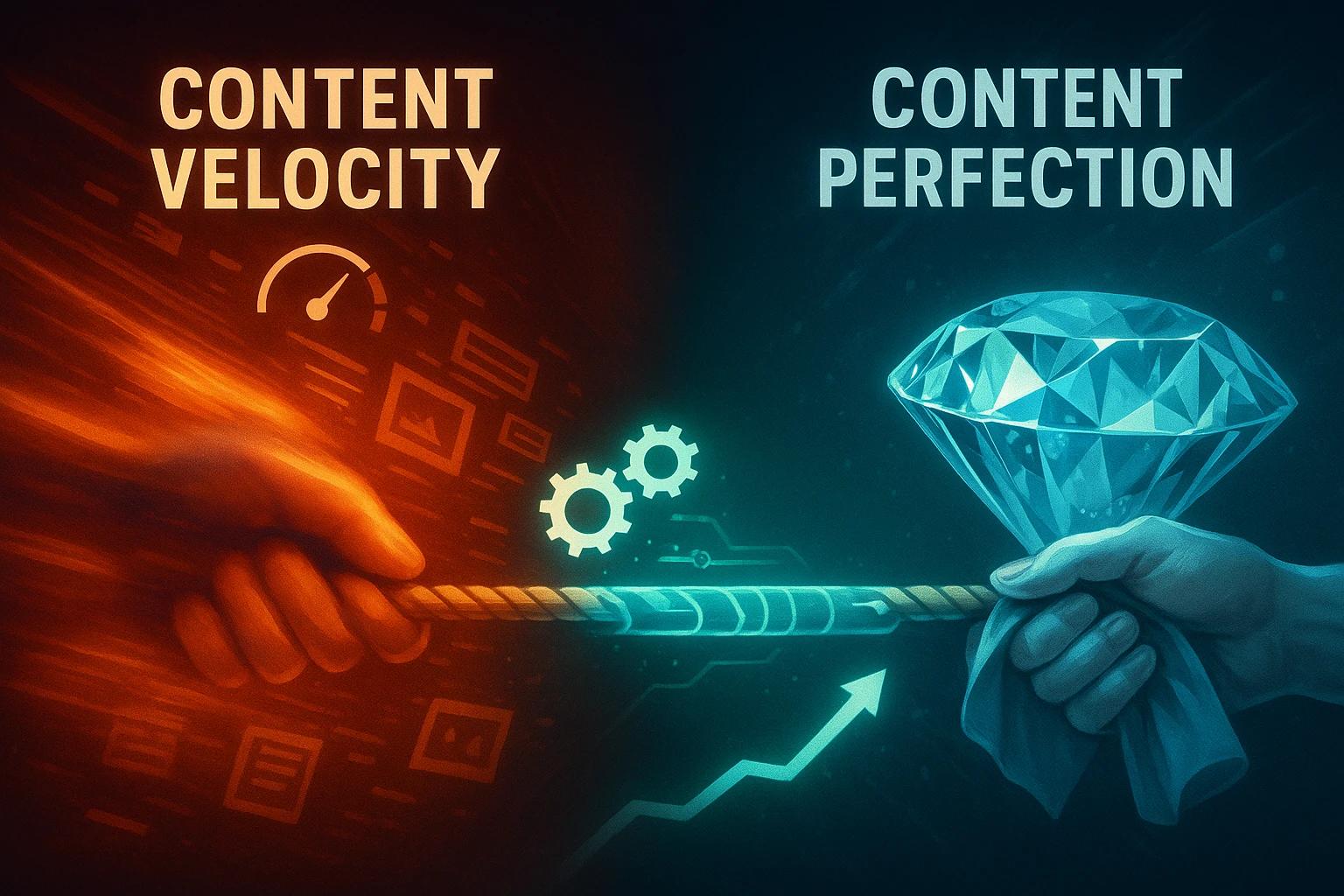
How Content Frequency Affects SEO Rankings and What to Prioritize
Explore how balancing content speed and quality impacts SEO and learn when to focus on velocity or perfection.
5 Signs Your Content Strategy is Losing Customers
Discover key signs your content strategy is stuck and quietly losing customers before it impacts your growth.

How to Measure SEO ROI with Business Metrics
Learn simple ways to measure SEO ROI focusing on leads, conversions, cost, and customer value beyond keywords and rankings.