The Short-Answer Checklist: How to Get Your Content Featured in AI Answers
Have you ever asked Google a question and gotten a perfect, concise answer right at the top, without clicking a single link? Or maybe you’ve used a chatbot like ChatGPT to summarize a topic for you. That’s the new reality of search, and it’s changing the game for anyone who creates content online.
The old world was a list of ten blue links. The new world is often a single, AI-generated answer.
For businesses, creators, and marketers, this presents a critical question: In a world of AI answers, how do you make sure your content is the source? If you’re not the chosen answer, you risk becoming invisible.
The good news is that you don’t need to be a machine learning expert to adapt. Optimizing your content for AI is less about complex code and more about clarity, structure, and authority. This guide will give you a simple, actionable checklist to start writing content that AI models love to quote.
First, What Are AI Answers and How Do They Work?
Before we dive into the checklist, let’s quickly get on the same page. When we talk about "AI answers," we're referring to the concise summaries generated by systems like Google’s AI Overviews, Perplexity, and chatbots.
Think of these AI models as incredibly smart, fast-reading research assistants. They crawl the web, read millions of articles, and try to understand the core concepts. When a user asks a question, the AI sifts through all the content it has "read" to find the most direct, trustworthy, and clearly-stated answer.
It looks for specific signals to determine which content to trust:
- Clarity: Is the information easy to understand?
- Structure: Is the content organized logically?
- Authority: Is the source credible and knowledgeable?
- Relevance: Does it directly answer the user's question?
Your job is to make your content the easiest, clearest, and most authoritative choice for that AI research assistant.

The Short-Answer Checklist: 4 Steps to Answer-Ready Content
Ready to make your content the go-to source for AI? Follow this four-step checklist. It’s a framework designed to structure your writing in a way that’s perfectly formatted for AI extraction.

1. Start with the Question (Question-First Headings)
AI models are designed to find answers to questions. The most direct way to signal that you have the answer is to frame your headings (your H2s and H3s) as the questions your audience is asking.
This acts like a perfect signpost, telling the AI, "The answer you're looking for is right here!"
Instead of: "The Function of SEO in Marketing"
The way you organize your content is fundamental. If you're wondering what’s the impact of heading structure on ai extractability?, the short answer is: it's massive. Question-based headings provide immediate context and align perfectly with user intent, making it incredibly easy for an AI to match a query to your content block.
2. Give the Answer Immediately (Short, Lead Summaries)
Once you've posed the question in your heading, provide a direct, concise answer in the very next paragraph. Don't bury the lead with long introductions or anecdotes. This "answer-first" or "inverted pyramid" approach is exactly what AI models are looking for.
Aim for a 1-3 sentence summary that directly answers the question from the heading. You can always elaborate with more detail, examples, and context in the following paragraphs.
Example:
What is Answer Engine Optimization (AEO)?
Answer Engine Optimization (AEO) is the process of creating and formatting online content so that it's more likely to appear in AI-generated answers, such as Google's AI Overviews. Unlike traditional SEO, which focuses on ranking in a list of links, AEO focuses on becoming the single, cited source for a specific query. This involves using clear headings, providing direct summaries, and structuring data effectively.
3. Make Facts Scannable (Bullet Points and Numbered Lists)
AI loves structured data, and one of the simplest forms of structure is a list. Bullet points and numbered lists break down complex information into digestible, scannable facts. This makes your content easier for both humans and machines to parse.
Use lists for:
- Steps in a process (numbered list)
- Key features or benefits (bullet points)
- A collection of tips or resources (bullet points)
- Statistical data points (bullet points)
This format allows AI to easily extract individual points to construct a comprehensive, yet concise, answer.
4. Prove You Know Your Stuff (Cite Sources and Show Authority)
Trust is a huge factor for AI. Models are being trained to prioritize content that demonstrates Expertise, Experience, Authoritativeness, and Trustworthiness (E-E-A-T).
You can build this trust by:
- Citing Your Sources: Link out to reputable studies, established industry sources, or official reports. This shows you've done your research.
- Showcasing Expertise: Mention author credentials, include expert quotes, or reference original research or case studies.
- Linking Internally: Connect to other relevant, authoritative articles on your own site to provide deeper context and show the breadth of your knowledge.
When an AI sees that your content is well-supported and written by a credible source, it's far more likely to select it as the basis for an answer.
Common Pitfalls vs. Best Practices
Optimizing for AI answers means unlearning a few old habits. Here’s a quick guide to what works and what doesn't in this new landscape.

DON'T: Use Vague, "Creative" Headings. A heading like "The Dawn of a New Era" is too abstract. AI won't know what question it answers.
Frequently Asked Questions
What is AI Answer Optimization?
AI Answer Optimization is the practice of structuring your content to be easily found, understood, and cited by AI-driven answer engines. The goal is to become the definitive source that platforms like Google and Perplexity use to generate their concise responses.
Will this replace traditional SEO?
Not entirely, but it's a critical evolution. Think of it as a new layer on top of SEO. Fundamentals like keywords, backlinks, and site speed still matter because they help AI discover your content in the first place. This checklist helps ensure that once your content is discovered, it's also understood and usable for generating answers.
Do I still need to use keywords?
Yes, but the focus is shifting from keyword density to topical relevance and natural language. Your content should comprehensively cover a topic and naturally include the terms people use when asking questions about it. Question-first headings are a great way to incorporate long-tail keywords organically.
How do I know if my content is being used in AI answers?
Tracking this can be tricky, as tools are still evolving. You can monitor your search traffic for increases in direct or "zero-click" traffic. Some SEO platforms are also beginning to introduce metrics that track visibility in AI Overviews and other answer formats. The most direct way is to simply ask AI tools questions that your content answers and see if you appear as a source.
Your Next Step: Putting the Checklist into Action
The shift to an AI-first search world is happening now, but it’s an opportunity, not a threat. By focusing on clarity, structure, and authority, you can create content that not only serves your human readers better but also positions you as a trusted source for the next generation of search.
Start by reviewing one of your existing blog posts. Can you reframe the headings as questions? Can you add a short, answer-first summary at the top of each section? This simple audit is the first step toward making your content more visible in the age of AI.
Now that you have the foundational checklist, you're ready to explore more advanced techniques like structured data and schema markup that can further signal the value of your content to AI engines.

Roald
Founder Fonzy — Obsessed with scaling organic traffic. Writing about the intersection of SEO, AI, and product growth.
Stop writing content.
Start growing traffic.
You just read about the strategy. Now let Fonzy execute it for you. Get 30 SEO-optimized articles published to your site in the next 10 minutes.
No credit card required for demo. Cancel anytime.
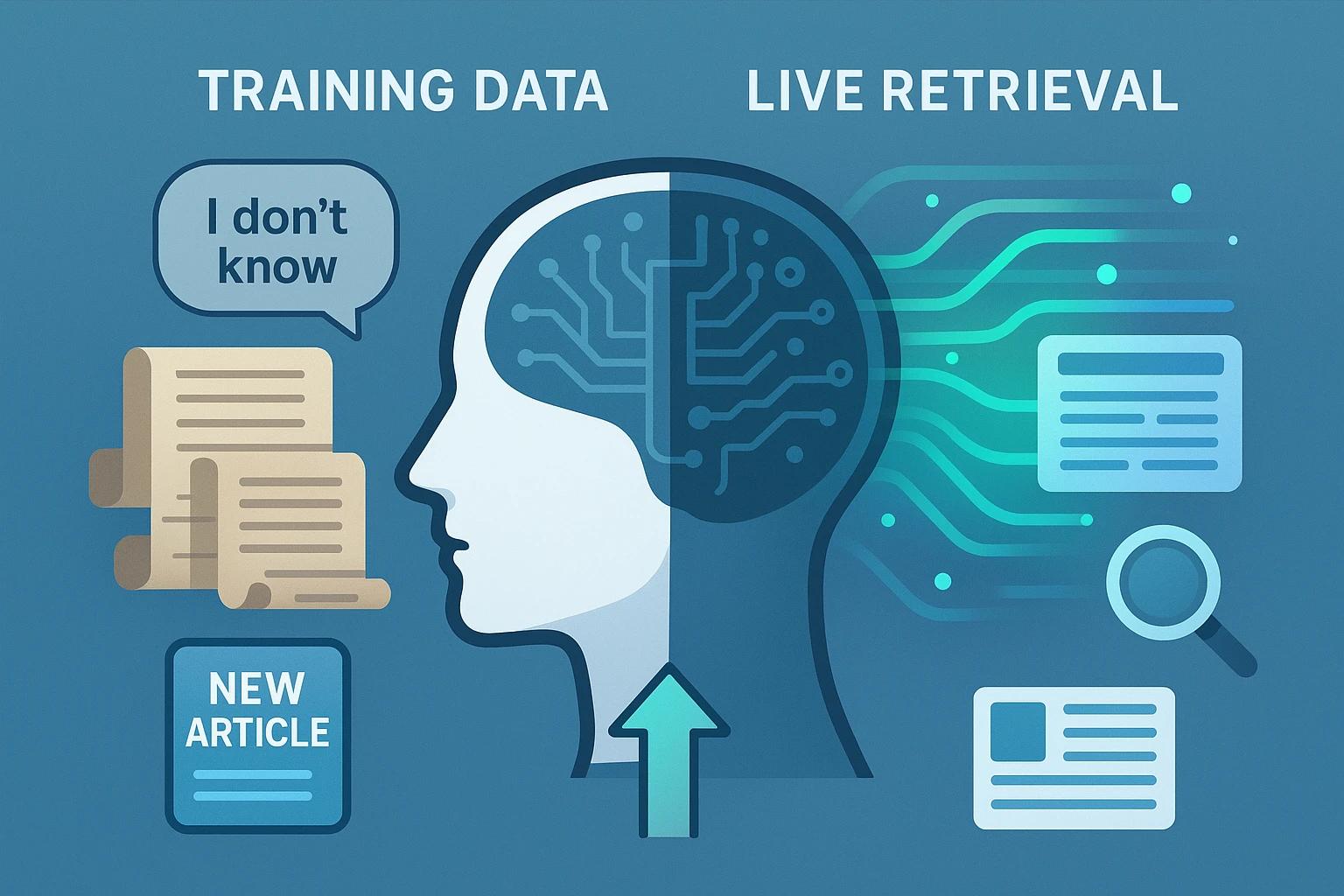
Training Data vs Live Retrieval in AI Answers
Learn why some content appears in AI replies and how to optimize for both AI memory and live retrieval.
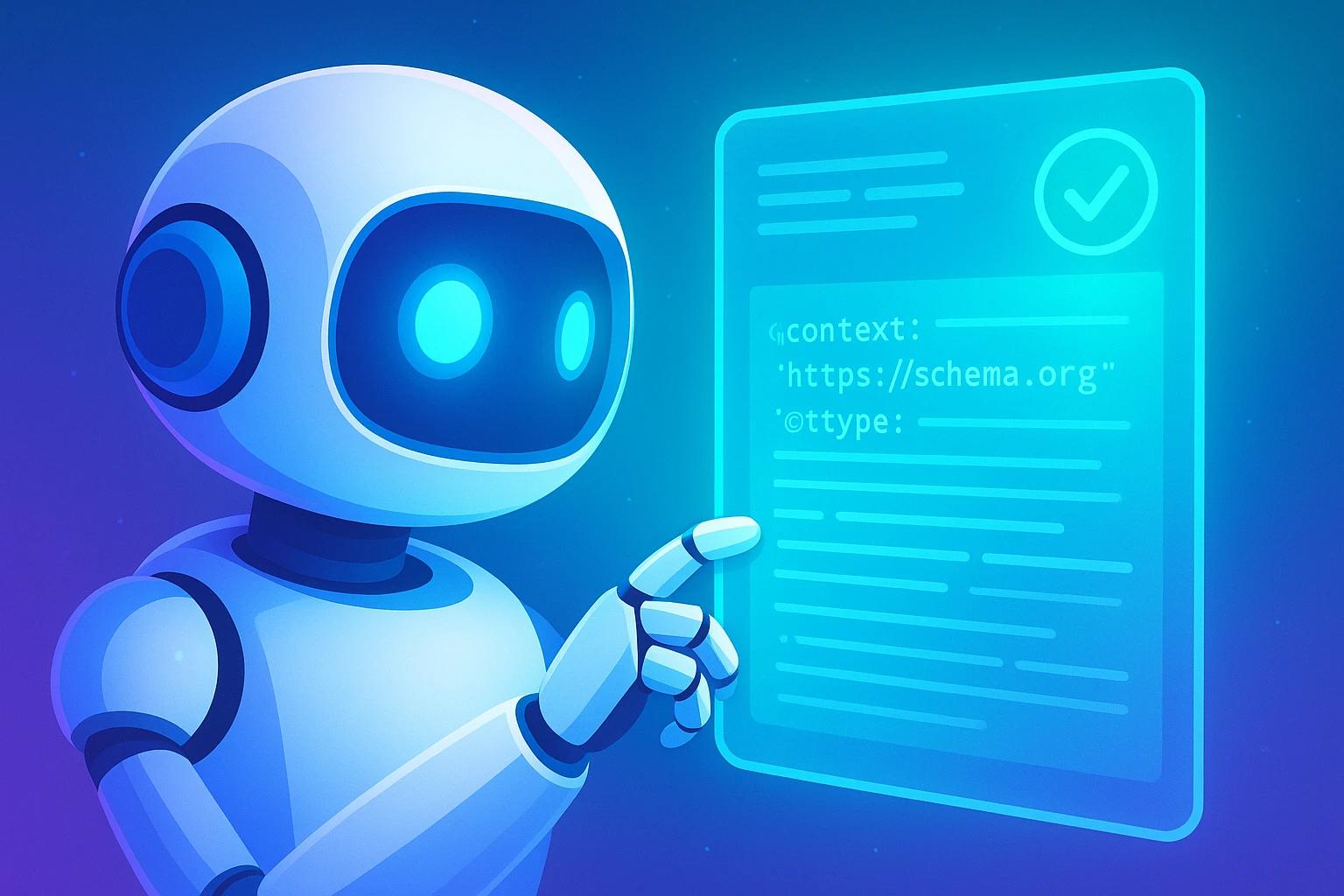
Structured Data and Schema Basics for AI Extraction
Learn how structured data and schema make your content easy for AI to find and cite with clear, simple labeling.

What Makes a Webpage Citable by AI
Learn the key trust signals and content traits that make webpages trusted and cited by AI search engines.