How to Optimize for Perplexity The Marketer's Guide to Getting Cited

How to Optimize for Perplexity: The Marketer's Guide to Getting Cited
You’ve mastered the art of ranking on Google. But as you watch your audience start asking questions to AI instead of just typing keywords, a new challenge emerges. You’re not just competing for a blue link anymore; you’re competing to become the trusted source inside an AI-generated answer.
Perplexity, the fastest-growing answer engine, is at the forefront of this shift. Unlike other AI tools, it doesn't just give an answer—it shows its work, citing its sources with transparent, numbered footnotes. This is a massive opportunity for brands that know how to play the game. Earning a citation isn't just a click; it's a direct endorsement from the AI, positioning your content as authoritative to a high-intent audience.
This guide breaks down exactly how Perplexity finds and cites information. We’ll move beyond generic SEO advice and give you the specific, data-backed strategies you need to make your content the source Perplexity trusts.
Why Perplexity Is a Game-Changer for Marketers
Perplexity isn't just another chatbot. It's an AI-native answer engine designed for users who want direct answers with verifiable proof. And it's growing at an explosive rate, processing up to 780 million queries monthly as of May 2025—a 239% jump from late 2024.
For marketers, the user behavior is what truly matters:
- High Research Intent: Nearly 29% of all queries on Perplexity are for research or academic purposes. This audience isn't just browsing; they're actively evaluating and learning, making a citation in front of them incredibly valuable.
- Rapid Marketer Adoption: You're not the only one paying attention. 33% of marketers now use Perplexity at least three times a week, and it's already integrated into 38% of business marketing processes.
The bottom line: your customers and competitors are already there. The question is whether your content is ready to meet them.
Decoding Perplexity's Core Mechanics: How It Chooses Its Sources
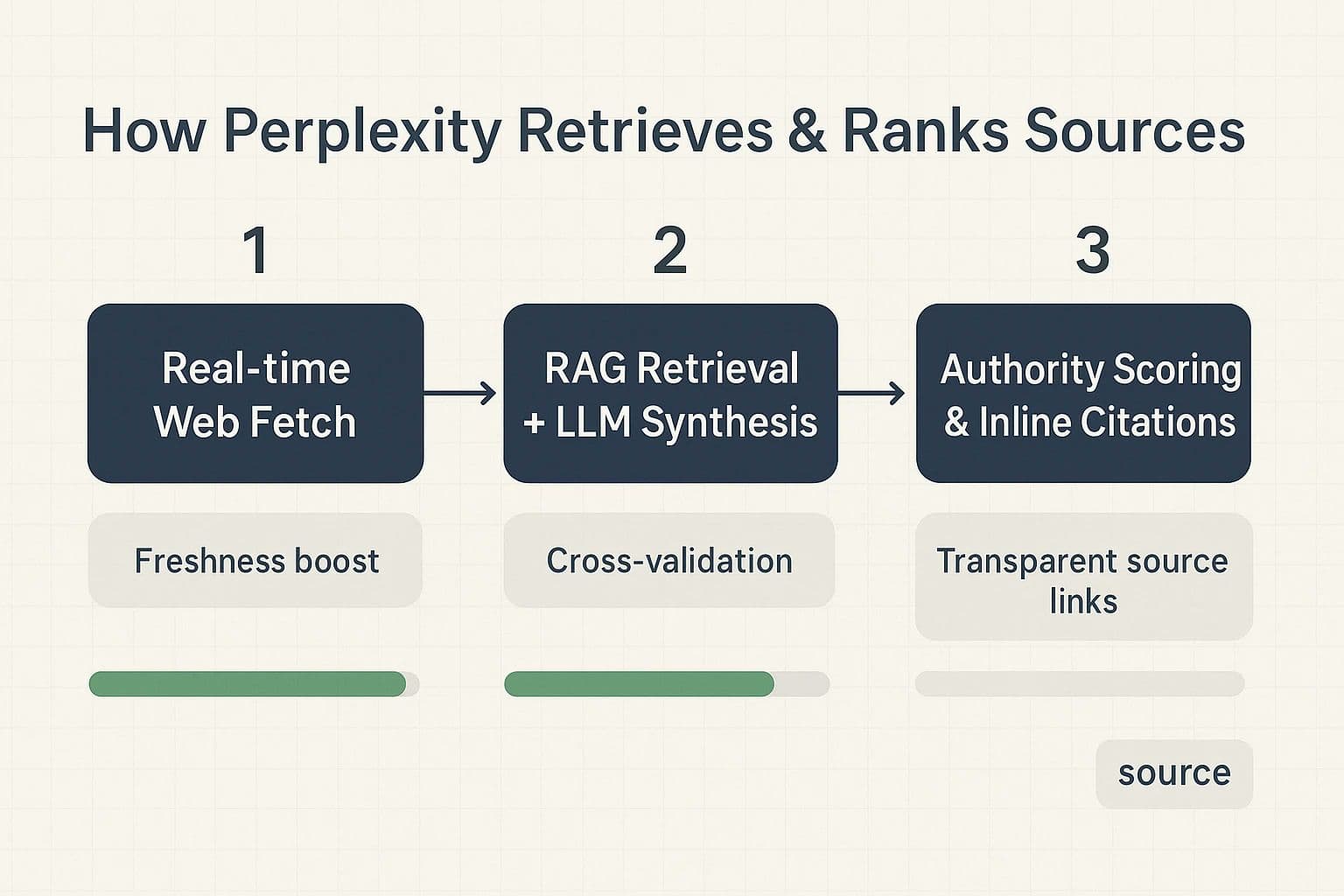
To get cited, you first need to understand how Perplexity thinks. It operates on a "citation-first" philosophy, using a process that combines live web access with Large Language Models (LLMs).
Here's the simplified breakdown:
- User Asks a Question: A user submits a query, often in a conversational, natural language format.
- Real-Time Web Fetch: Perplexity's model performs a live search of the web to find relevant, up-to-date information. It doesn’t rely on a static, pre-trained dataset.
- RAG Synthesis: Using a technique called Retrieval-Augmented Generation (RAG), it analyzes content from top-ranking, authoritative sources. It looks for direct answers, data points, and expert consensus.
- Answer Generation with Citations: It synthesizes the information into a cohesive answer, creating inline, numbered footnotes that link directly back to the exact pages it used.
This process rewards content that is fresh, authoritative, and structured for easy extraction.
Pro Search vs. Quick Search: Tailoring Content for Different Modes
Not all Perplexity searches are the same. The platform offers different modes that cater to different user needs, and your content strategy should adapt accordingly.
- Quick Search: This is the default mode, designed for fast, direct answers. Think of it as Perplexity’s version of a featured snippet. To get cited here, your content needs to be concise, provide an immediate answer to a specific question, and be highly scannable.
- Pro Search (Copilot): This is an interactive, guided search. It asks clarifying questions and helps users dig deeper into a topic. To win citations in Pro Search, your content must be comprehensive, cover multiple sub-topics, and be structured to answer follow-up questions the user might not have even thought of yet.
Your optimization strategy needs to account for both. A single piece of content can serve Quick Search with a direct, top-of-page summary, while its deeper sections can provide the substance needed for Pro Search citations.
The Blueprint: 5 Content Characteristics That Earn Perplexity Citations
General SEO advice won't cut it. To consistently get cited, you need to engineer your content specifically for Perplexity's algorithm. Research shows that citation frequency can drive up to 35% of all AI answer inclusions. Here’s how to claim your share.
1. Radical Freshness
Perplexity heavily favors recent content because its users expect real-time answers. Content decay is rapid; some experts observe a drop-off in as little as 2-3 days post-publication.
How to Optimize:
- Aggressive Refresh Cadence: Don't just update content quarterly. Identify your most important pages and build minor updates (new stats, recent examples) into a weekly or bi-weekly workflow.
- Signal the Update: Change the "last updated" date and resubmit the URL in Google Search Console to encourage a fresh crawl.
2. Direct Answers and Q&A Structures
Perplexity needs to quickly identify the answer to a user's question. Make it easy for the model by structuring your content conversationally.
How to Optimize:
- Lead with the Answer: Start your articles or key sections with a direct, one-to-two-sentence answer to the main question, much like you would for a featured snippet.
- Use Question Headings: Structure your H2s and H3s as the questions your audience is asking (e.g., "How Does Perplexity Rank Sources?").
- Build Dedicated FAQ Sections: Consolidate related questions into a well-structured FAQ section at the end of your content.
3. Schema Markup Mastery
Structured data is a direct line of communication to search engines and AI models. It removes ambiguity and tells them exactly what your content is about. For Perplexity, it’s a powerful signal, contributing up to 10% of its ranking factors.
How to Optimize:
- Implement FAQ Schema: Mark up your question-and-answer sections with
FAQPageschema. This explicitly tells Perplexity, "Here is a question, and here is the definitive answer." - Use HowTo Schema: For instructional content,
HowToschema breaks down the process into clear, machine-readable steps. Tests show technical enhancements like schema can lead to 89% better crawling and 78% higher mention rates.
4. Factual Density and Originality
To become a trusted source, you must provide unique value. Perplexity cross-validates information across multiple sources, so generic, rehashed content gets ignored.
How to Optimize:
- Publish Original Data: Conduct your own surveys, analyze proprietary data, or synthesize publicly available information in a new way.
- Be Quotable: Include concise, data-backed statements and expert quotes that are easy for the AI to lift and cite.
- Demonstrate E-E-A-T: Ensure your content reflects Expertise, Experience, Authoritativeness, and Trustworthiness. Link to credible sources, feature author bios, and showcase your credentials.
5. Multi-Modal Richness
Perplexity understands that a good answer often involves more than just text. In fact, research indicates that 70% of general queries cite images, videos, or other visuals.
How to Optimize:
- Use Informative Visuals: Create custom charts, graphs, and diagrams that explain complex concepts. Use descriptive alt text and captions.
- Embed Relevant Videos: Supplement your text with video tutorials or explanations that add depth and context.
Does My Google Ranking Matter for Perplexity?
Yes, absolutely. While Perplexity is its own engine, it doesn't operate in a vacuum. It uses the open web as its source of truth, and Google’s index is a powerful proxy for authority and quality.
Think of your Google ranking as the foundation. Strong domain authority, a healthy backlink profile, and high rankings for relevant keywords signal to Perplexity that your content is credible and worth considering. Studies by firms like BrightEdge have shown a significant overlap between sources cited in AI answers and pages ranking in the top 10 of Google.
The takeaway: Don't abandon your SEO fundamentals. Instead, layer these Perplexity-specific optimizations on top of a solid SEO strategy to maximize your visibility on both platforms.
How to Check If You're Being Cited and Fix Common Mistakes
You can't optimize what you don't measure. Regularly checking your citation presence is critical.
The simple way:
- Go to Perplexity.ai.
- Ask questions that your content is uniquely qualified to answer.
- Review the sources. Look for your domain in the numbered footnotes. You can also try a
site:yourdomain.com [query]search within Perplexity.
Common Mistakes That Get Content Ignored:
- Vague, Fluffy Content: Perplexity needs direct answers. Long, meandering introductions and verbose paragraphs without clear data points are easily skipped.
- Outdated Information: A single old statistic can disqualify your entire page as a source for a real-time query.
- Missing Verifiable Sources: If you make a claim, back it up. Content without outbound links to credible sources is seen as less trustworthy.
- Keyword Stuffing: Perplexity understands semantic relevance, not just keywords. Write naturally for your audience, focusing on comprehensively covering the topic.
The shift to answer engines is here. Manually retrofitting every article with direct answers, schema, and constant freshness checks is a significant undertaking. The brands that win will be the ones who systematize it.
Fonzy structures every article for Perplexity citation automatically → Start free trial
Roald
Founder Fonzy — Obsessed with scaling organic traffic. Writing about the intersection of SEO, AI, and product growth.
Stop writing content.
Start growing traffic.
You just read about the strategy. Now let Fonzy execute it for you. Get 30 SEO-optimized articles published to your site in the next 10 minutes.
No credit card required for demo. Cancel anytime.
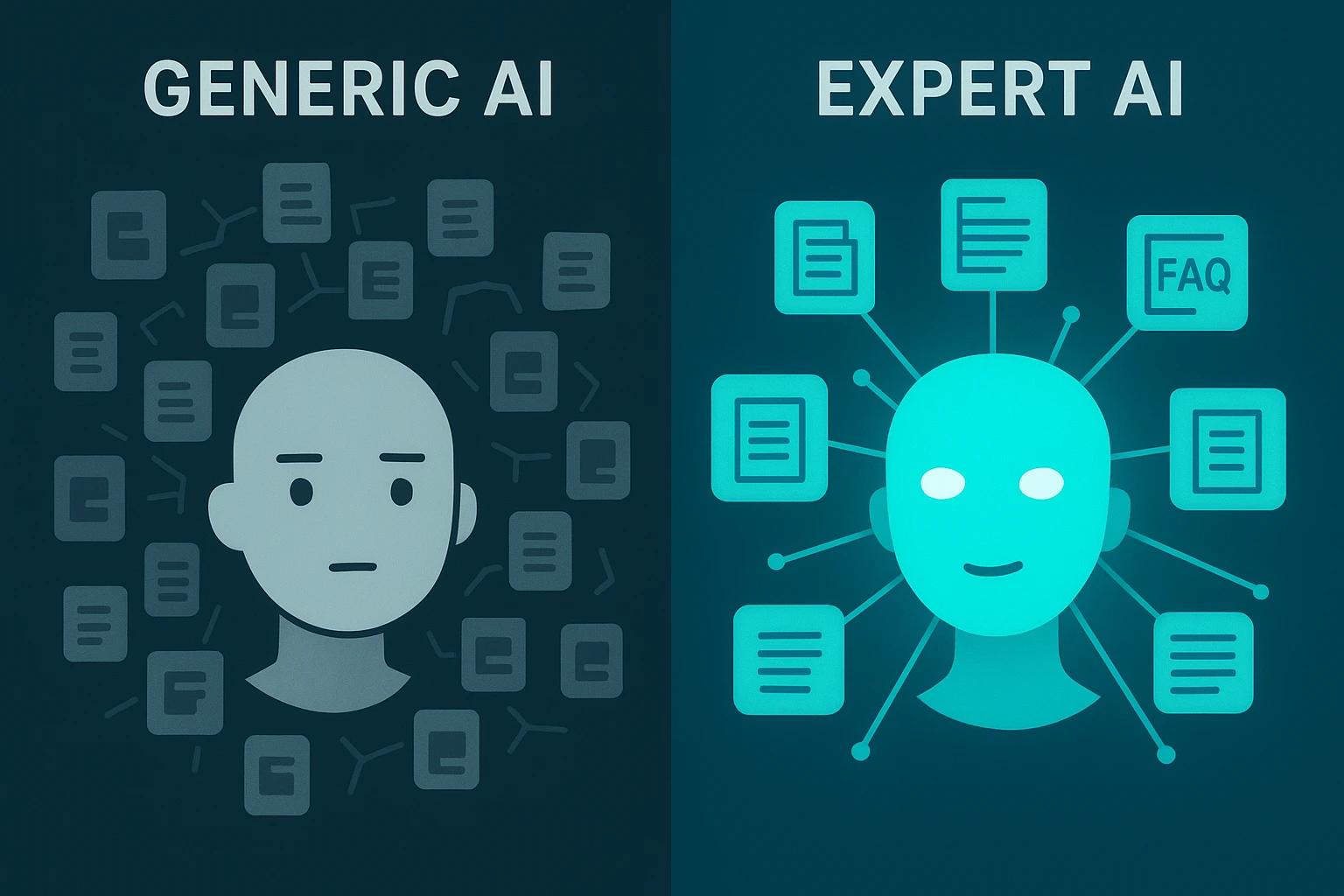
How Repetition Helps AI Learn and Reinforce Your Expertise
Learn why strategic repeated content helps AI understand and trust your unique expertise without hurting SEO.
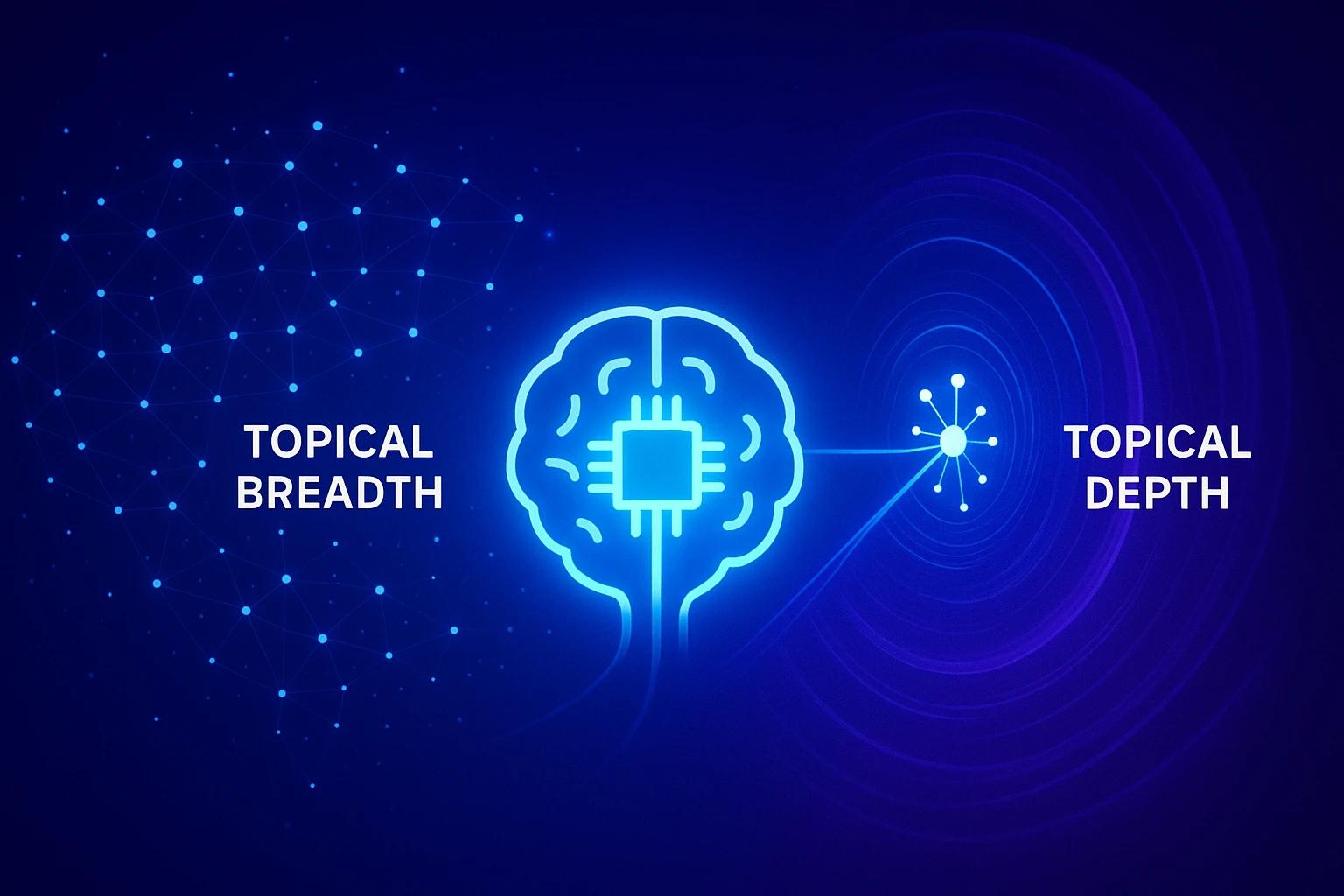
Topical Breadth vs Depth How Coverage Influences AI Answers
Learn how balancing topical breadth and depth helps your content get cited by AI answer tools and build authority.
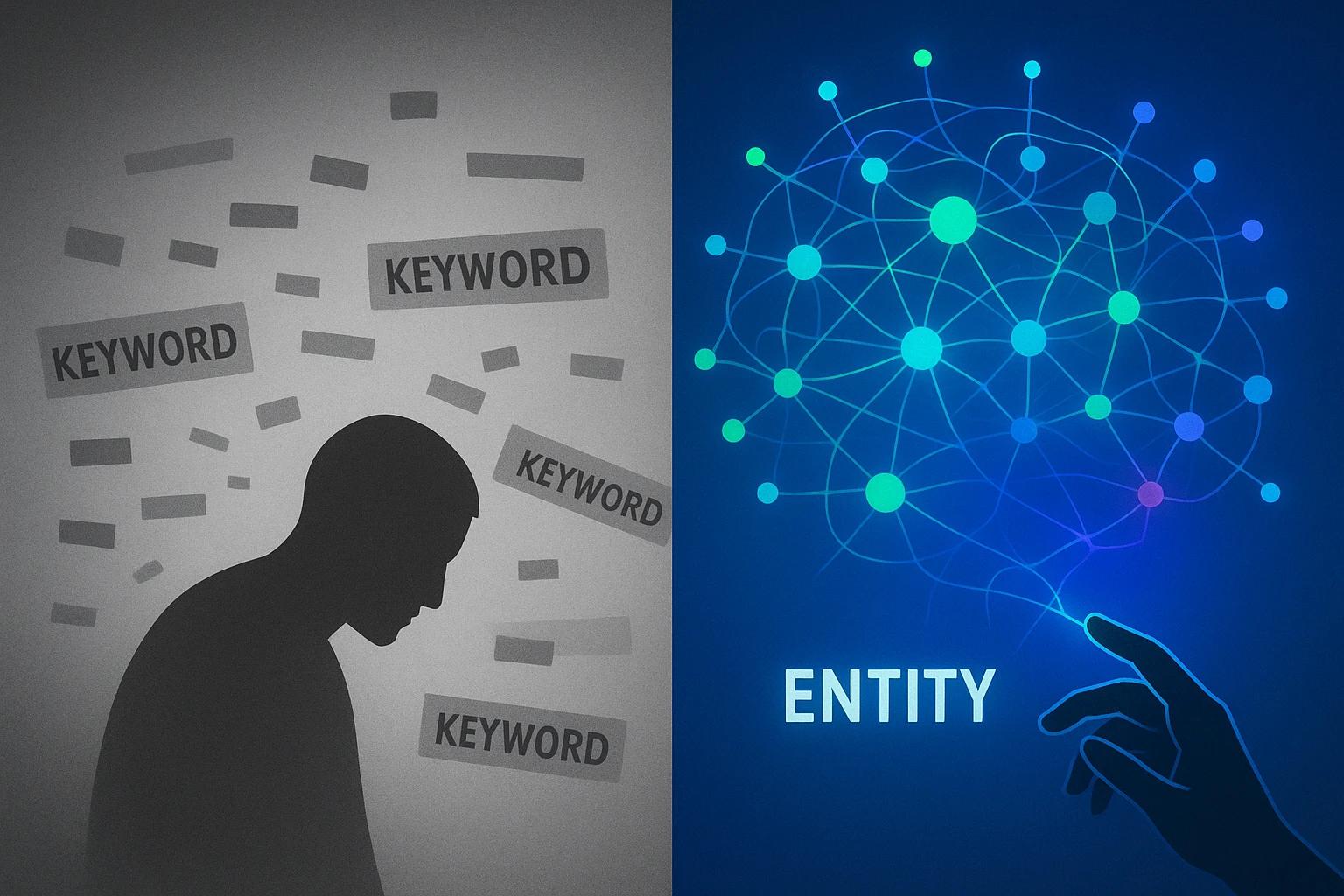
Building topical authority that AI and search engines trust
Learn how to shift from keywords to entities and build the expertise AI and search engines recognize and trust.