
 Ready to grow?
The most reliable free way to check your Google ranking is Google Search Console's Performance report, because it averages your real position across every person who searched, not just you. Incognito searches and free rank-checker tools are useful for a quick spot-check, but they are not a source of truth: results still shift by location, device, and the exact moment you search. This guide walks through all three methods, in order of how much you should trust them.
Quick answer: the best way to check your Google ranking
If you want the most trustworthy number, use Google Search Console. If you want a quick spot-check on one keyword, use an incognito window. If you want a rough external estimate with no login, use a free rank-checker tool. Ranked by reliability:
- Google Search Console: your real average position, from actual Google searches. The source of truth.
- Incognito search: the fastest check, but still shaped by your location and device. Directional, not definitive.
- Free rank-checker tool: a neutral, no-login snapshot for a single keyword. Good for a quick gut-check.
Key takeaways
- Google Search Console's Performance report is the most accurate free method, averaged across every customer who searched.
- The rank you see in your own logged-in browser is personalized by location, device, and search history. No real customer sees it.
- Incognito search and free tools are fine for a directional spot-check, not for tracking a trend.
- Check monthly and watch the trend, not the daily wobble.
- Your position can differ by device, so check both mobile and desktop before you draw conclusions.
Why the rank on your own phone lies to you
A plumber checks "emergency plumber Leeds" from his own phone and sees himself at number one. He has searched that term fifty times and clicks his own listing constantly, so Google has learned he likes his own site and floats it up for an audience of one. That is not where customers find him.
Three things bend your results away from what a stranger sees:
- Location. Google shows nearer businesses higher. Standing in your shop, you get a different result than a customer across town.
- Device. A search on your phone and the same search on a laptop can return different orders, especially for local terms.
- Search history. Google remembers what you have clicked. Visit your own site daily and Google ranks it higher for you than for anyone else.
Google's own Search Console documentation confirms it in plain language: results are "specific to the time, place, device, and recent history of the person searching" (Search Console Help). That's not a bug in your setup. It's how the system is designed to work, which is exactly why you need a neutral way to check.
Method 1: read your average position in Google Search Console
Google Search Console is the one source that reports your real rank from actual Google searches, averaged across every customer who saw you. It's completely free, and its Performance report shows the average position your site holds for each query. That is the number you want: not "where I show up," but "where my site showed up, on average, across everyone who searched."
If your site is already verified in Search Console, here is the short path to the number. You do not need the full setup tour for this.
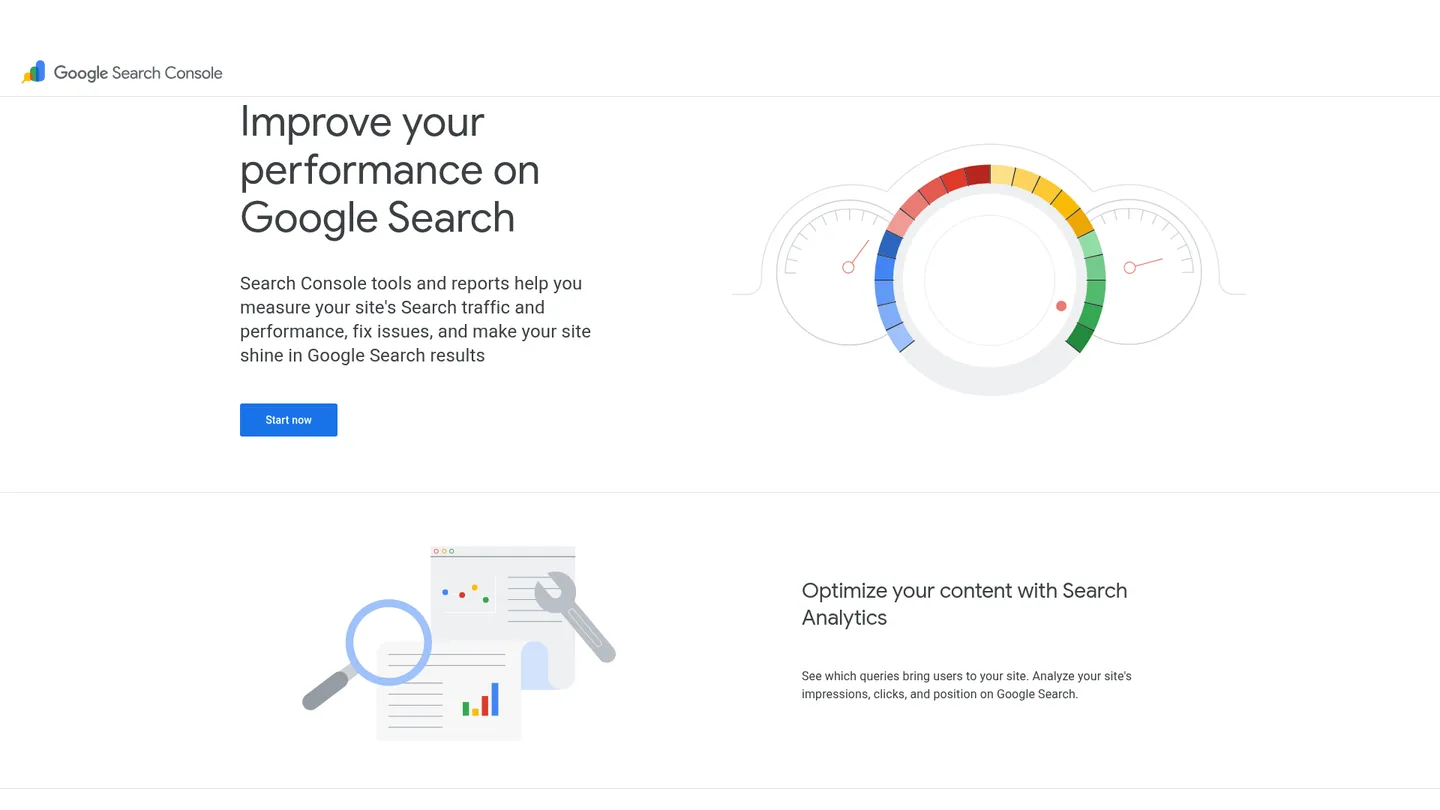
- Open Search Console and click Performance in the left menu.
- Turn on the Average Position metric at the top so the chart includes it.
- Scroll down to the Queries tab to see every search that brought people to your site, each with its average position beside it.
- Find your keyword, say "wedding florist Bristol," and read the number. An 8.4 means you sit around the bottom of page one for that search, across everyone who looked.
Two columns next to position make this worth more than any quick check. Impressions tells you how many times your site appeared in results for that query. Clicks tells you how many people actually came. A keyword with high impressions and a position of 11 is a near miss: you are one rung from page one on a term people search a lot. That is where your next bit of effort pays off, and no incognito search would have told you which keyword to pick.
There is a catch worth stating plainly. Search Console only shows queries where your site already appeared. If you rank nowhere for a term, it will not show up in your Queries list at all, because you never got an impression. Search Console measures the ground you already hold, not the ground you want.
The honest catch with Search Console, and why it still wins
Here's the blunt truth: Search Console can be a tedious, manual process. There is no tidy "you are number five for this keyword today" alert. Paid rank trackers automate that and email you a chart. But the free, trustworthy option is Search Console, and it's worth the extra effort for one reason: the numbers are real. They come from actual Google searches by actual people, not a tool's sample. Treat it like a monthly habit rather than a daily one. The tedium is the price of accuracy, and accuracy is the whole point of checking at all.
Method 2: spot-check in an incognito window
This is the fastest way to get a rough, directional read, not the most accurate one. Use it for a quick gut-check on one or two important terms, then confirm the real trend in Search Console.
- Open a private window. In Chrome: the three-dot menu, then New Incognito Window (or Ctrl/Cmd+Shift+N). In Safari: File, then New Private Window.
- Search the exact phrase a customer would type, not "my flower shop," but "wedding florist Bristol."
- Count down the organic results until you find your own listing. That number is roughly your position, for that spot, at that moment.
This matters because the top spot is worth far more than the ones below it. Backlinko found that the number one organic result earns roughly a 27.6% average click-through rate, and the top three results combined pick up 54.4% of all clicks. Clicks fall off sharply past the first page. If your incognito check puts you at the bottom of page two, the real problem is not that customers chose a competitor. It is that they never saw you at all.
Incognito has real limits. It still uses your location, so you see results for where you are standing, not where your customer is. It is a snapshot of one moment, not an average over weeks. And it does not erase device differences: the same search can rank differently on a phone than on a laptop, and with most local searches now happening on mobile, that gap is worth checking, not ignoring. Treat incognito as directional, never as the final answer.
Method 3: try a free rank-checker tool
A rank-checker tool does the incognito search for you, but from a neutral location instead of your own chair. Two solid free options, no account needed: Ahrefs' Keyword Rank Checker checks a single keyword against your domain in seconds; Seobility's Ranking Checker adds a preview of the top 20 results and lets you switch between desktop and mobile or pick a specific city.
- Best for a single fast check: Ahrefs' Keyword Rank Checker. One keyword, one domain, no login, results in seconds.
- Best for comparing devices or cities: Seobility's Ranking Checker. Lets you switch mobile vs. desktop and pick a location, plus shows the surrounding top 20.
The trade-off is accuracy: free tools sample the results page at that moment, and the free tier usually gives one location and a daily limit. Use a checker plus an occasional incognito glance for the day-to-day "did I move" question. For the trend over time, Search Console beats both, and it's free.
Does mobile vs. desktop change your ranking?
Yes, and Search Console shows you this directly. Devices sits right next to Queries and Pages as its own tab in the Performance report, because Google's own data confirms position can shift depending on whether someone searched on a phone, tablet, or desktop.
Most local searches now happen on a phone, so a healthy desktop position paired with a weak mobile one is a real problem, not a rounding error. When you spot-check, run the search once on your phone and once on a laptop before drawing any conclusions, and in Search Console, click the Devices tab to compare the two properly.
How often should you check your ranking?
Not daily. Rankings wobble day to day for reasons that have nothing to do with your work, and watching them every morning will make you change things that did not need changing. A position of 6 on Monday and 8 on Wednesday is noise, not a trend.
Check once a month for most keywords. Open Search Console, look at the Average Position over the last 28 days, and compare it to the month before. You are looking for direction. That movement tells you whether the work is paying off. A single day's number never does.
The exception is right after you change something big. If you rewrite a key page or earn a new link, check that page's keywords more closely for a few weeks to see the effect. Otherwise, monthly is enough.
And the position is worth moving. Most people looking for a local business start with a Google search, so where you land for a local search directly decides who walks in. For a florist, a bakery, or a plumber, the gap between page one and page two is the gap between a full calendar and a quiet one. If you want the wider playbook on turning that visibility into bookings, start with how to get more customers.
Frequently asked questions
How do I check my Google ranking for free?
Use Google Search Console's Performance report for your real average position, free and from actual Google data. For a faster but rougher read, search in an incognito window or use a free tool like Ahrefs' Keyword Rank Checker or Seobility's Ranking Checker. Confirm anything important in Search Console.
Why does my website rank higher when I search for it myself?
Because Google personalizes your results based on your search history, location, and device. You visit your own site often, so Google assumes you want it and floats it up for you specifically. A new customer with no history sees a different, usually lower, position. Always check in incognito or in Search Console to see the real number.
What is a good average position to aim for?
Page one, roughly positions one through ten, is where the clicks live. Backlinko found the top organic result earns around a 27.6% click-through rate and the top three results together earn 54.4% of all clicks, with sharp drop-off past the first page. Getting from position 12 to position 8 on a keyword people actually search is usually worth more than chasing a term nobody types.
How do I check my Google Business Profile ranking in the local pack?
Google Business Profile itself doesn't show a numeric rank. Its Performance report only tells you which search terms people used and how many views, calls, or clicks you got, not where you sat in the local pack. For a real spot-check, search your local keyword in Google Maps or an incognito window from a few different spots near your business. For a repeatable check, geo-grid tools like Local Falcon scan a grid of points around your address and show your rank at each one.
Does my Google ranking look different on mobile vs. desktop?
Often, yes. Search Console tracks this directly with its own Devices tab, and most local searches happen on phones today, so a mobile ranking gap is worth catching early. Check both when you spot-check a keyword, and compare desktop against mobile inside Search Console for the full picture.
Is checking my ranking the same as setting up Search Console?
No. Setting up Search Console is a one-time job: you verify you own the site so Google will share your data. Checking your ranking is the ongoing habit of opening the Performance report, or running an incognito search, to read your position for a given keyword. You only do the setup once, then you check your rank as often as you need.
Picture a florist who checks "wedding florist Bristol" on her own phone and sees herself at number two. She feels great, until a bride three streets away searches the same words and finds her nowhere on page one. She wasn't lying to herself on purpose. She just trusted the wrong source. Read your average position in Search Console, confirm with a free tool or incognito check, and you finally know where customers actually find you.
Checking your number is step one. Moving it is the ongoing work: fresh pages, updated content, answers to what your customers actually type. That's the part Fonzy handles. It researches your market, writes SEO-ready articles in your voice, and publishes them straight to your site, so your ranking keeps climbing without you living in a dashboard. Try it free for 3 days, cancel anytime: 3 articles included, no SEO skills needed.