More Than Words: Why A Mix of Content Formats Makes AI Smarter
You’ve been doing everything right. You’re publishing well-researched, long-form articles every week. You’re hitting your word count goals, covering keywords, and providing real value. Yet, your organic growth feels stuck in first gear. It’s a common frustration, and it often stems from a misconception about how today’s AI-driven search engines actually learn.
We’ve been taught that “content is king” and that more high-quality content is the answer. But what if the secret isn’t just about the volume of your content, but the variety? What if feeding AI a diverse diet of different content formats—articles, lists, FAQs, and guides—is the key to unlocking the next level of visibility?
It turns out, for a machine learning model, a 2,000-word article and a 10-point FAQ are not just different lengths of text; they are entirely different kinds of lessons. Understanding this distinction is the first step toward building a content strategy that doesn't just inform readers, but intelligently trains the algorithms that connect you to them.
What Are Machine Learning Signals, Anyway?
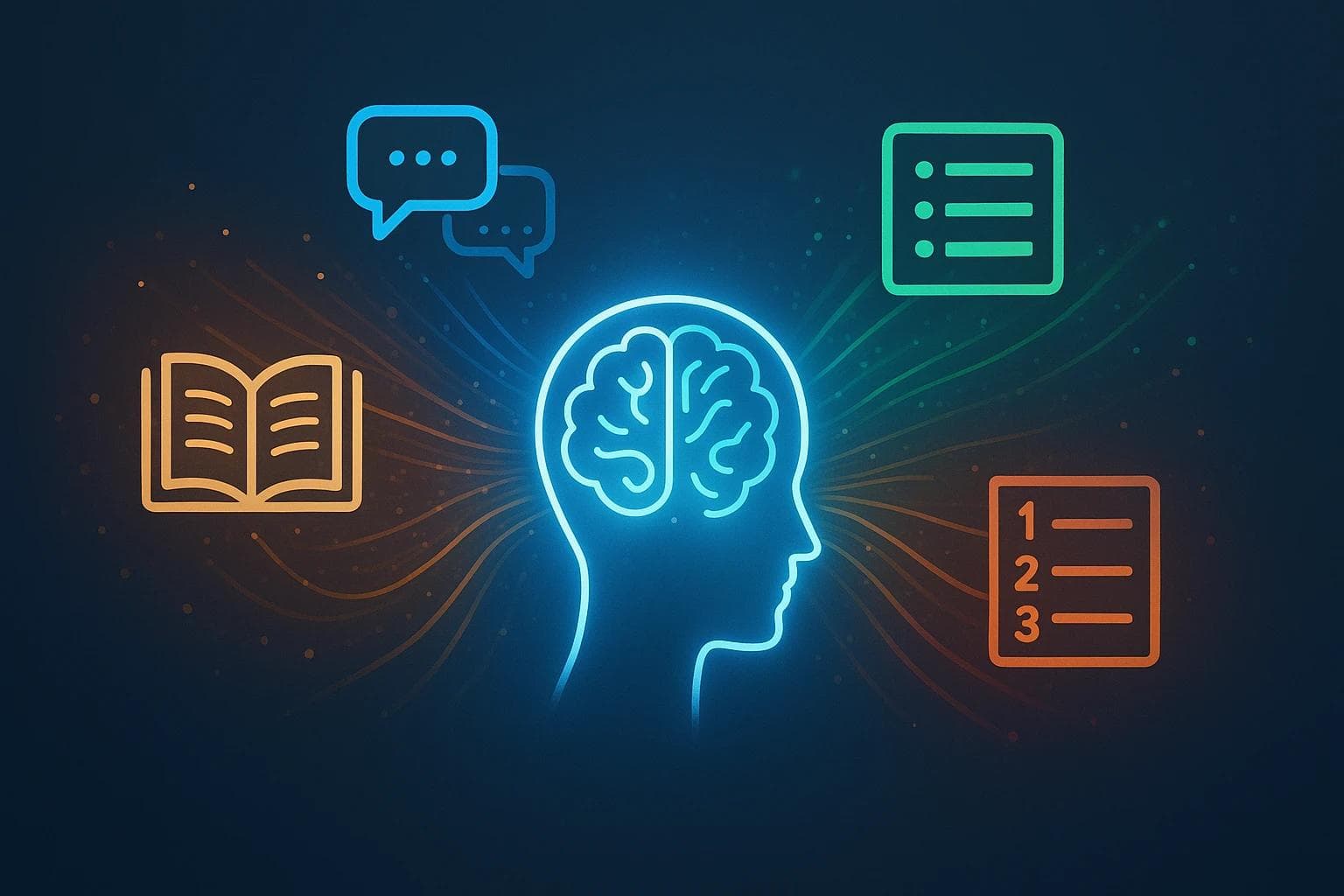
Let's break this down with a simple analogy. Imagine an AI is a detective trying to understand a complex topic, like "how to brew the perfect cup of coffee." To solve the case, it needs different types of clues, or what we call "machine learning signals."
- A long-form article on the history of coffee cultivation is like a detailed witness testimony. It provides rich context, narrative, and deep relationships between concepts (e.g., how soil acidity affects flavor).
- An FAQ page answering "What temperature should coffee be brewed at?" is like finding a sticky note with a crucial fact written on it. It’s a direct, unambiguous piece of data linking a specific question to a specific answer.
- A bulleted list of the "Top 5 Coffee Grinders" is like a lineup of suspects. It provides clear, distinct items (entities) and their key features (attributes) in a structured way that’s easy to compare.
- A how-to guide on using a French press is like a set of security camera footage showing the sequence of events. It demonstrates a process, cause-and-effect, and logical steps.
A detective who only reads witness testimonies will have a lot of background story but might miss the key facts. To truly understand the topic in its entirety, the AI needs all these different types of clues. These "clues" are the machine learning signals your content provides.
The Monotony Trap: Why a Single-Format Strategy Stalls Growth
When your content strategy relies exclusively on one format, like long-form articles, you’re sending a monotonous stream of signals. The AI gets very good at understanding narrative and context from your site, but it may struggle to extract quick facts, understand structured comparisons, or answer direct user questions.
This is the "Monotony Trap." You're creating high-quality content, but its uniform structure limits the different ways an AI can learn from you. By diversifying your formats, you create a richer, more varied training library for AI systems, helping them see you as a comprehensive authority on your topic.
The Signal Spectrum: How Each Format Teaches AI a Different Skill
Different content formats are not just for appealing to different human reading preferences; they are structured to generate distinct types of machine learning signals. Let's look at how each format contributes something unique to an AI's education.
Long-Form Articles: The School of Context and Nuance
These are your deep dives. They provide the narrative tissue that connects ideas, explores history, and discusses complex arguments.
- Primary Signal: Semantic Depth. AI learns the subtle relationships between topics and understands the broader context of your industry.
FAQs: The Masterclass in Intent and Response
Frequently Asked Questions are a goldmine for AI. Each question-answer pair is a crystal-clear signal that directly maps a user's intent to a concise, correct response.
- Primary Signal: Intent-Response Pairs. This directly helps AI understand what people are asking and what constitutes a good answer, making your content ideal for featured snippets and voice search results.
Lists & Tables: The Bootcamp for Structured Data
Whenever you use bullet points, numbered lists, or comparison tables, you’re essentially pre-organizing information for an AI. This structure makes it incredibly easy for algorithms to identify and categorize key pieces of information.
- Primary Signal: Structured Entities & Attributes. AI can quickly pull out product names, features, pros, and cons without having to parse dense paragraphs.
How-To Guides: The Blueprint for Sequential Logic
Step-by-step guides teach AI about processes and order. By breaking down a task into a logical sequence, you provide a clear blueprint of cause and effect.
- Primary Signal: Causal and Sequential Relationships. This helps AI answer "how-to" queries and understand the logical flow of tasks within your niche.
This spectrum of signals is why a modern, AI-first content strategy looks less like a library of books and more like a complete educational curriculum. This is the strategic thinking that underpins modern platforms designed to automate content creation. By understanding how an AI thinks, you can create a more effective strategy manually or get better results from an automated system.

From Volume to Variety: A New Mindset for Content Strategy
The key takeaway is to shift your focus from pure word count to format diversity. Instead of planning four 2,000-word blog posts for the month, think about creating one cornerstone article, a detailed FAQ page to support it, a quick-reference checklist, and a step-by-step guide.
This approach doesn't just make your content more engaging for human readers with different learning styles; it builds a powerful, multi-faceted training dataset for the AI systems that govern search visibility. This new understanding of content diversity is what powers the next generation of AI-driven content tools, and getting this right is key to getting the most out of any modern fonzy ai or similar automated SEO solution. The goal is to create a content ecosystem where each format plays a specific role in demonstrating your expertise to both people and machines.
Your Action Plan: Auditing for Content Diversity
Ready to put this into practice? You don't need to overhaul your entire content library overnight. Start with a simple audit.
- Categorize Your Last 10-20 Posts: Go through your recent content. How many are long-form articles? How many are lists? How many are FAQs or how-to guides?
- Identify the Gaps: Are you heavily skewed toward one format? Most businesses find they are over-invested in long-form articles and have very few structured or Q&A formats.
- Find Repurposing Opportunities: Look at your most popular articles. Can you extract a 10-point FAQ from one? Could you turn a section of another into a standalone step-by-step guide?
- Plan for Variety: As you plan new content, think about a "content cluster" instead of a single article. For every big topic, plan a main article, a supporting FAQ, and a scannable list or checklist.
Frequently Asked Questions about Content Diversity and AI
What is content diversity in AI training?
It refers to using a wide variety of content formats (text, images, lists, Q&A), styles, and structures to train an AI model. This is different from just data diversity (which might refer to demographics), as it focuses on the shape and structure of the content itself to provide different kinds of learning signals.
Why is diverse data so important for AI?
Diverse data helps AI models become more accurate, fair, and robust. A model trained only on one type of content will have a narrow "worldview" and perform poorly when it encounters new or different information. Format diversity, specifically, helps the model understand concepts from multiple angles, reducing bias and improving its ability to generalize.
What are the basic types of content AI prefers?
AI doesn't have a single "preference," but it thrives on clarity and structure. While it can process complex prose, it can extract information much more efficiently from well-structured formats like FAQs, bulleted lists, and tables. A healthy mix of deep narrative (articles) and clear structure (lists, FAQs) is ideal.
So, is publishing more content not the answer?
Publishing more content is still important, but it's not the only answer. The goal should be scaled publishing across different formats. A high volume of monotonous content is less effective than a slightly lower volume of highly diverse content that sends a wide range of strong machine learning signals.
Start Building a Smarter Content Ecosystem
By embracing content diversity, you move from being a simple content producer to a sophisticated educator—for both your human audience and the AI that connects you to them. Think of each new piece of content not as an isolated asset, but as a new lesson in the curriculum you’re building. A long-form article lays the foundation, an FAQ clarifies the details, a list organizes the key players, and a guide puts it all into action.
Together, they create an ecosystem of content that is far more powerful and intelligent than the sum of its parts.

Roald
Founder Fonzy — Obsessed with scaling organic traffic. Writing about the intersection of SEO, AI, and product growth.
Stop writing content.
Start growing traffic.
You just read about the strategy. Now let Fonzy execute it for you. Get 30 SEO-optimized articles published to your site in the next 10 minutes.
No credit card required for demo. Cancel anytime.
How Repetition Helps AI Learn and Reinforce Your Expertise
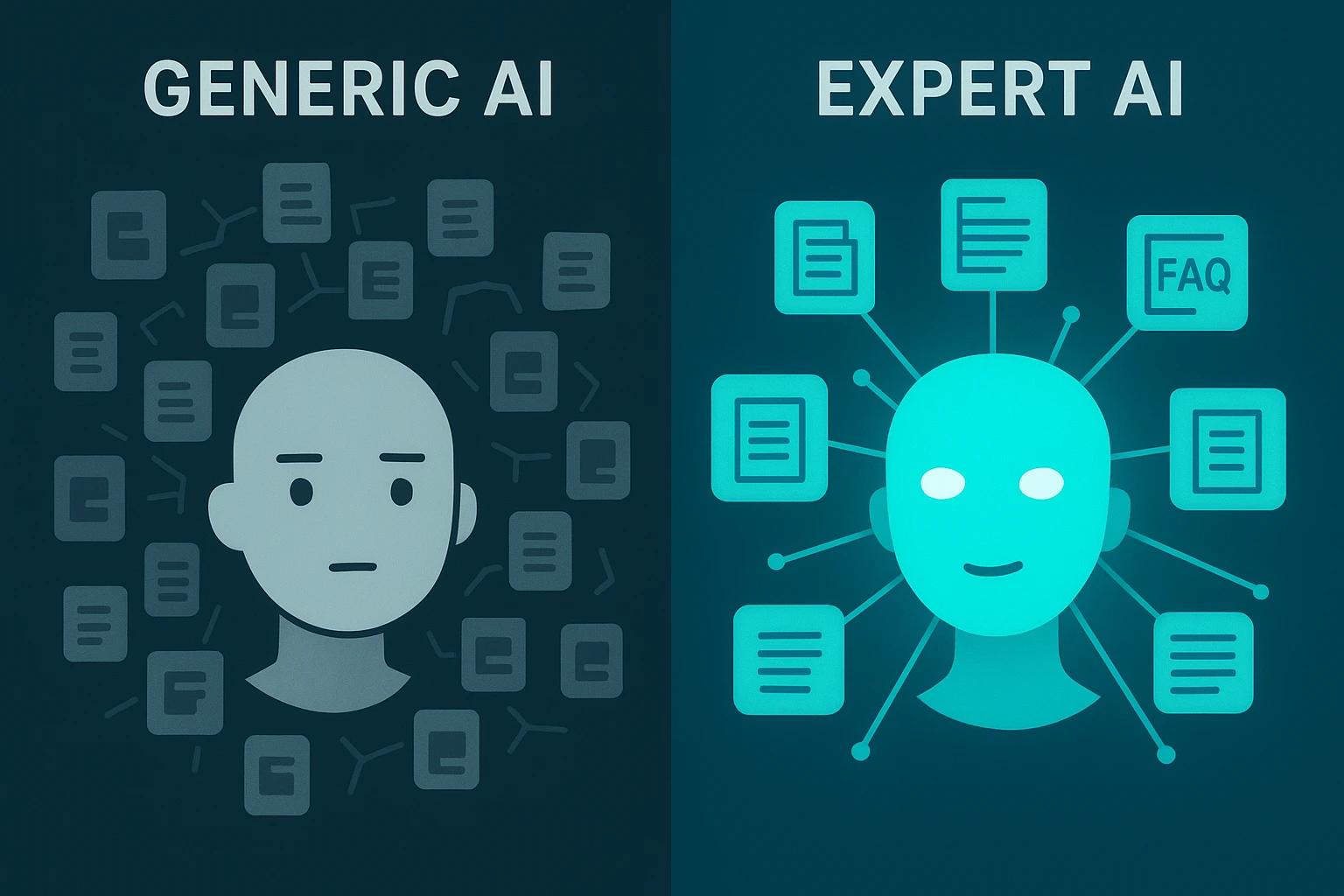
Learn why strategic repeated content helps AI understand and trust your unique expertise without hurting SEO.
Topical Breadth vs Depth How Coverage Influences AI Answers
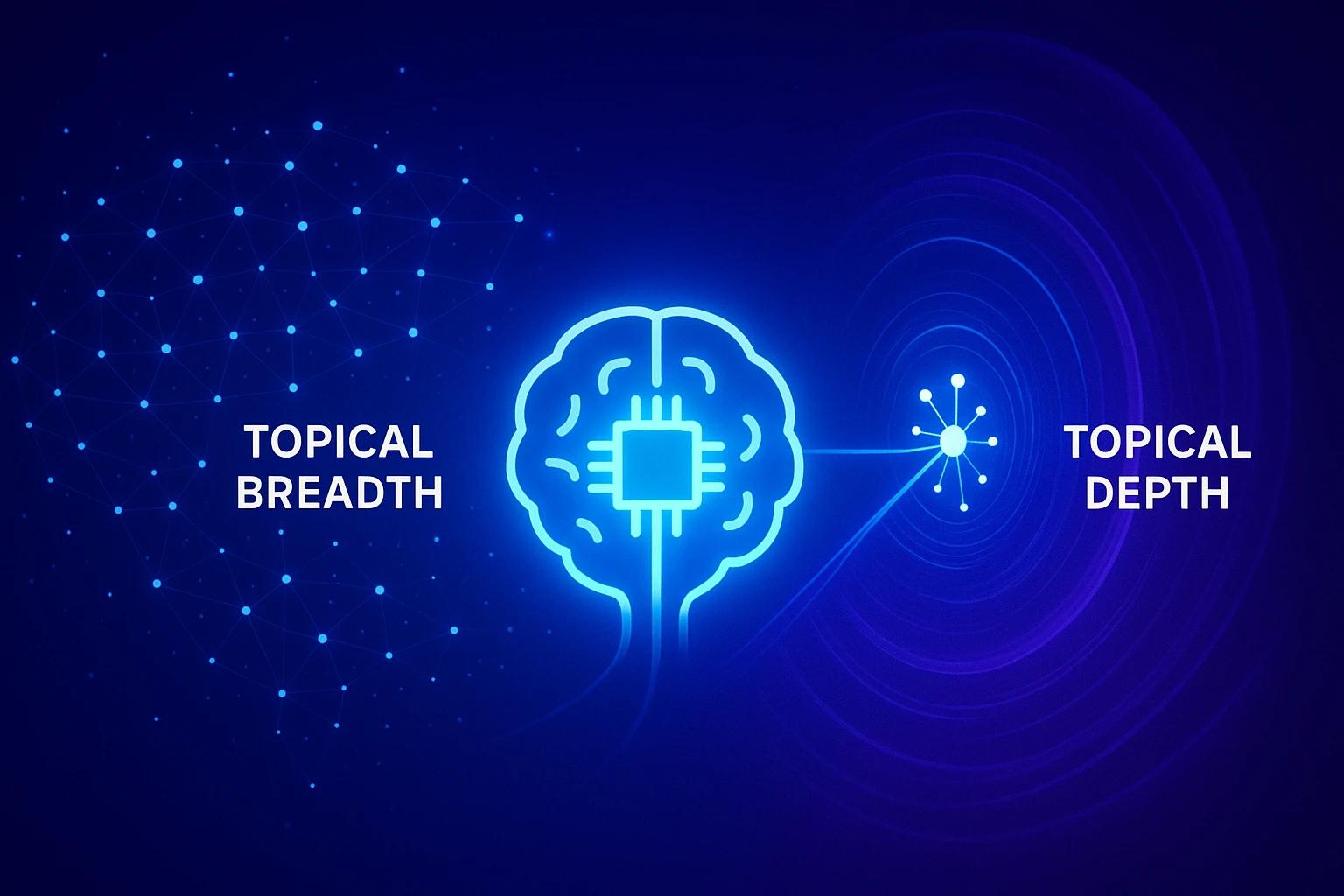
Learn how balancing topical breadth and depth helps your content get cited by AI answer tools and build authority.
Building topical authority that AI and search engines trust
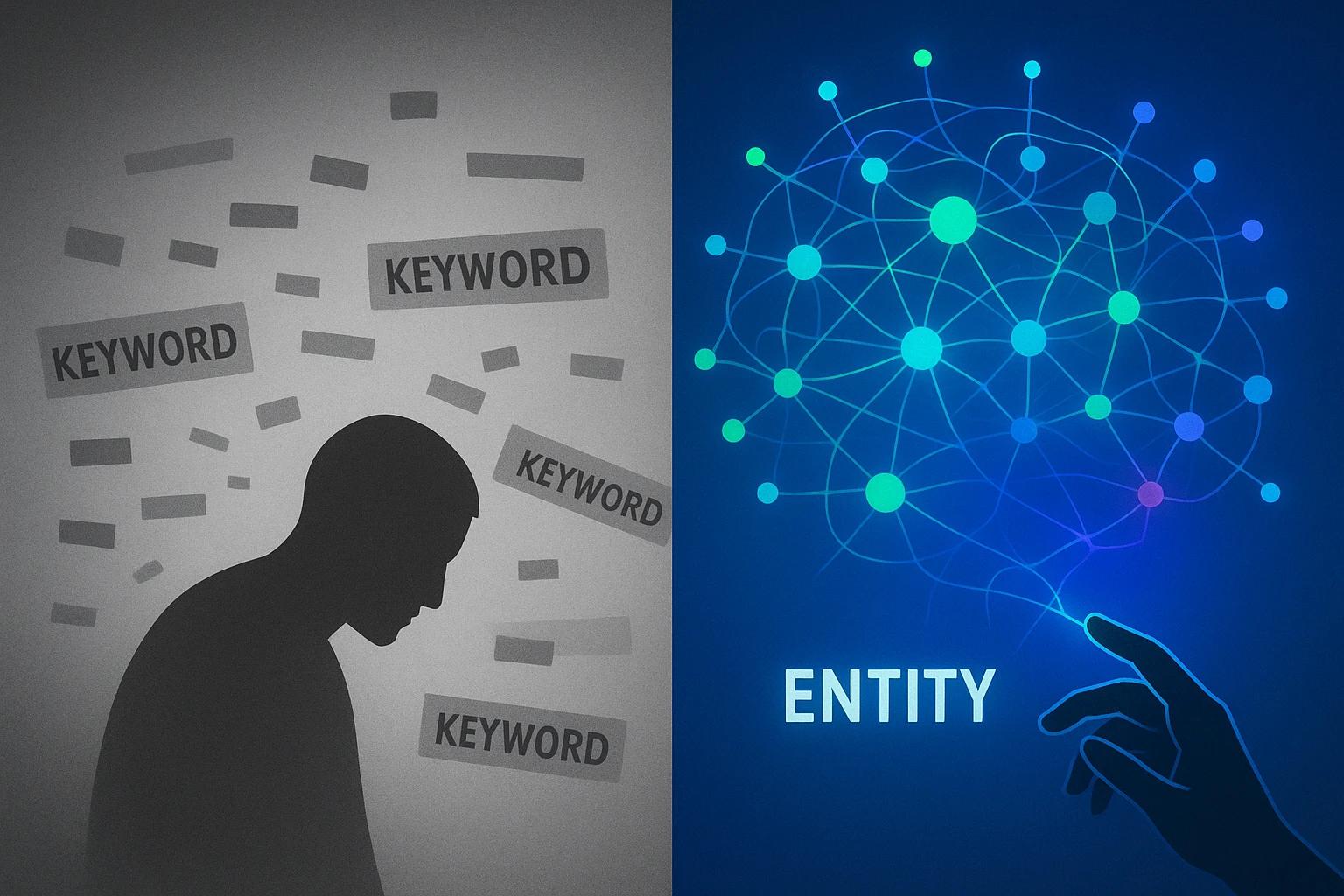
Learn how to shift from keywords to entities and build the expertise AI and search engines recognize and trust.